Self-Portrait by Abbott Handerson Thayer
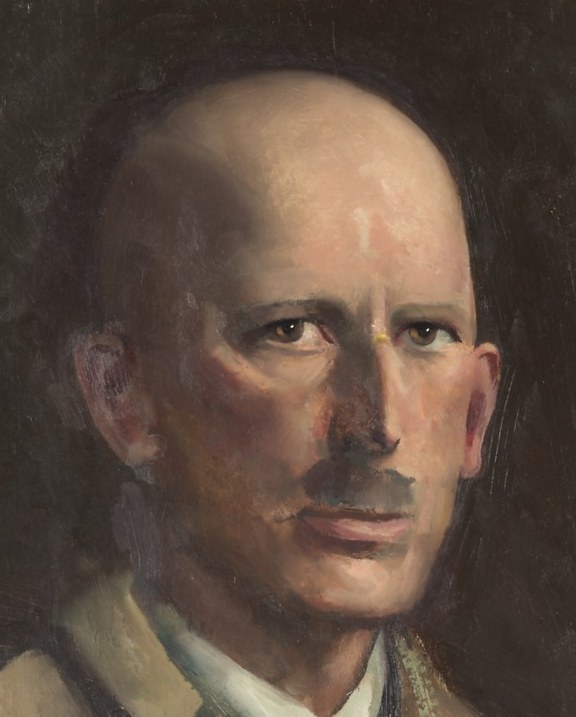
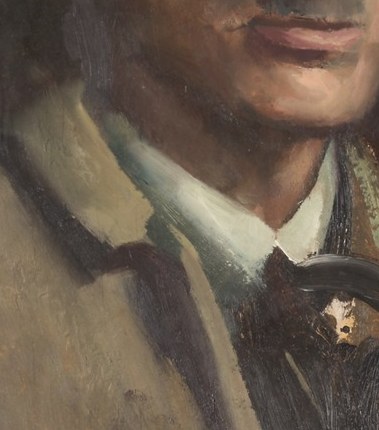
Abbott Handerson Thayer's *Self-Portrait*, painted in 1918, shows the artist in his later years, reflecting a life dedicated to both art and the natural world.
Look closely at his contemplative gaze; it suggests the keen observation of a man who studied details not just for his canvases, but for scientific understanding. While he was a prominent American painter known for his portraits and idealized "angel" figures, Thayer was also a passionate naturalist.
He even collaborated with his son, Gerald, on a book about protective coloration in animals, a study that might have influenced military camouflage during World War I. This dual identity as an artist and a scientist informed his unique approach to seeing and representing the world.
What do you notice about how he presents himself, both as an artist and as a man of science?
Details
Transcript
This man painted himself in 1918, late in his career. He was known for portraits, but also for his 'angel' paintings. He was also a devoted naturalist, observing the world closely. He even co-authored a book on animal camouflage with his son. This keen observation shaped his art, and his gaze here. The painter captures himself: an artist and a scientist.