In the Housatonic Valley by Homer Dodge Martin
Homer Dodge Martin's "In the Housatonic Valley" from 1858 beautifully captures the American landscape, using painterly techniques that create a profound sense of depth and atmosphere. This oil painting, now at The Cleveland Museum of Art, is a prime example of the Hudson River School's dedication to natural beauty.
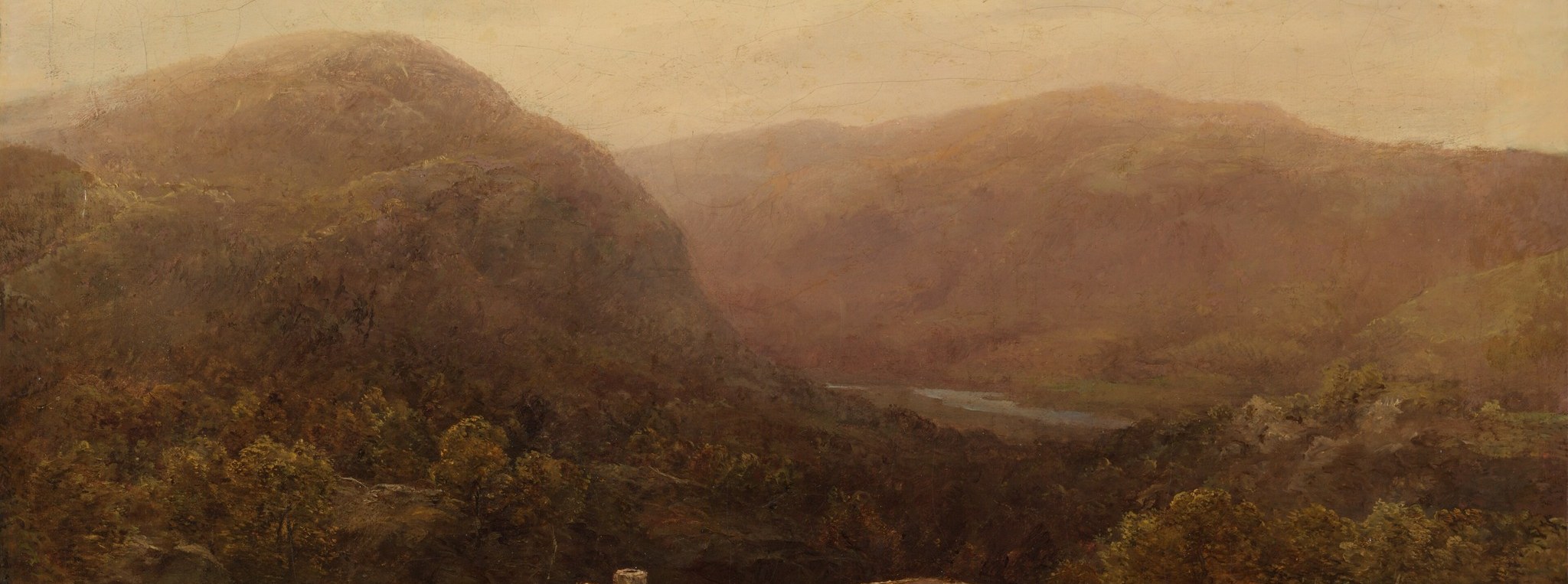
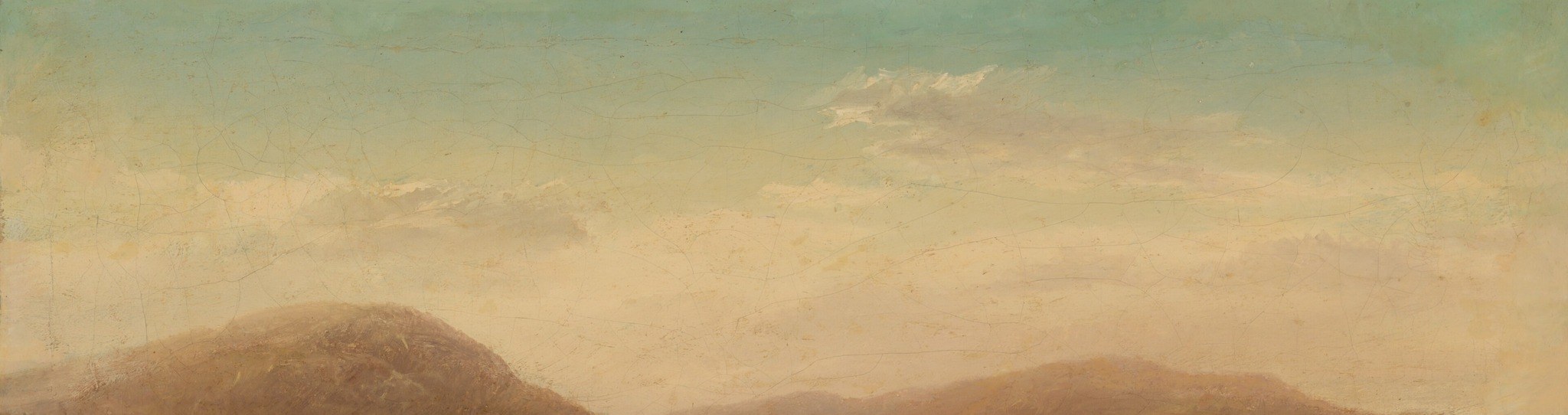
Notice how the artist creates the illusion of distance in the rolling hills. This effect, known as atmospheric perspective, causes objects further away to appear lighter and less distinct, mimicking how our eyes perceive depth in nature. It's a subtle but powerful trick of the brush.
Martin, an American landscape painter, was a significant figure in the mid-19th century art scene. His works, like this one, are celebrated for their detailed observation and atmospheric rendering, contributing to the movement's exploration of America's unique wilderness.
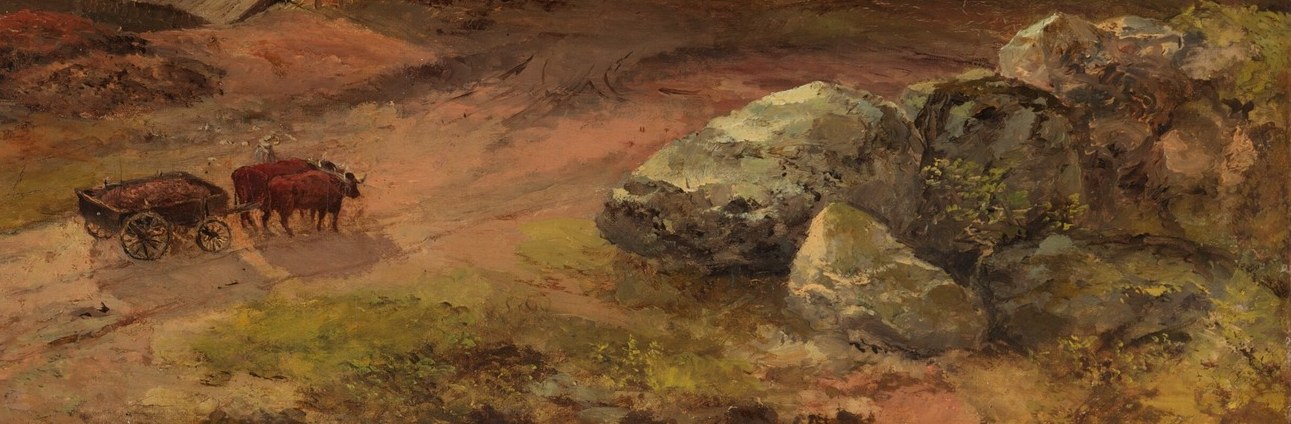
The skillful use of light and shadow also defines the scene, particularly on the barn. It creates a vivid sense of three-dimensionality, inviting the viewer to step into this tranquil valley. What details in the foreground do you find most striking?
Details

Transcript
This painter shows us the Housatonic Valley, a real place. He captures the vastness of the distant rolling hills. See how the air itself seems to soften the farthest peaks. This trick, 'atmospheric perspective,' makes distant objects blur. It gives real depth to the scene, pulling your eye inward. Look how light catches the barn roof, then shadows the side. The painter uses light and shadow to build a sense of space.