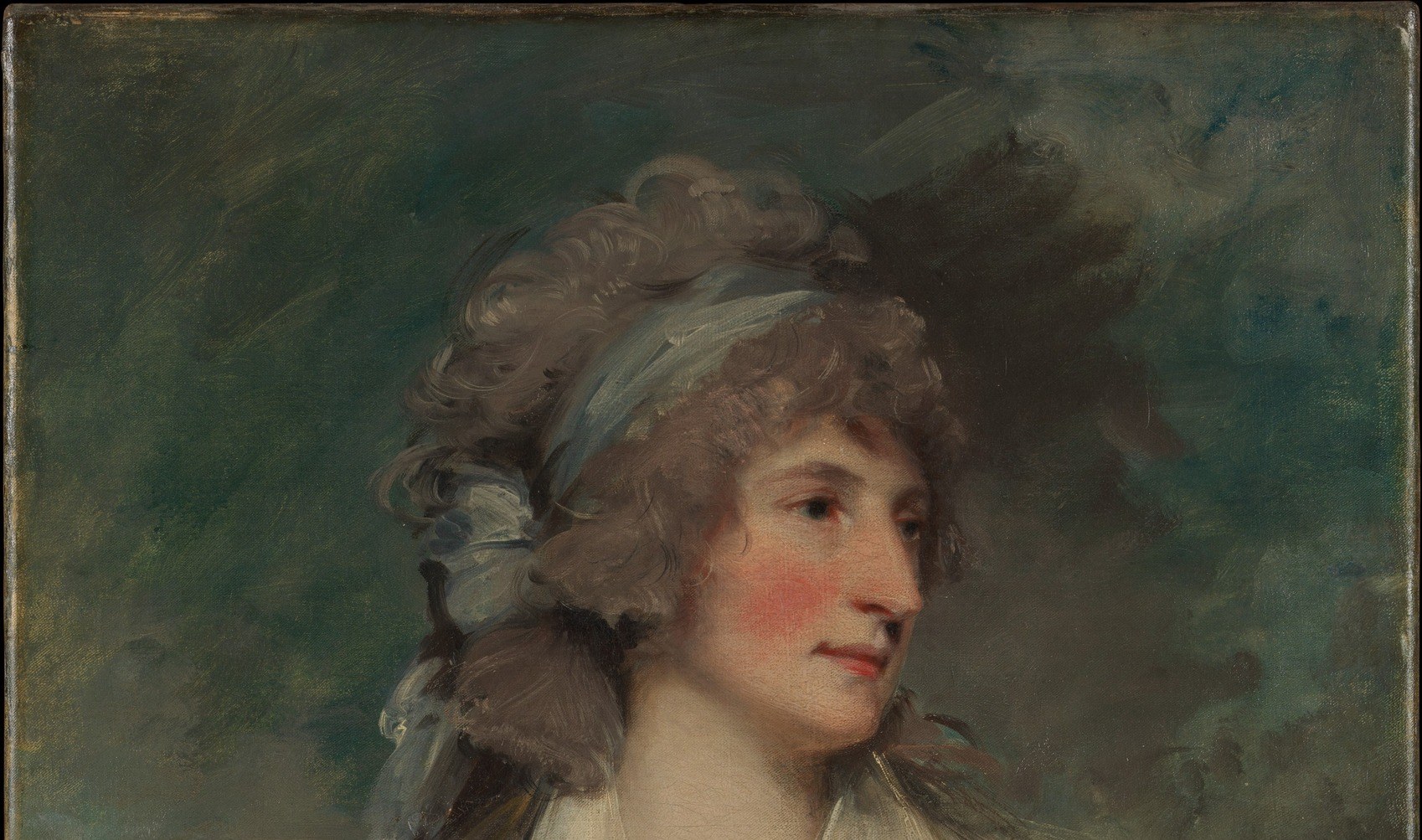
Portrait of a Woman; (reverse, now covered by relining canvas) Study of a Child's Head by John Hoppner
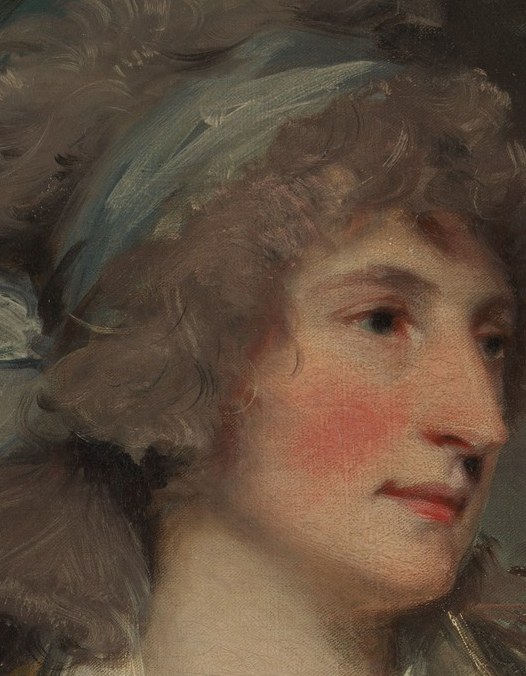
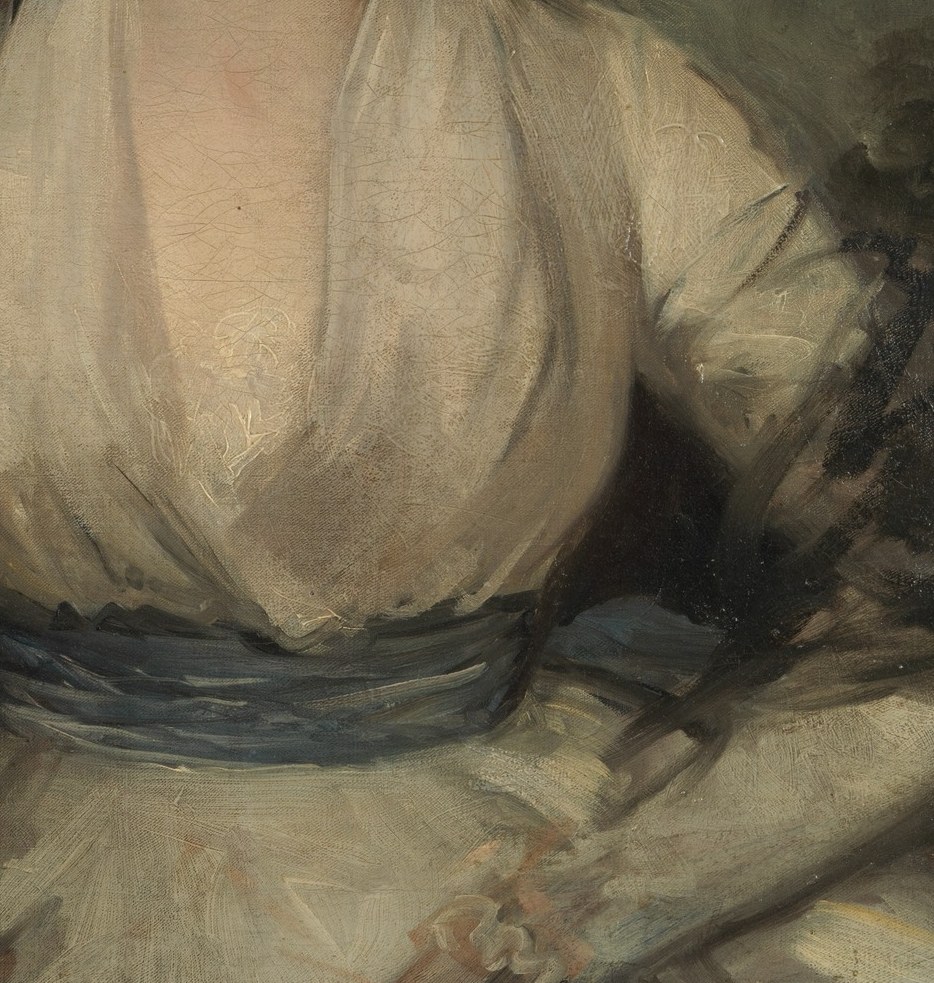
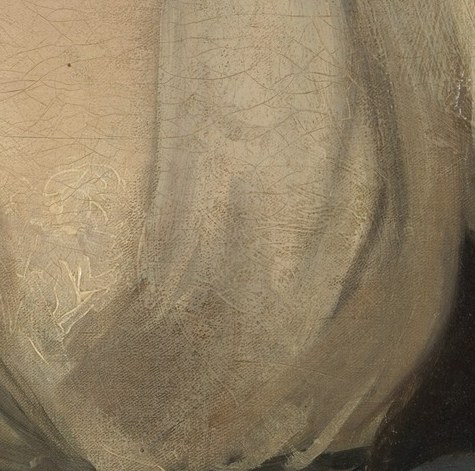
This "Portrait of a Woman" by John Hoppner (1796) held at The Metropolitan Museum of Art hides a secret: a study for a child's head on its reverse. The painting itself raised eyebrows in its time. Hoppner, a celebrated colorist, painted an unidentified woman with striking vitality. Her direct gaze and the soft, informal rendering of her pale gown, a detail which seemed too intimate for the era, caused comment. The dark background pushes her forward, a common technique to emphasize the sitter, but here it amplifies the painting's enigmatic quality. The visible brushstrokes on the fabric show Hoppner's skilled technique and the lively character of the work. The sitter's identity remains unknown, adding to the portrait's enduring mystique and the questions it continues to provoke. What might the hidden study of a child's head suggest about the woman?
Details
Transcript
She stares directly at you. Who is she? Her rosy cheeks seem too vital for a formal portrait. Look closely at her low-necked, pale gown. The painter applied paint with visible, lively strokes. Hoppner used light and shadow to make her stand out. The sitter's identity remains a mystery today. A study for a child's head is hidden on the reverse.