School Time by Homer, Winslow
Winslow Homer's "School Time," painted around 1874, is an oil on canvas that captures a simple yet profound moment in rural American life. This early work by Homer, housed in a private collection, beautifully illustrates his developing interest in unembellished, everyday subjects.
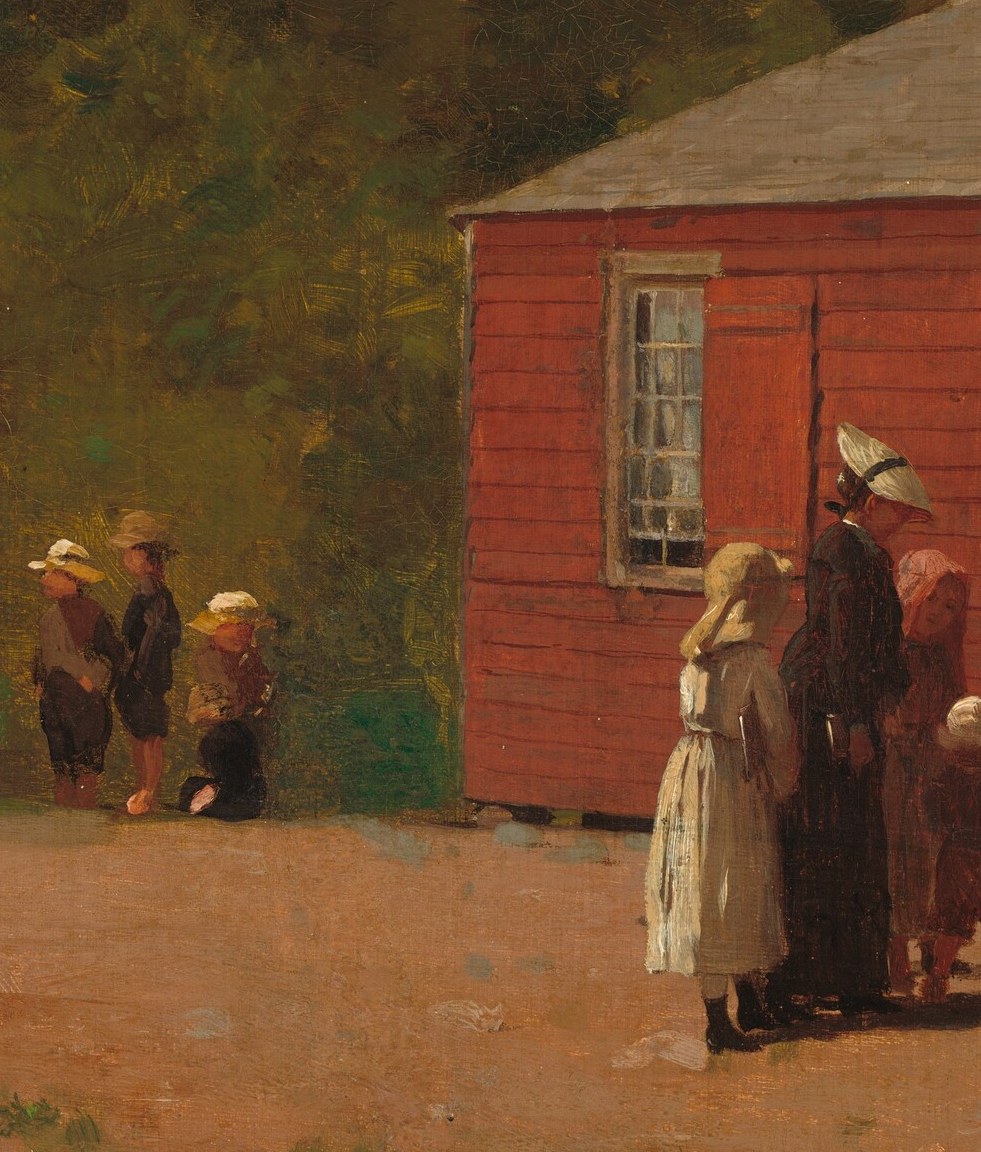
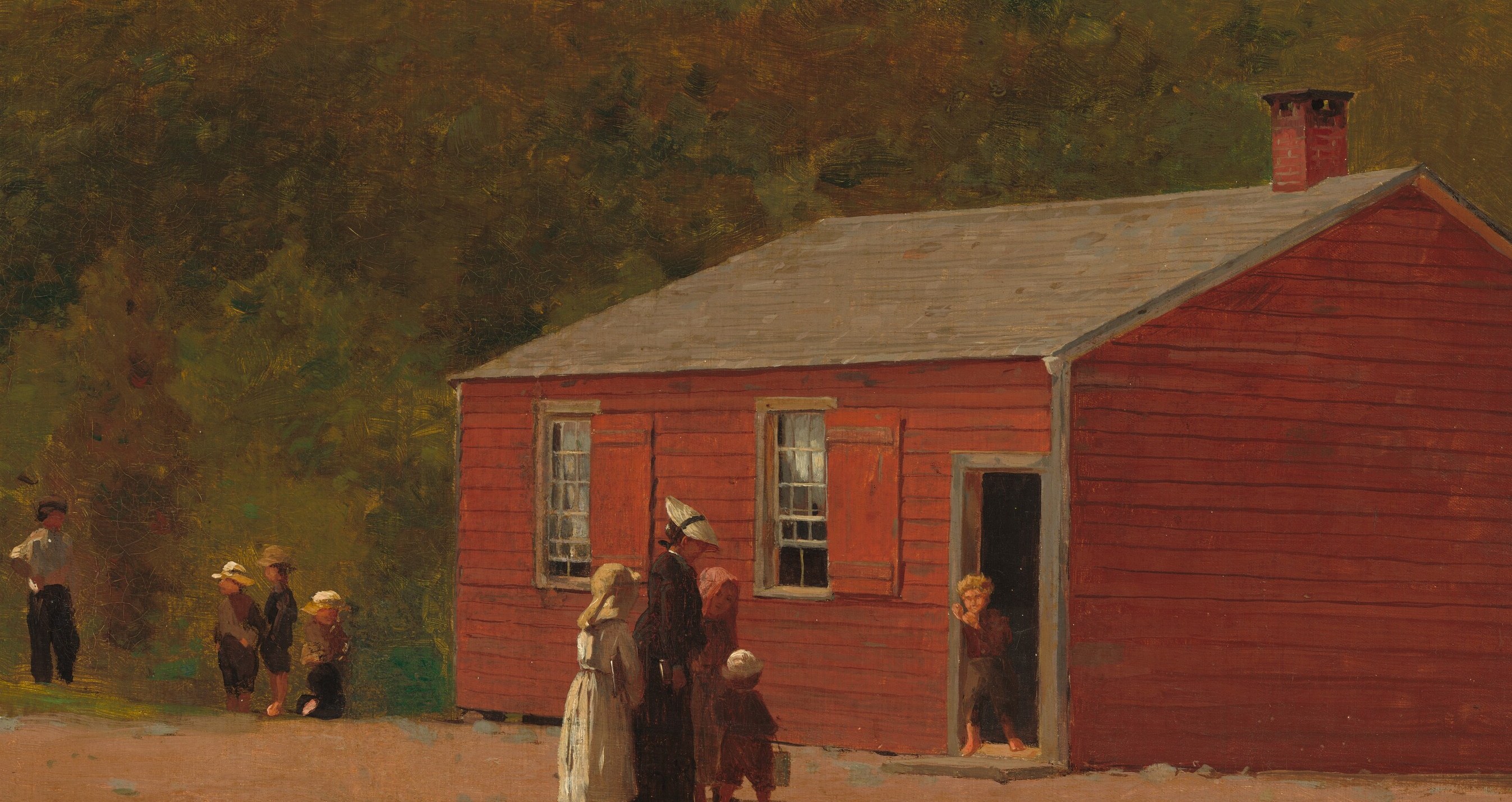
In the painting, your eye is drawn to the central figures of a woman and a child, standing together at the entrance of a stark red schoolhouse. Their intimate proximity suggests a deep connection, but Homer deliberately leaves their relationship ambiguous. Are they mother and child, or a teacher and student? This ambiguity invites us to ponder the universal moments of transition and connection.
Homer began his career as an illustrator before dedicating himself to painting. He sought to portray people's lives authentically, without idealization. "School Time" exemplifies this approach, finding artistic merit in ordinary scenes and the quiet emotional truths embedded within them. It's a testament to his skill in making us feel, rather than just see.
The painting's simple composition and direct brushstrokes create a sense of authenticity, making the scene feel immediate and relatable. What connection do you sense between these two figures?
Details

Transcript
This painter was known for capturing everyday American life. But this scene, 'School Time', holds a quiet mystery. A woman and a child stand close, about to enter the school. Are they mother and child? Or a teacher and student? Homer never tells us, but paints their quiet closeness. His genius was in finding the human story in unspoken moments.