Saint Florian by Cossa, Francesco del
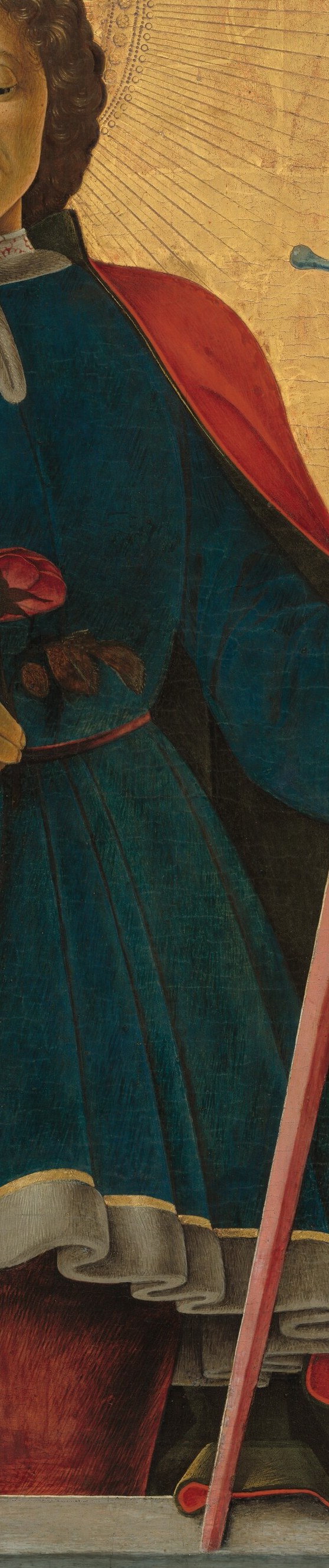
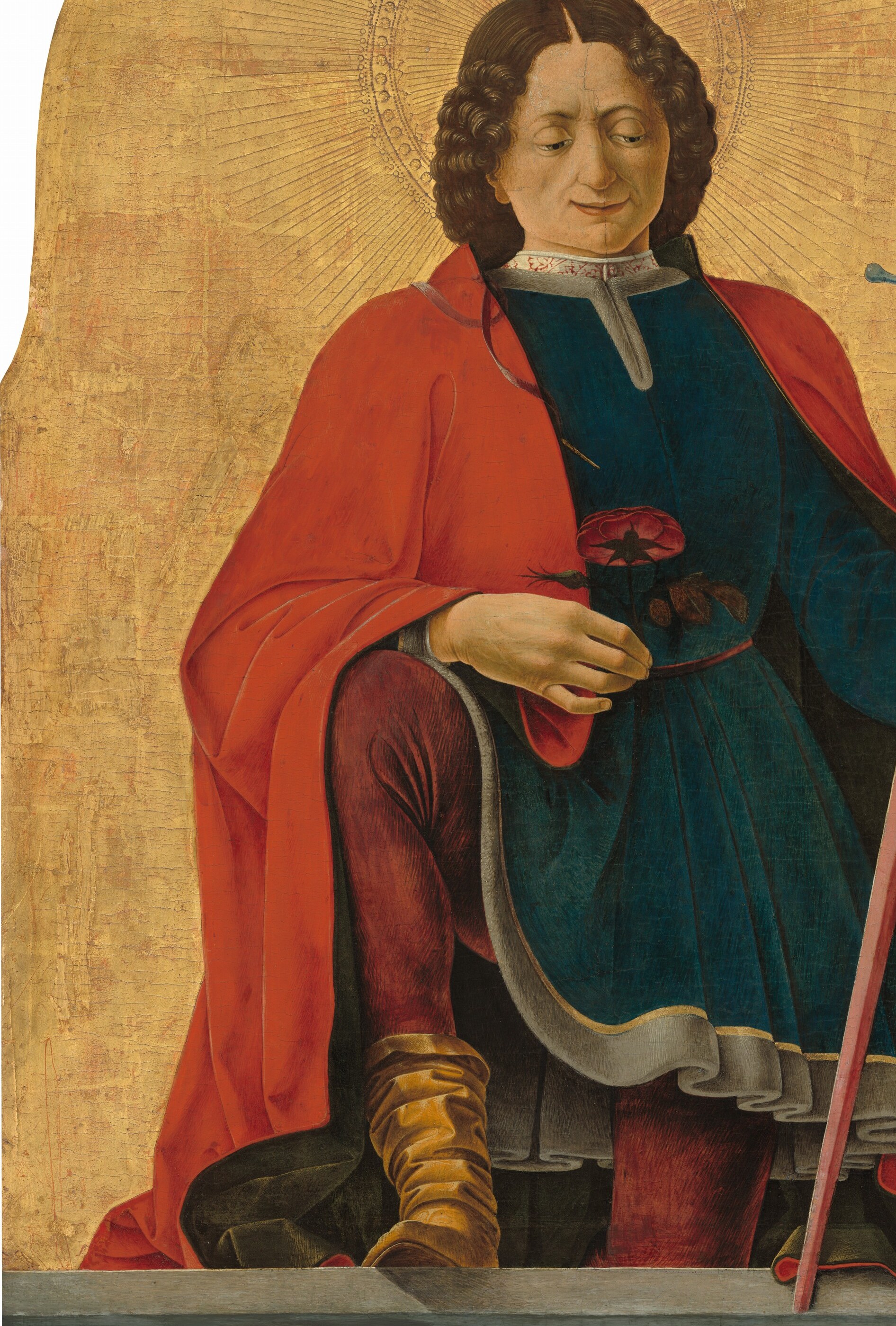
A pail of water in the hand of a Roman soldier is the key to this entire painting. The work is Francesco del Cossa's "Saint Florian," painted in tempera and gold on a poplar panel around 1473 or 1474. It hangs today at the National Gallery of Art in Washington, D.C., but it was never meant to be seen alone.
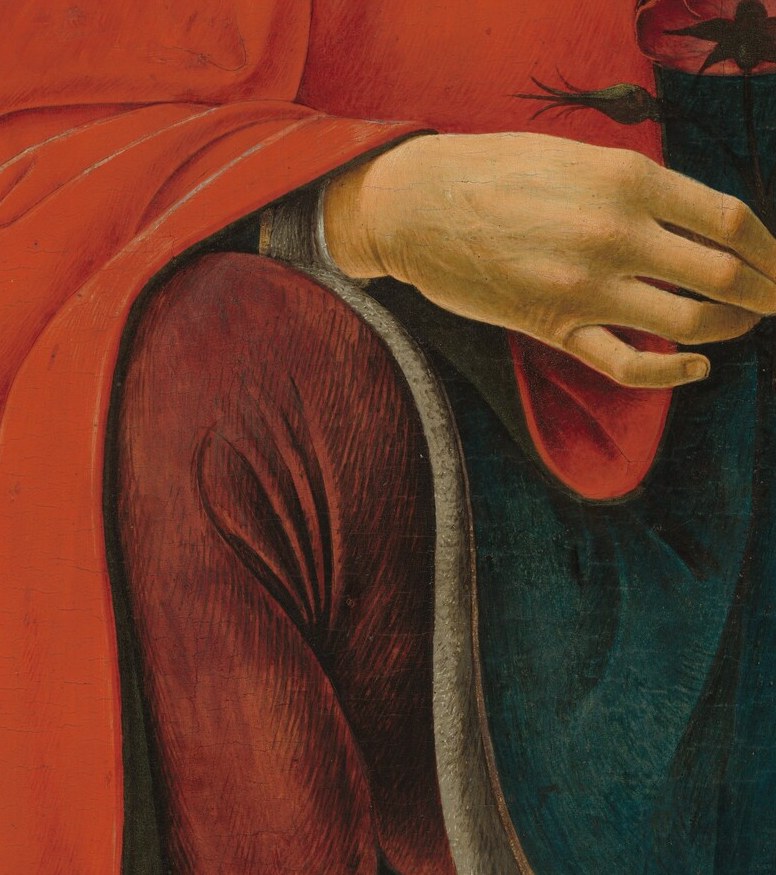
Look closely at the object in the saint's left hand. Where you might expect a martyr's palm, Cossa painted a small wooden bucket. That one detail identifies him as Saint Florian, a third-century Roman officer martyred for his faith and, much later, adopted as the patron saint of firefighters. In the tight, fire-prone cities of Renaissance Italy, his intercession was earnestly sought.
The panel was once the upper-left wing of the Griffoni Polyptych, a towering, gilded altarpiece commissioned by the Griffoni family for the Basilica of San Petronio in Bologna. The polyptych was dismantled centuries ago, and its panels are now scattered among museums in Washington, London, and Milan. The pointed Gothic arch at the top still carries the ghost of its original context; it once locked into a vast framework of nearly identical saints and scenes.
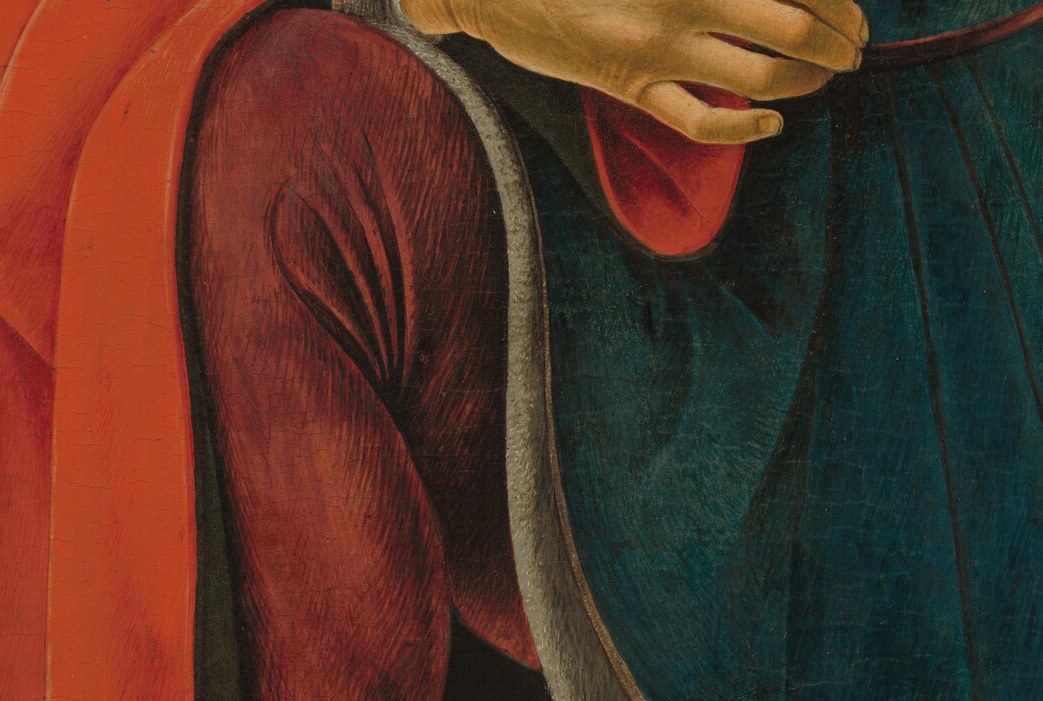
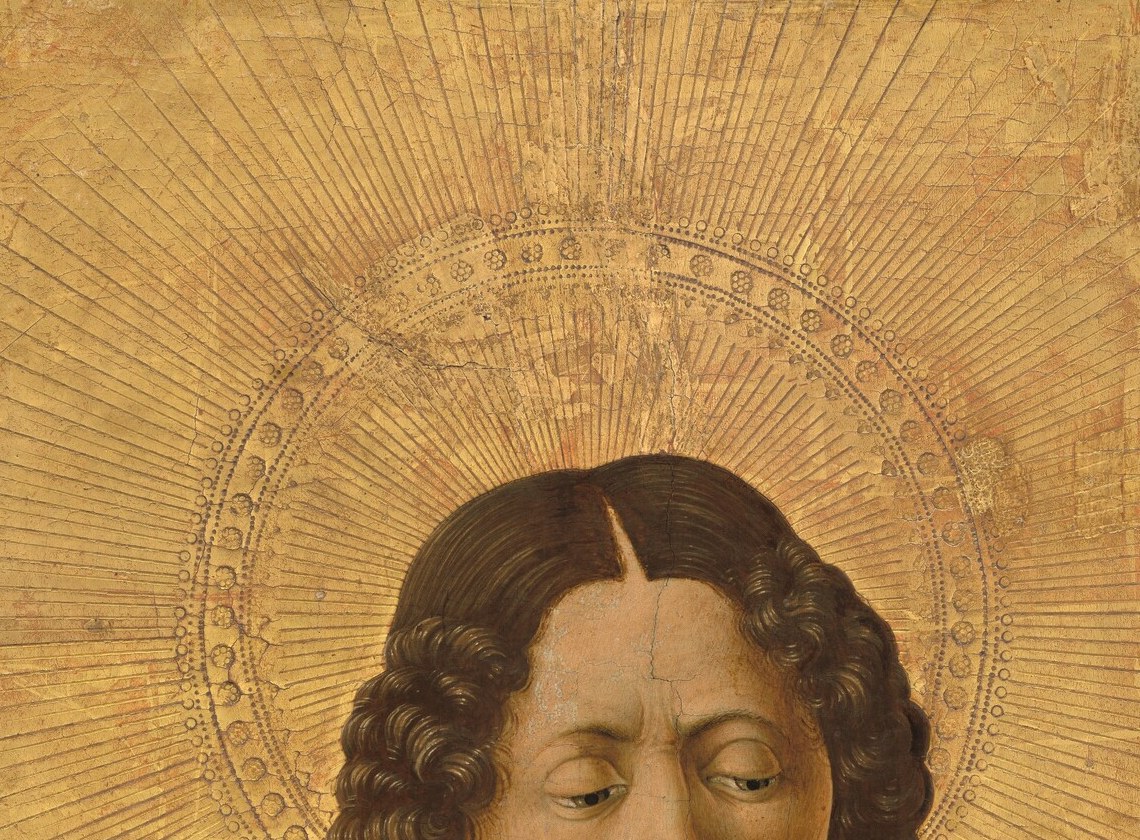
Cossa was a proud, competitive painter who once wrote a letter demanding to be paid by the square foot, convinced his work was worth more. In Saint Florian's face you see why: a delicate, downcast calm rendered with a tenderness that feels almost Flemish, set against the punch-work brilliance of a Ferrarese gold ground.
Details
Transcript
At first glance, a Roman soldier in gilded armor. The sword and the halo do half the work. The rest hangs on the object in his left hand. It's a pail of water. Saint Florian was the patron saint of firefighters. The Griffoni family commissioned this panel in 1473. The belt's metalwork probably carries their colors. This was the upper-left wing of a vast altarpiece, later broken apart. His face was designed to meet a kneeling worshipper's eyes directly.