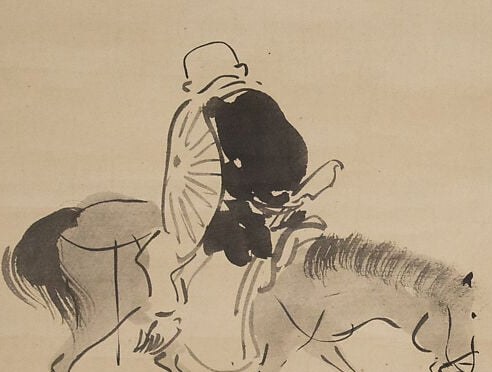
蓮生法師図|Monk Renshō Riding His Horse Backwards by Matsumura Goshun
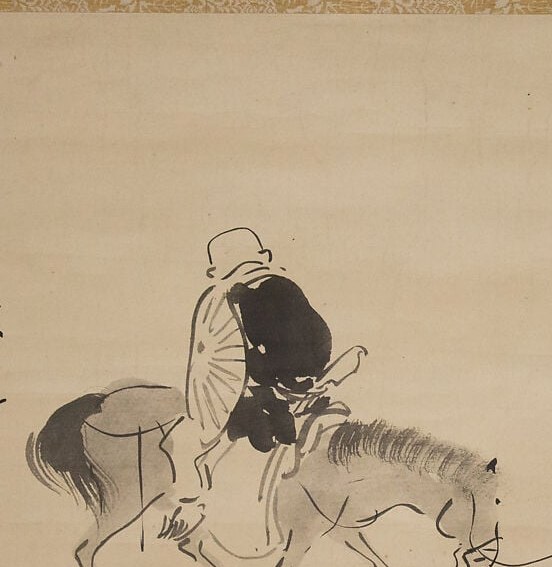
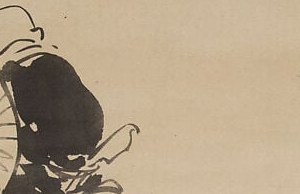
This painting is a visual joke, and a serious Zen teaching at the same time. "Monk Renshō Riding His Horse Backwards" by Matsumura Goshun (c. 1784) hangs in quiet defiance of every equestrian portrait ever made. Renshō sits reversed, facing the horse's tail, while the animal trots calmly on. Instead of reins, he holds a folded fan.
The fan is the giveaway. Reins signal control and striving. A fan signals effortlessness, the Zen principle of wu wei. The monk's serene, backward-facing expression says he has already seen where he's going. The horse's unbothered face makes it a silent accomplice to the whole absurd enterprise. Even the attendant walking alongside, facing forward like a normal person, sharpens the strangeness.
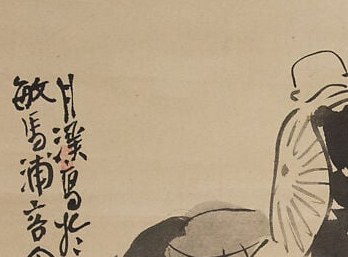
Goshun studied under Yosa Buson and later founded the Shijō school, but he spent formative years with the iconoclastic painter Sesshū Tōyō. This lineage prized spiritual wit: enlightenment expressed as a prank. Renshō himself was known for eccentric humor, making the painting a portrait of a real monk and a teaching tool in one stroke.
A koan is meant to break your brain. This one does it with ink and a horse. What expectation do you need to let go of, so you can ride backward for a while?
Details
Transcript
It looks like a simple ink painting of a monk on a horse. But he's riding backward. No reins. Just a folded fan. This is Renshō, an eccentric monk known for Zen humor. Everything in this picture is a visual koan: a riddle to break ordinary logic. The horse is completely unbothered. Goshun painted it around 1782. He never intended this to be merely funny. The backward posture says: enlightenment faces where you've been, while life carries you forward.