Portrait of a Venetian Gentleman by Cariani
View the artwork: Portrait of a Venetian Gentleman →
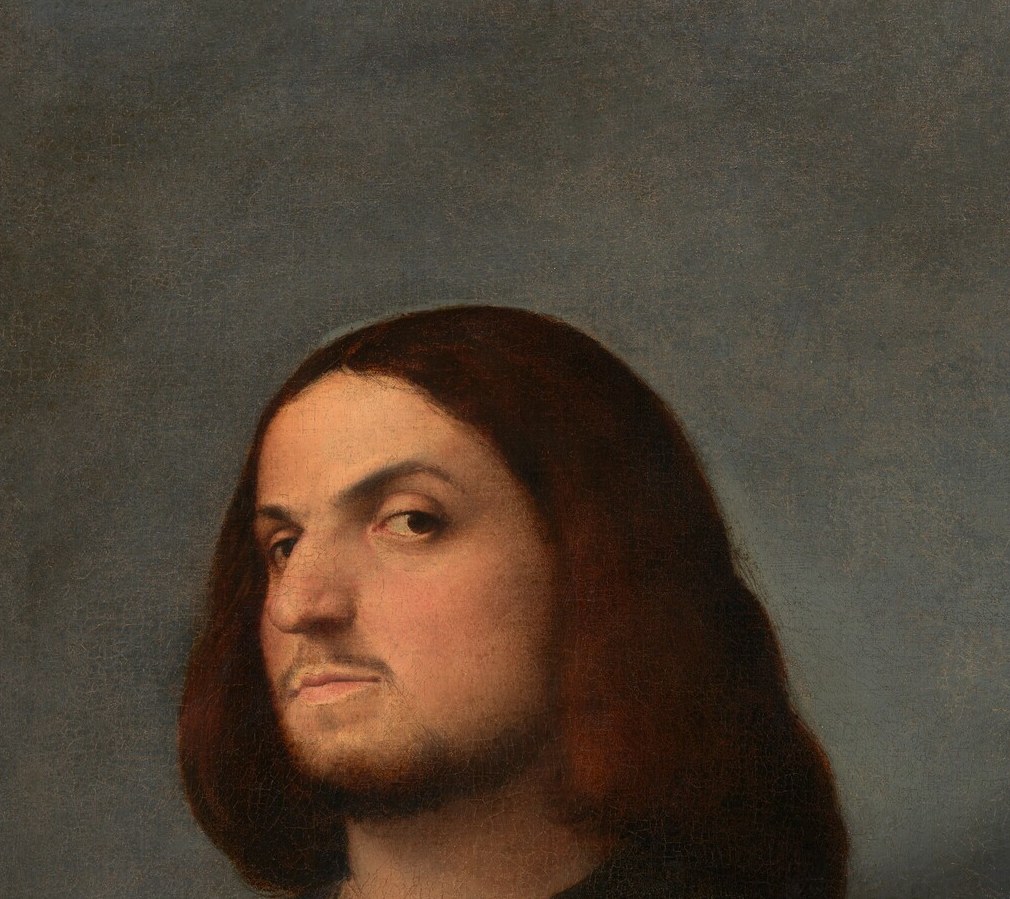
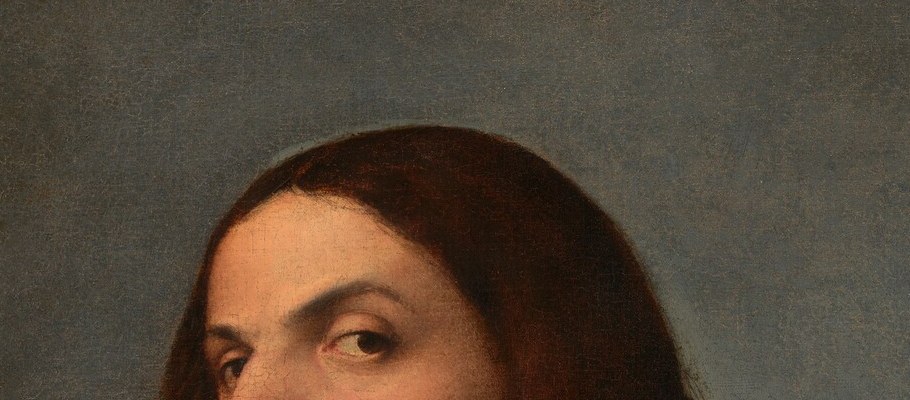
This is Cariani's Portrait of a Venetian Gentleman, painted in Venice around 1510. It hangs today in a private collection, and most people scroll past it because it looks like a simple dark portrait of a serious man. It is not simple.
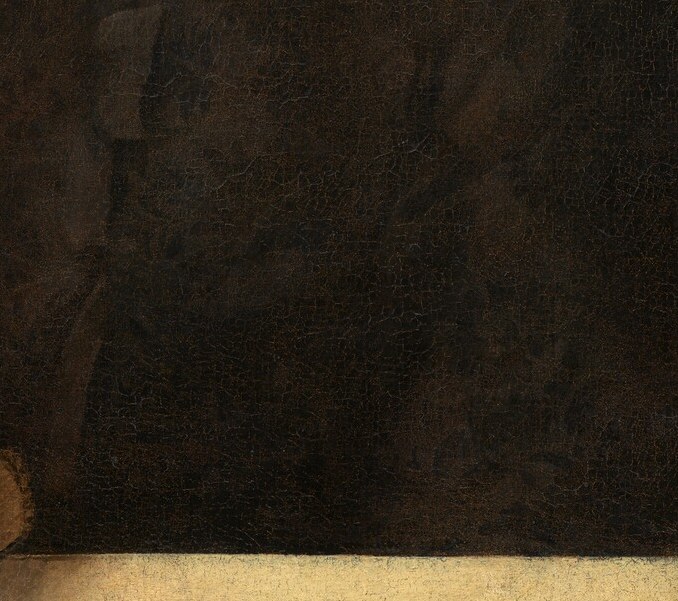
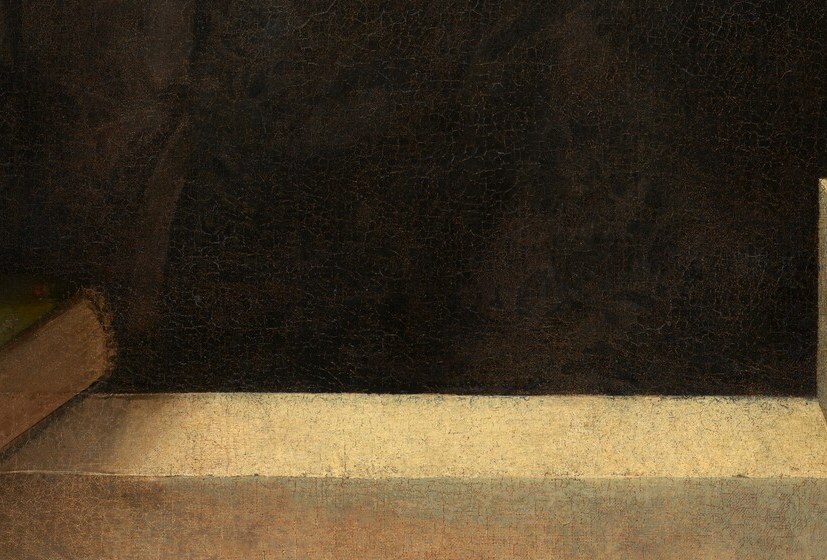
Start with his right hand. The white glove grips that closed book with visible force, an unusual choice when most sitters of the period held an open volume or made a relaxed gesture. Closed books in Venetian portraiture are a code: they signal knowledge possessed but not shared. This man is not studying. He is withholding.
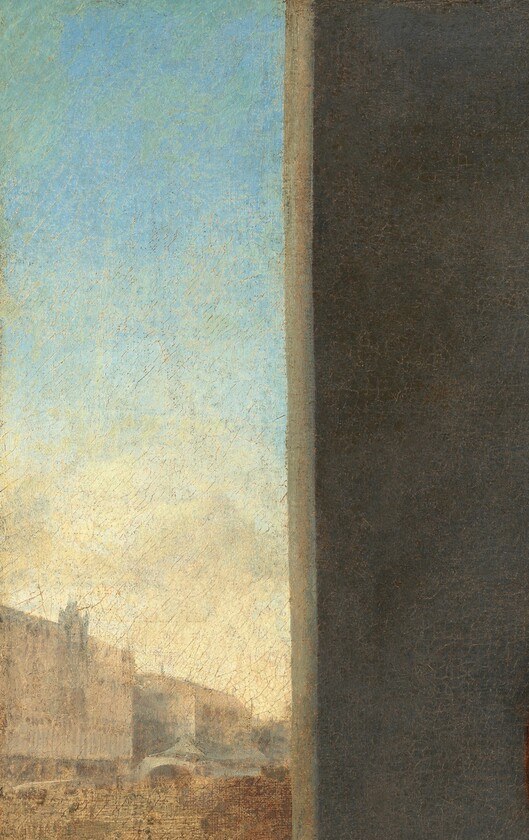
Now look at the upper-left window. That tiny architectural fragment is a real Venetian skyline, with white buildings and towers visible against blue sky. Cariani gave us an identifiable city view, but it is easy to miss because the figure dominates the frame. And his left hand, half-consumed by shadow, refuses to match the right hand's assertion. The composition is built on an asymmetry of action and reserve.
Cariani worked in the orbit of Giovanni Bellini and Giorgione, absorbing their atmospheric light but pushing toward something sterner. This painting anticipates the confrontational stillness that later artists like Lorenzo Lotto would make famous. What do you think this man is about to say?
#arthistory #venetianpainting #renaissanceart
Details
Transcript
A Venetian gentleman, dressed in almost total black. His face is calm. But there is more happening here. His right hand grips a closed book like a weapon. In Venetian portraits, a closed book means knowledge held back. Now look at the window behind him. That tiny skyline is Venice. Cariani painted a real city view. And his left hand barely emerges from the shadow. One hand speaks. The other stays silent. The whole man is in that choice.