The hurdy-gurdy player by David Vinckboons
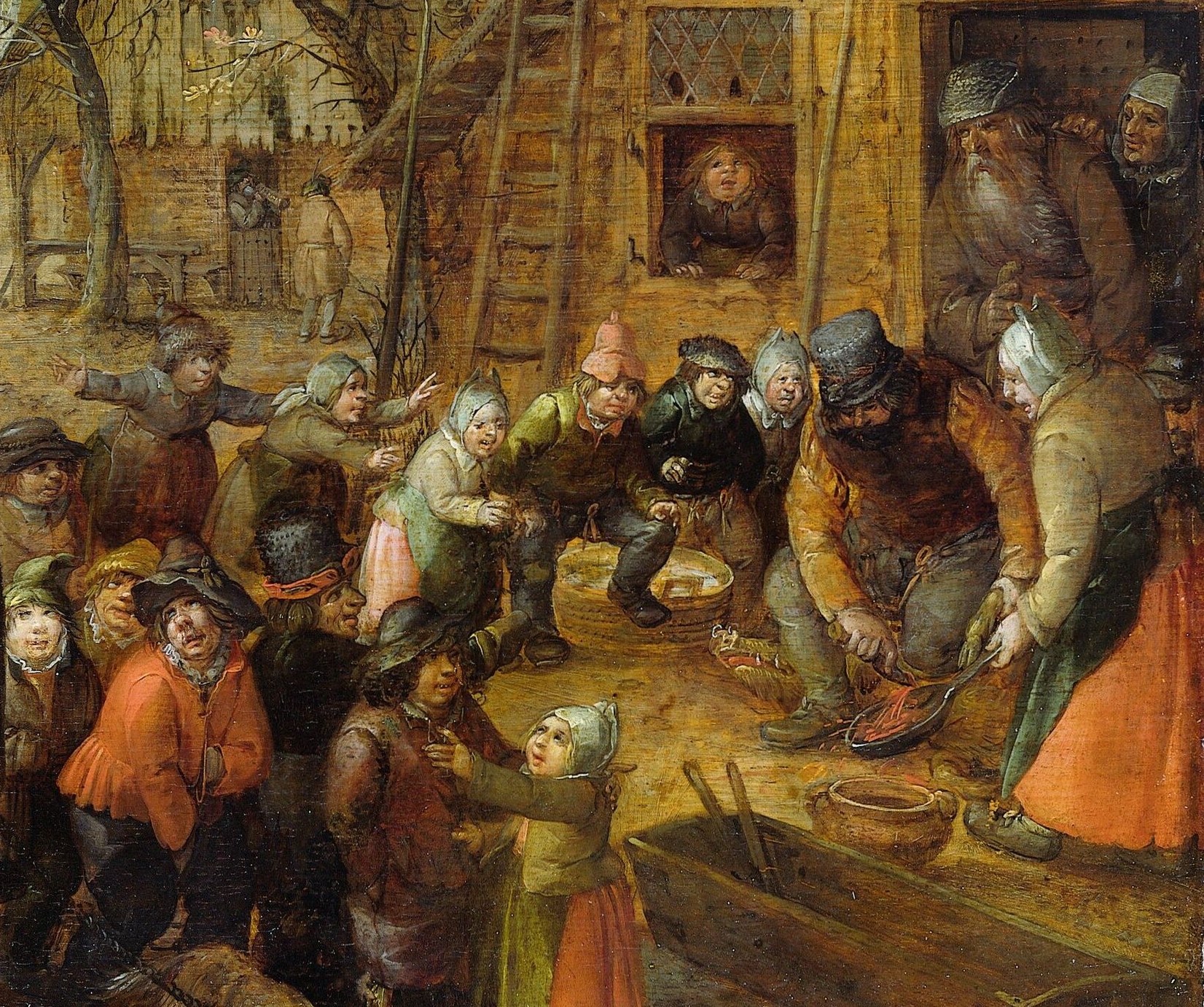
David Vinckboons painted The Hurdy-Gurdy Player in 1608, and it sits in the Rijksmuseum as a dense document of a village day. It is technically a landscape, but the ground is so packed with bodies and small stories it reads like a puzzle. To a 17th-century Dutch viewer, the elements were not neutral. A hurdy-gurdy was a disreputable instrument, its cranked wheel producing a drone that symbolized hollow, mechanical art. A white dog stood for domestic fidelity. A public slaughter was simply life, stripped of sentimentality.
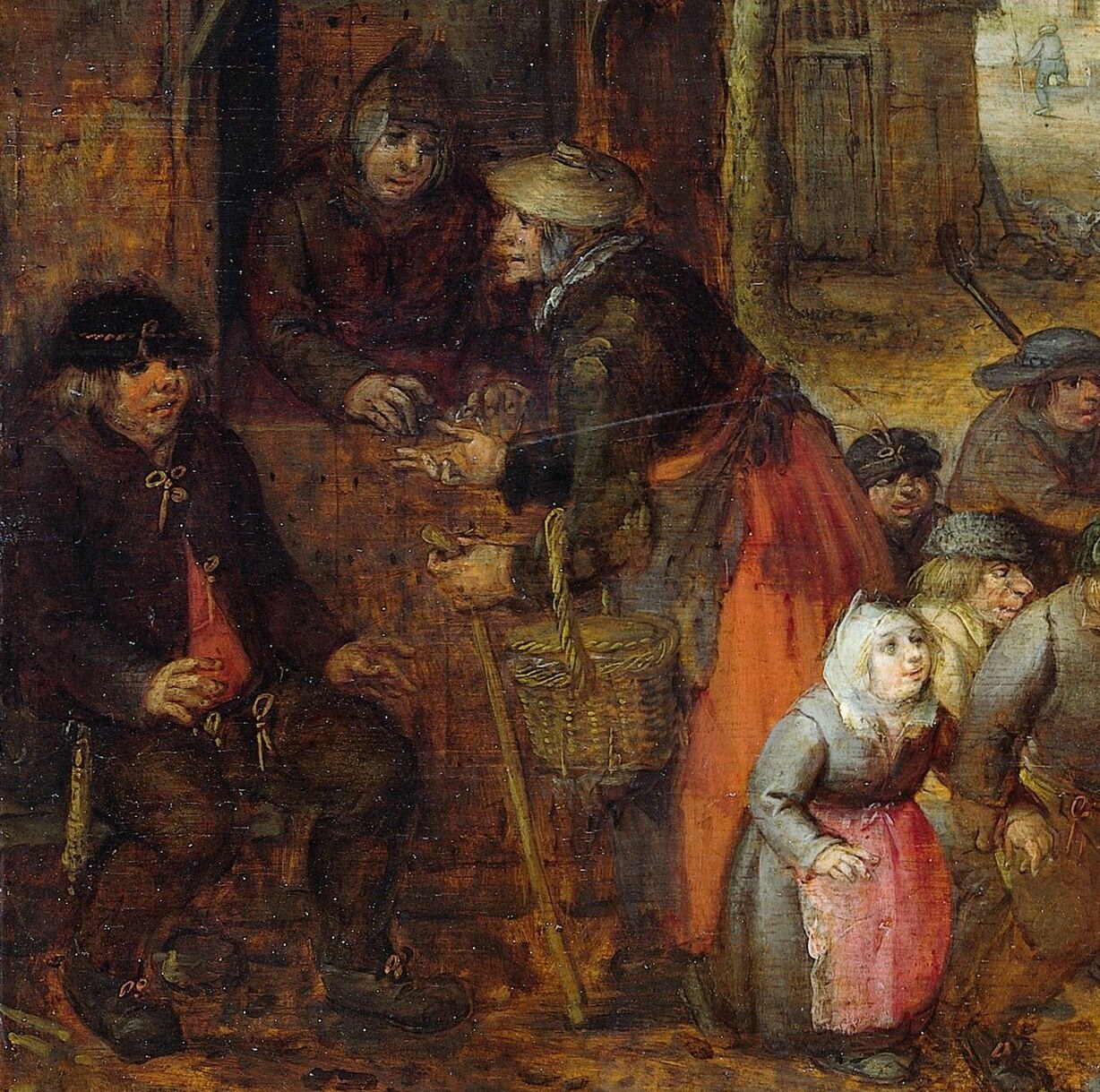
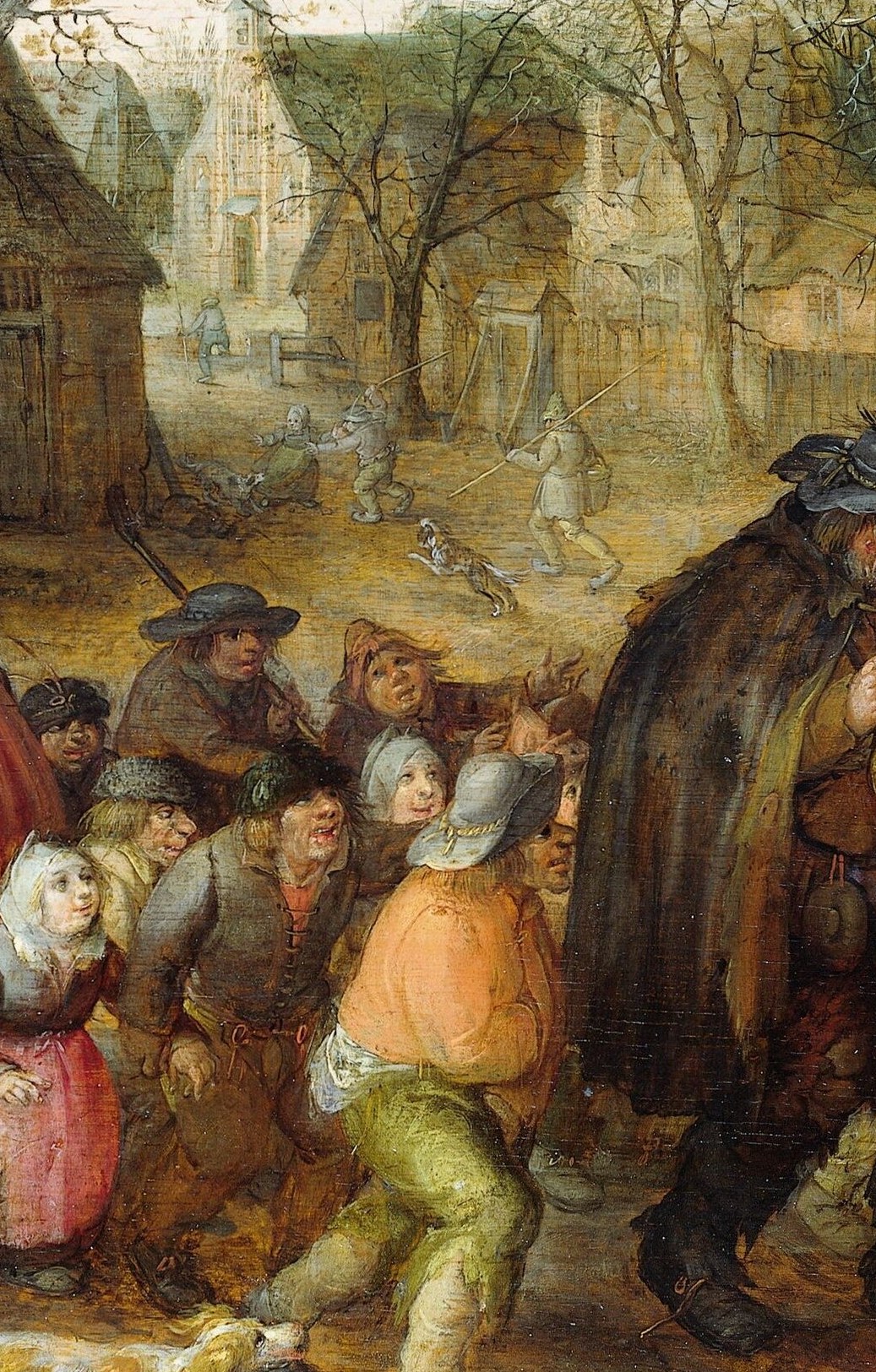
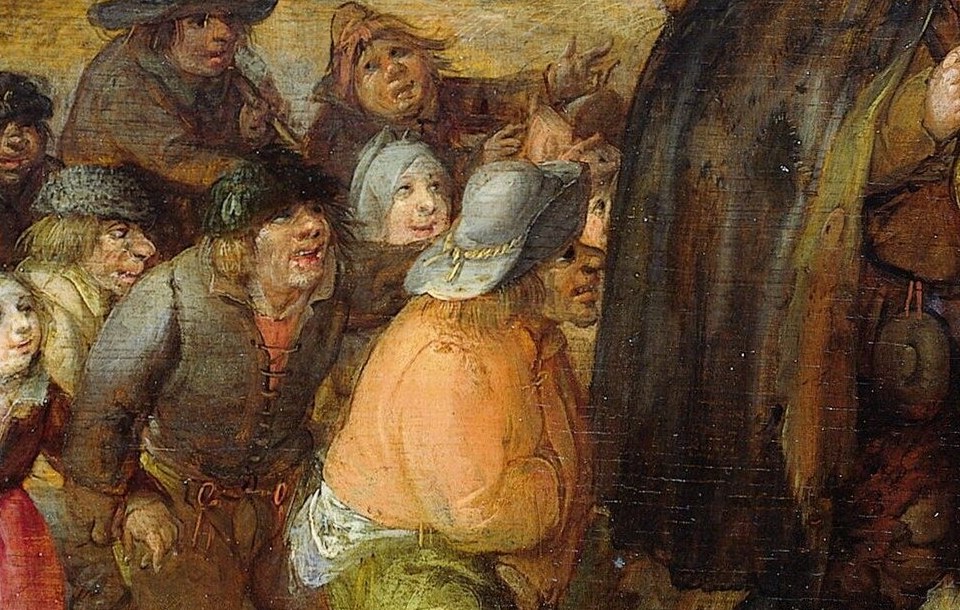
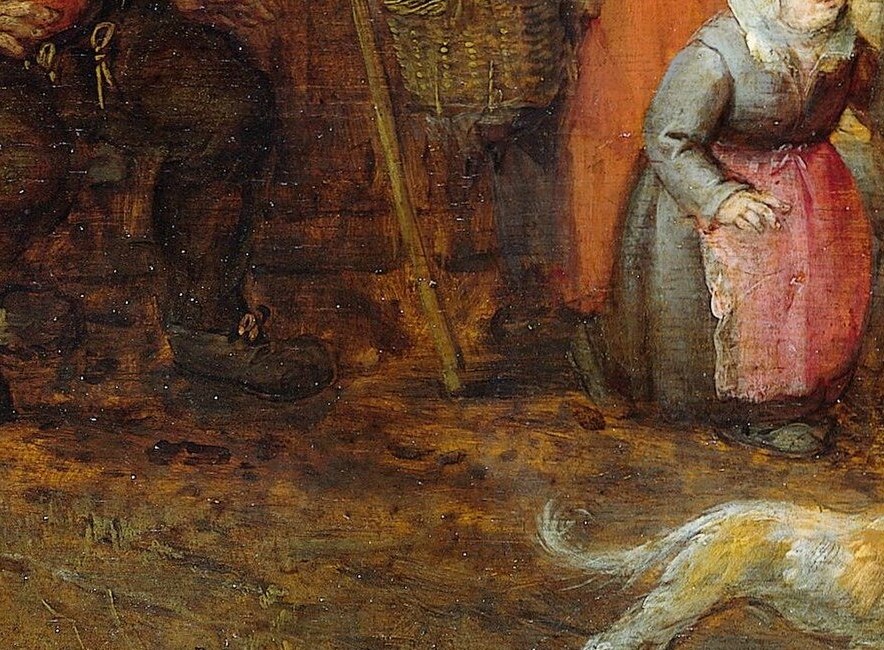
Look at the musician. He stands at the exact center of the composition, cut in two by the crowd, his face shaded by a wide hat. His instrument is a small mechanical violin resting at his waist. On the left, a white dog sits clean and watchful on the dirty ground. On the right, the crowd gathers around the killing of an animal. Children press in to see. The figure on the far left meets our eye, breaking the fourth wall.
Vinckboons came from Mechelen and worked in Amsterdam during the early Golden Age. He fathered a dynasty of architects and mapmakers. His village scenes extend a tradition that starts with Bruegel: using peasant life as a moral theater. The human world here is staged in a cold, pale winter light filtering through bare trees, the only quiet thing in the picture. Everything else is noise and work and survival.
This is a painting that encodes a philosophy. Loyalty is small and easy to overlook. Art can be an empty crank if no one means it. And the hardest truths happen in plain sight, surrounded by a crowd that has already accepted them.
Details
Transcript
She seems to be watching all of this. But she is not. This is the hurdy-gurdy player. He stands at the exact center of the world. His instrument is a mechanical violin. It makes its music without passion. A clean white dog sits among the filth. Domestic loyalty amid chaos. In the 1600s, street music was considered a deceit. A trick for coins. An animal is being butchered. Children watch. The world does not look away. A Flemish code: the dog is loyalty, the hurdy-gurdy is hollow art, the slaughter is raw truth. The figure on the left looks at us. She asks if we are part of this too.