Market Woman at the Vegetable Stall by Pieter Aertsen
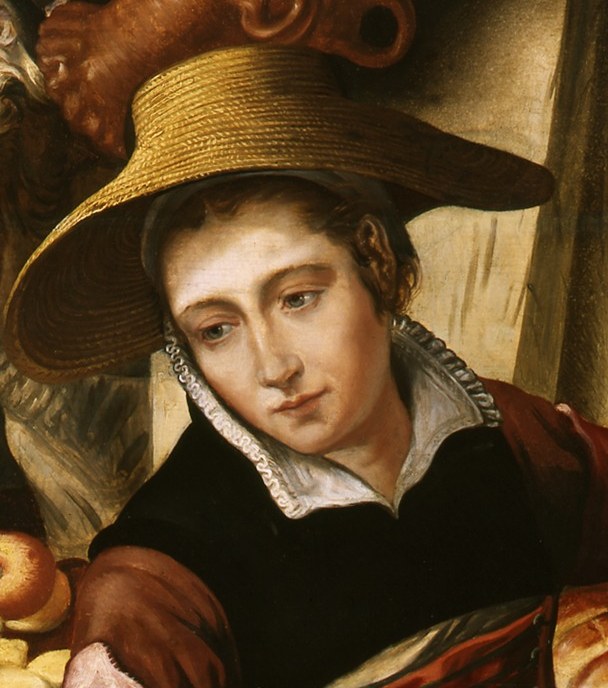
Pieter Aertsen's "Market Woman at the Vegetable Stall" (1567) is a quiet revolution in oil on an oak panel. At a time when religious scenes dominated high art, Aertsen, nicknamed "Tall Pete," made a monumental painting where the sacred is literally pushed into the margin and a working woman's daily labor fills the frame. It's held today in the Gemäldegalerie Berlin.
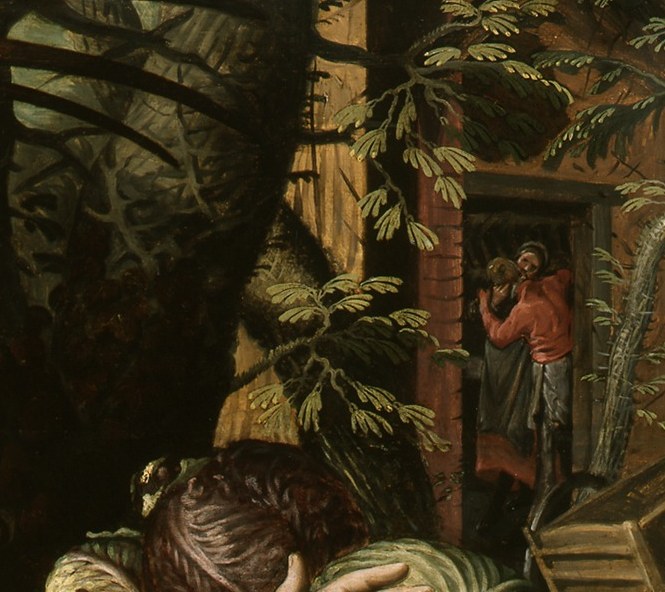
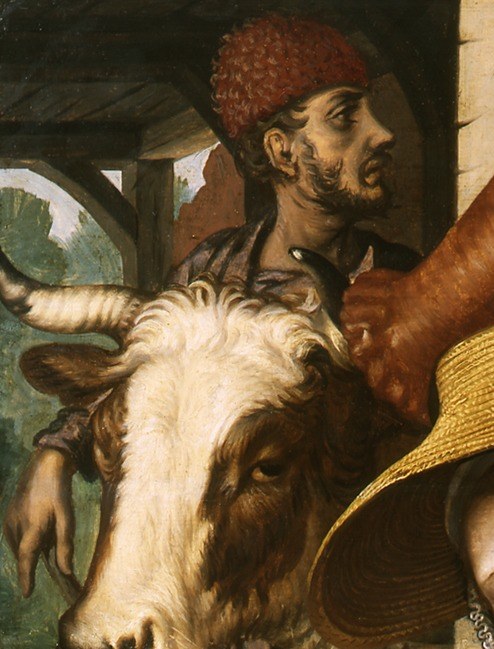
Let your eye drift from the woman's calm, averted face to the upper right corner. There, in the gloom of a doorway, a tiny biblical scene unfolds. This was Aertsen's signature move: a deliberate inversion of priorities, giving the foreground to a market stall and the leftovers of the composition to the divine.
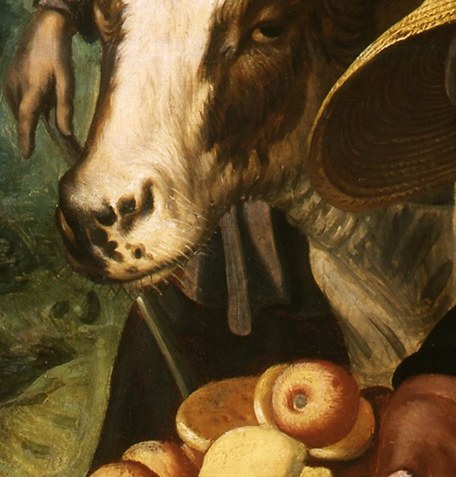
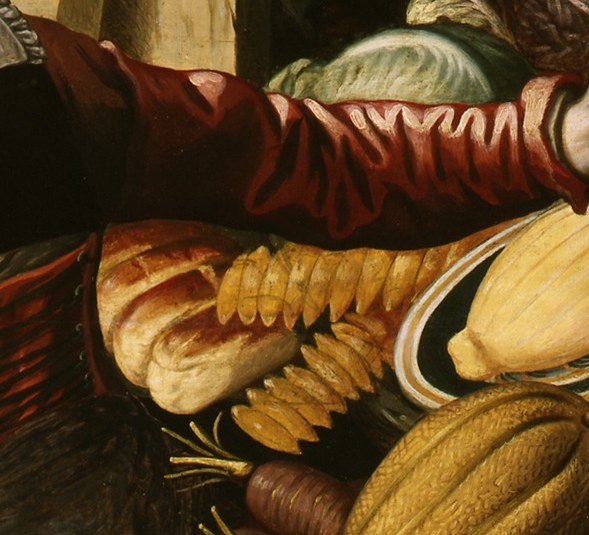
The produce itself is a map of 16th-century global trade. The lemons and citrus pile are not Dutch; they arrived through the bustling ports of Antwerp, luxury goods from the Mediterranean rendered with near-scientific precision. The waffle-patterned cakes and humble cauliflower anchor the scene in local, vernacular life, creating a tension between the every day and the exotic.
Active in Amsterdam and Antwerp, Aertsen laid the groundwork for Flemish Baroque and the independent still life genre. Next time you see a painting of a lavish table, you can trace its roots back to this woman's quiet stall. What would a market scene look like if you painted one today?
Details
Transcript
She looks like a simple vegetable seller. But her stall holds a secret. Tucked in the background: a tiny religious scene. Aertsen deliberately pushed the sacred aside for the everyday. Those lemons are not local. They came through Antwerp's ports. In the 1560s, a single lemon was a luxury import. His genius was making the mundane monumental.