The Virgin Reading by Carpaccio, Vittore
Vittore Carpaccio's "The Virgin Reading," painted around 1505, is a serene portrayal of the Virgin Mary, now housed at a notable museum. This oil painting, originally on panel, invites viewers into a moment of quiet contemplation.
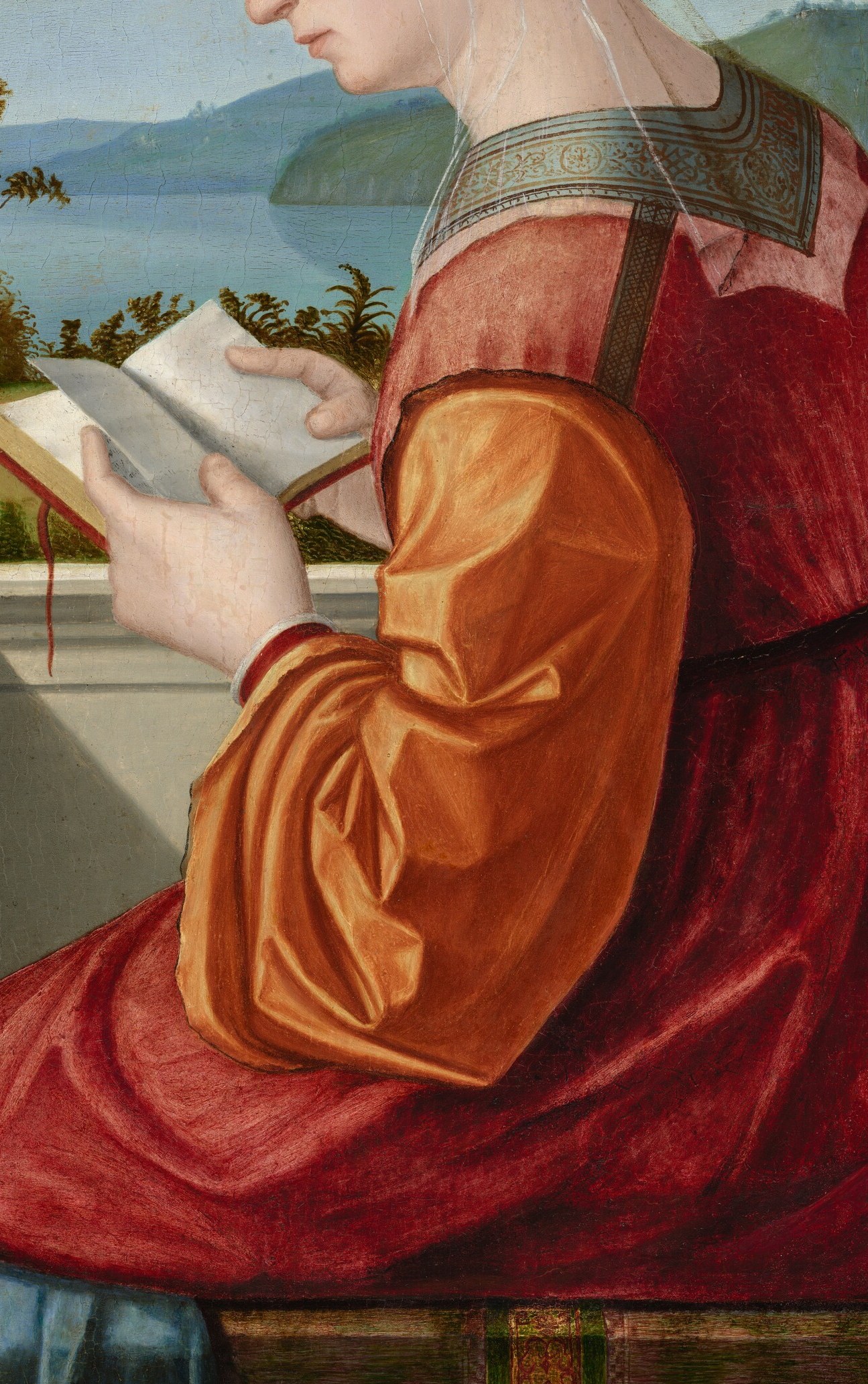
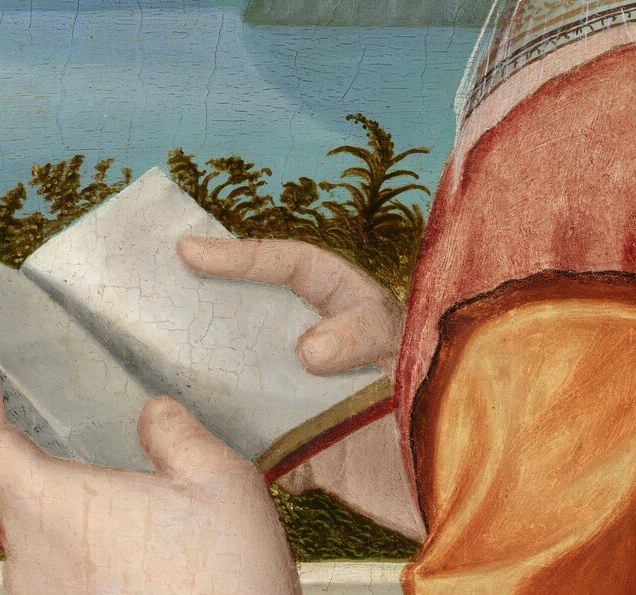
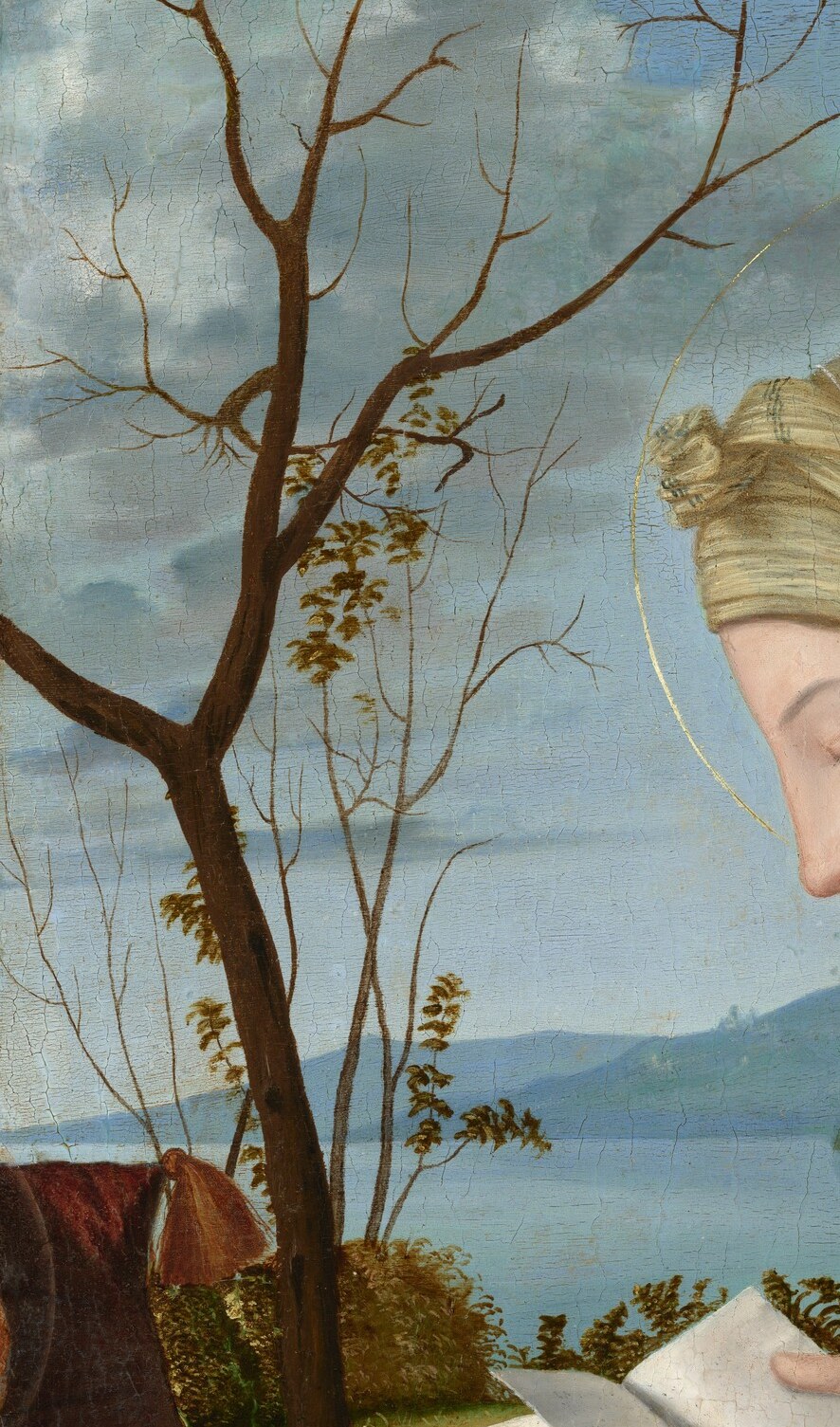
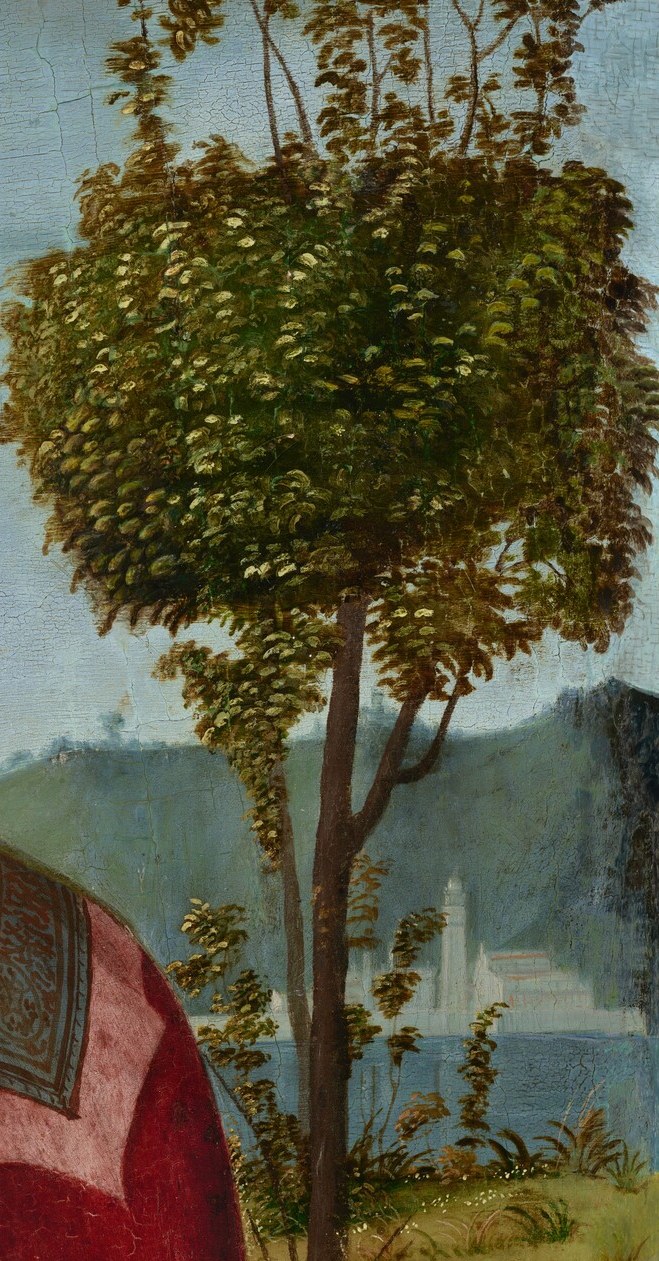
Observe Mary's subtle halo, a traditional indicator of her divine nature. Her engrossed reading emphasizes her piety and inner spiritual life, a recurring theme in Renaissance art. Look closer at the landscape in the background; a bare tree stands in stark contrast to a lush, green one. This visual juxtaposition often symbolizes the cycles of life and death, or perhaps the transition from old testament to new, common in Venetian symbolism of the period.
Carpaccio, a student of Gentile Bellini, was known for his precise detail and thoughtful compositions. His style blended influences from Northern European painting with the vibrant artistic traditions of Venice. This work exemplifies his ability to convey deep meaning through careful artistic choices, making it more than just a depiction but a narrative in itself.
What other subtle messages do you see hidden in the details of this painting?
Details
Transcript
This is the Virgin Mary, deep in thought. Her subtle halo indicates her divine status. She reads, an act of piety central to her story. Beyond, a bare tree may symbolize mortality. Across from it, a lush tree suggests life and abundance. This painter often wove rich symbolism into his art.