The Adoration of the Magi by Benvenuto di Giovanni
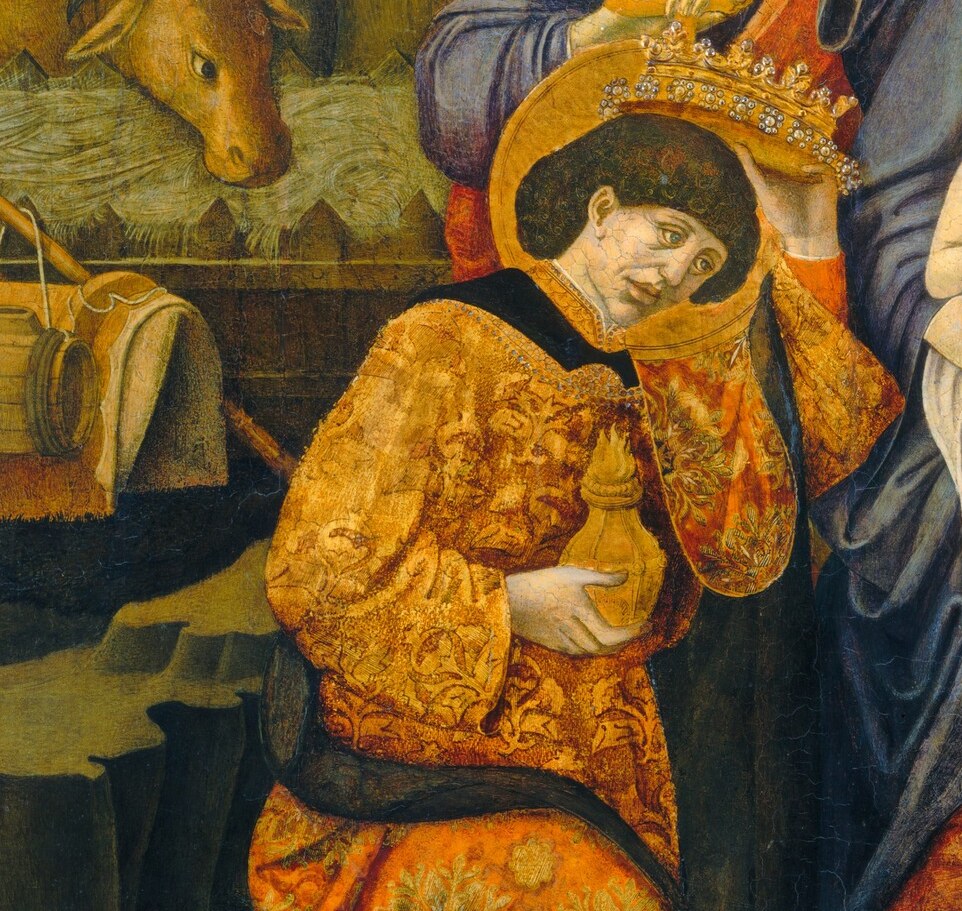
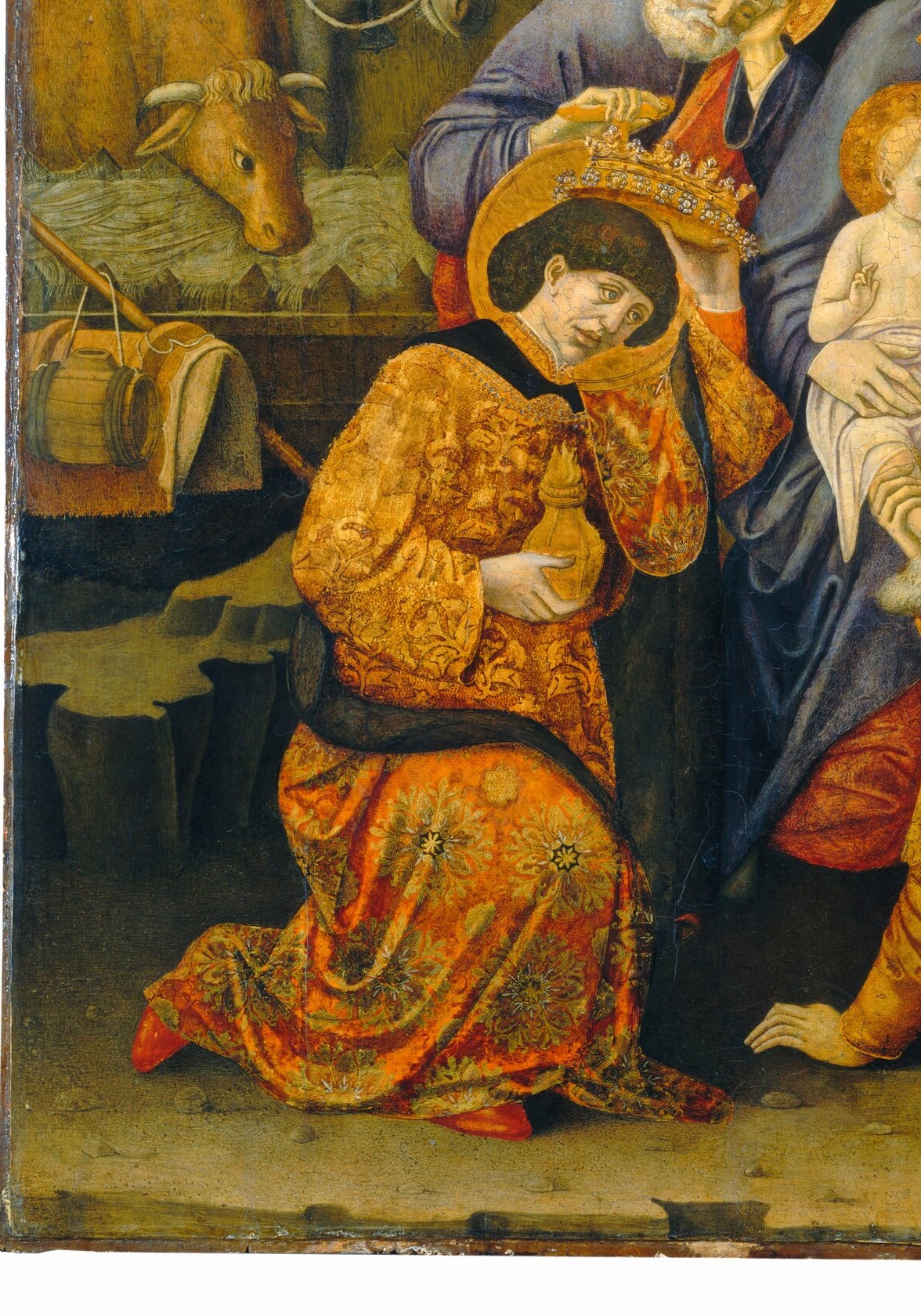
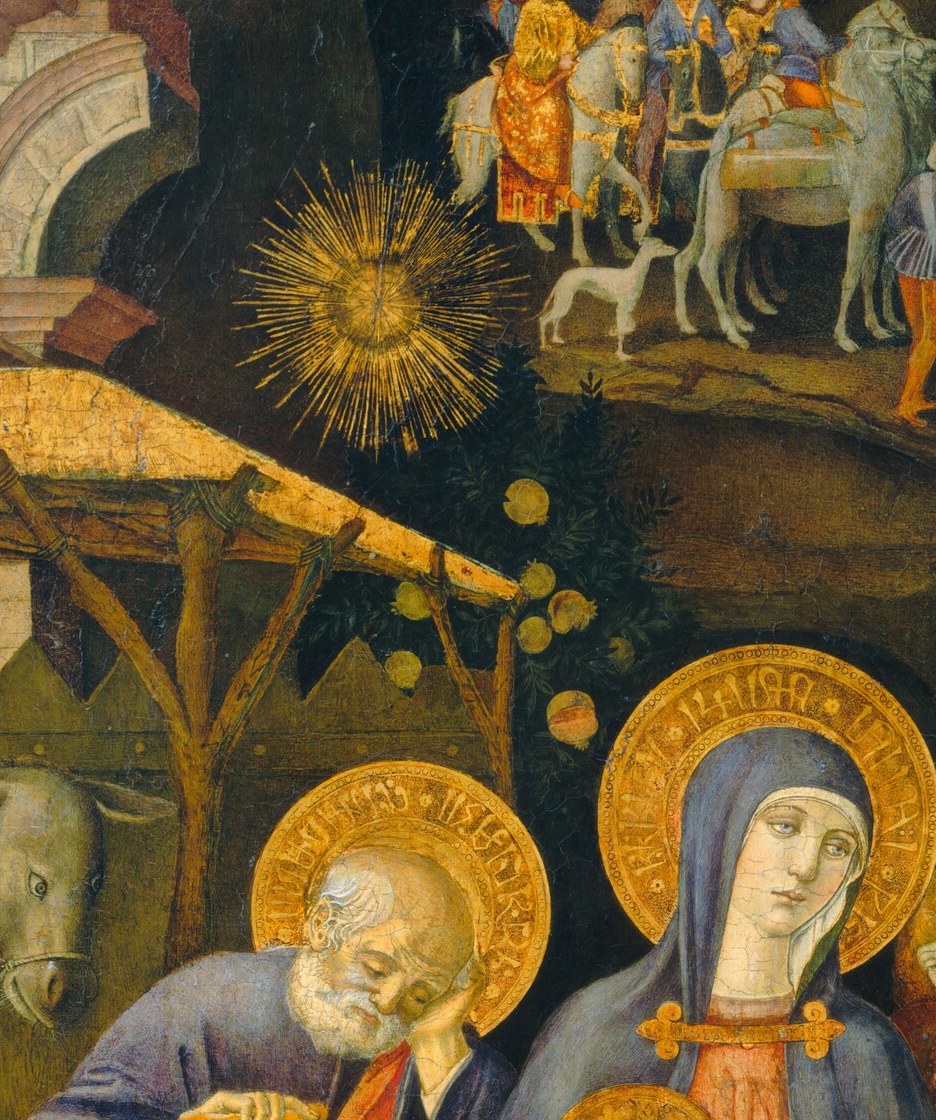
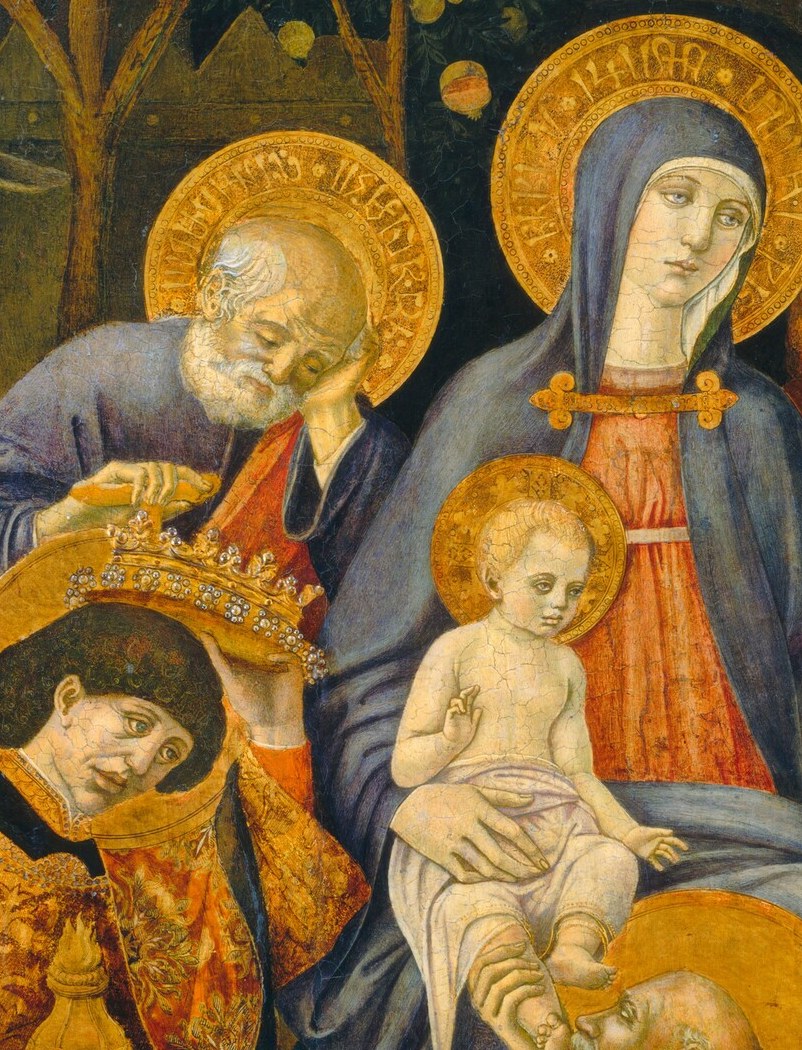
This is "The Adoration of the Magi," painted around 1475 by the Sienese artist Benvenuto di Giovanni. At first glance it delivers exactly what an Adoration altarpiece should: three kings kneeling before the newborn Christ, attended by a courtly retinue in a landscape that traces their journey from a walled city to the humble stable.
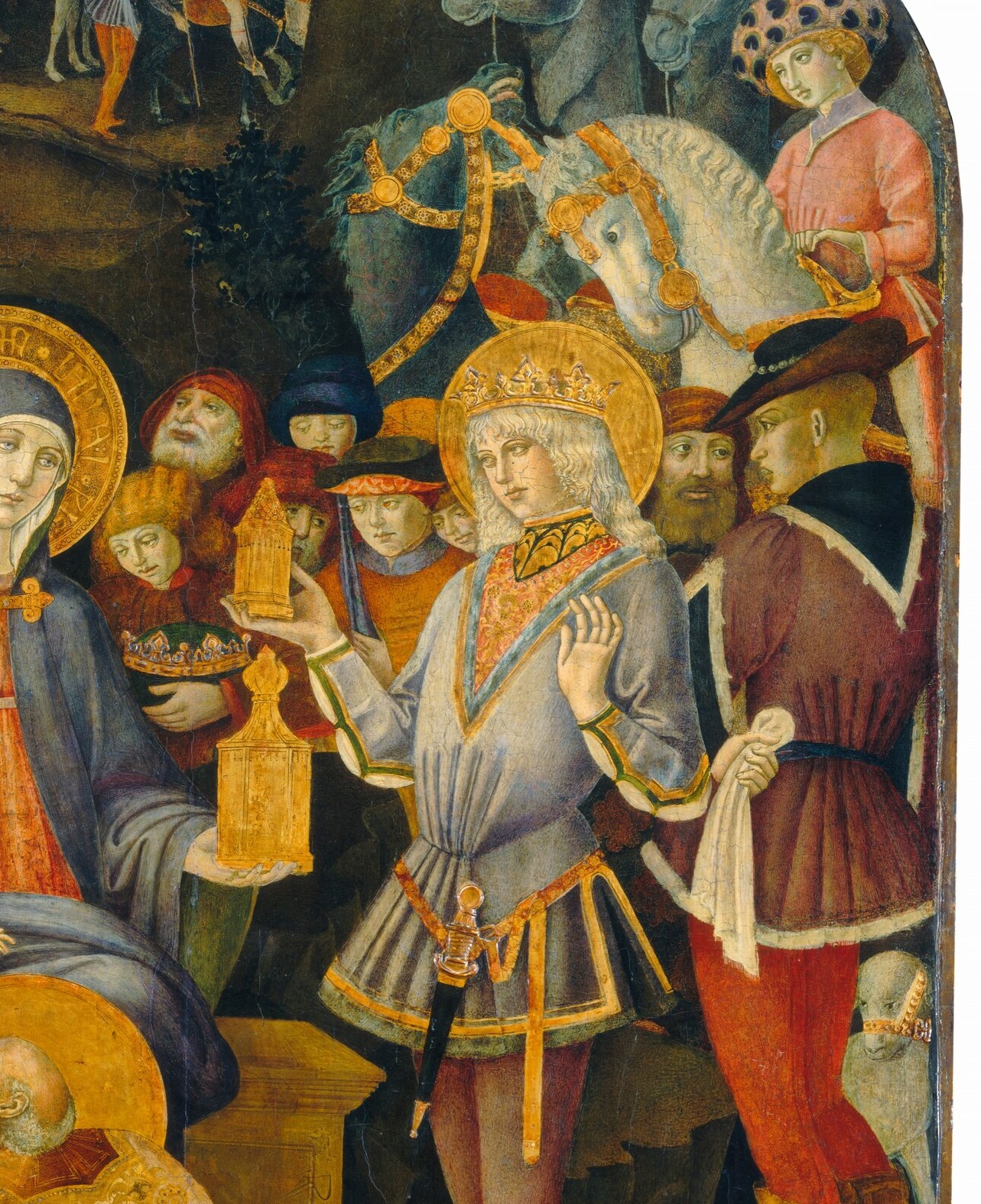
Look at the cluster of standing attendants behind the gift exchange. Most faces obey the conventions of a sacred scene, they look toward the holy child, or downward in reverence. But one man, near the center of the crowd, does not. His head is turned, and his gaze lands directly on the viewer.
This is startling. In the visual language of a 15th-century altarpiece, a direct outward stare was a specific device, reserved for donor portraits, or for figures the artist wanted to mark as existing outside the biblical moment. It breaks the fourth wall of devotion and pulls a real person into the painted world.
We do not know for certain who he was. He may be a donor, a patron who paid for the panel and commissioned his own face into the holy scene. Or he may be Benvenuto di Giovanni himself, looking back at us from a crowd of kings and angels. Either way, his is the one pair of eyes in the painting that will not let you look past them.
Details
Transcript
Three kings have come to kneel before a newborn. Gold, frankincense, myrrh. The costliest things they own. This is a Sienese altarpiece from around 1475. Now look past the kings, into the middle of the crowd. One man is not looking at the holy child at all. He looks straight out, at us. A direct gaze in an Adoration scene breaks every rule of the genre.