Commodore Thomas Macdonough by Stuart, Gilbert
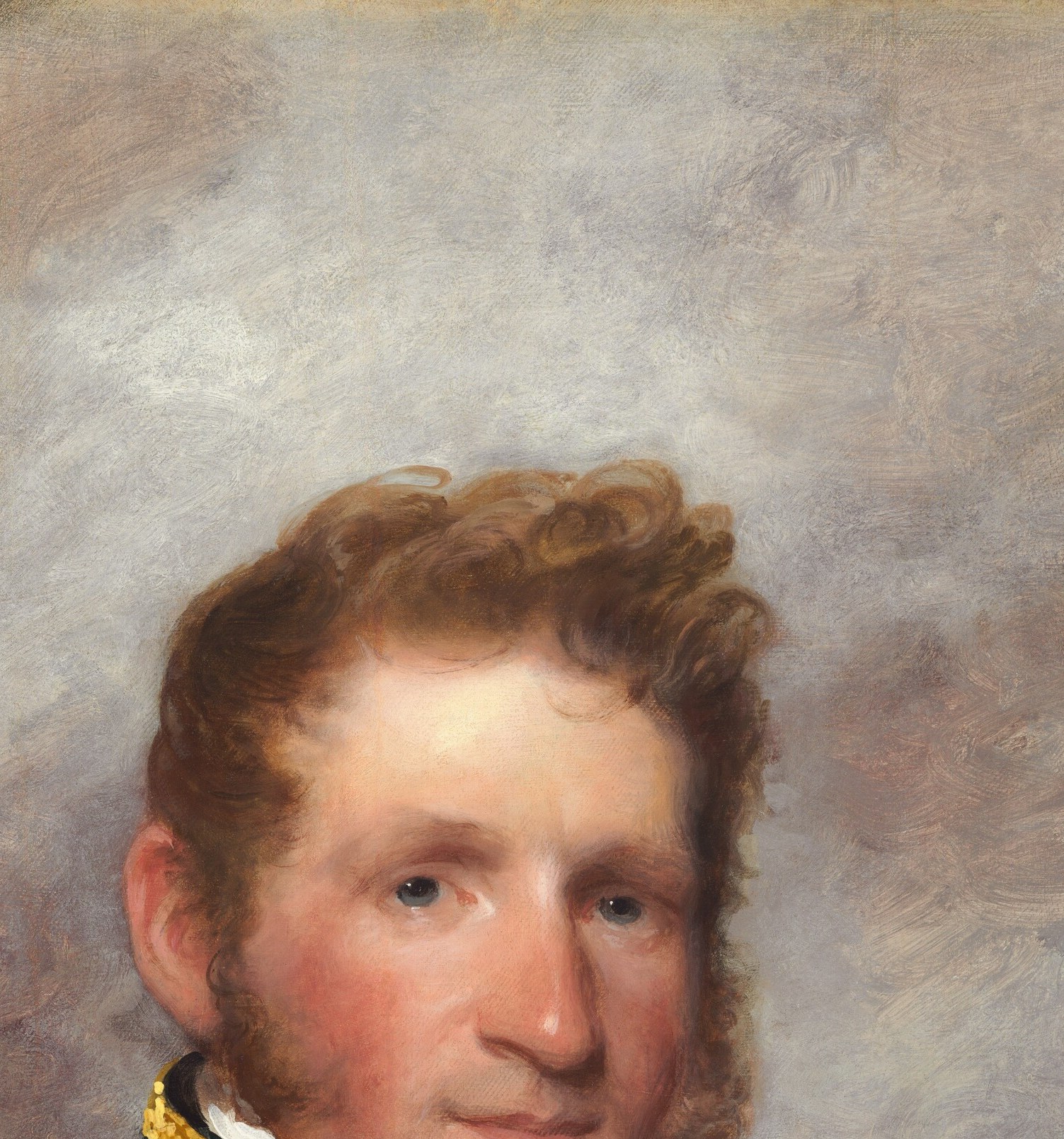
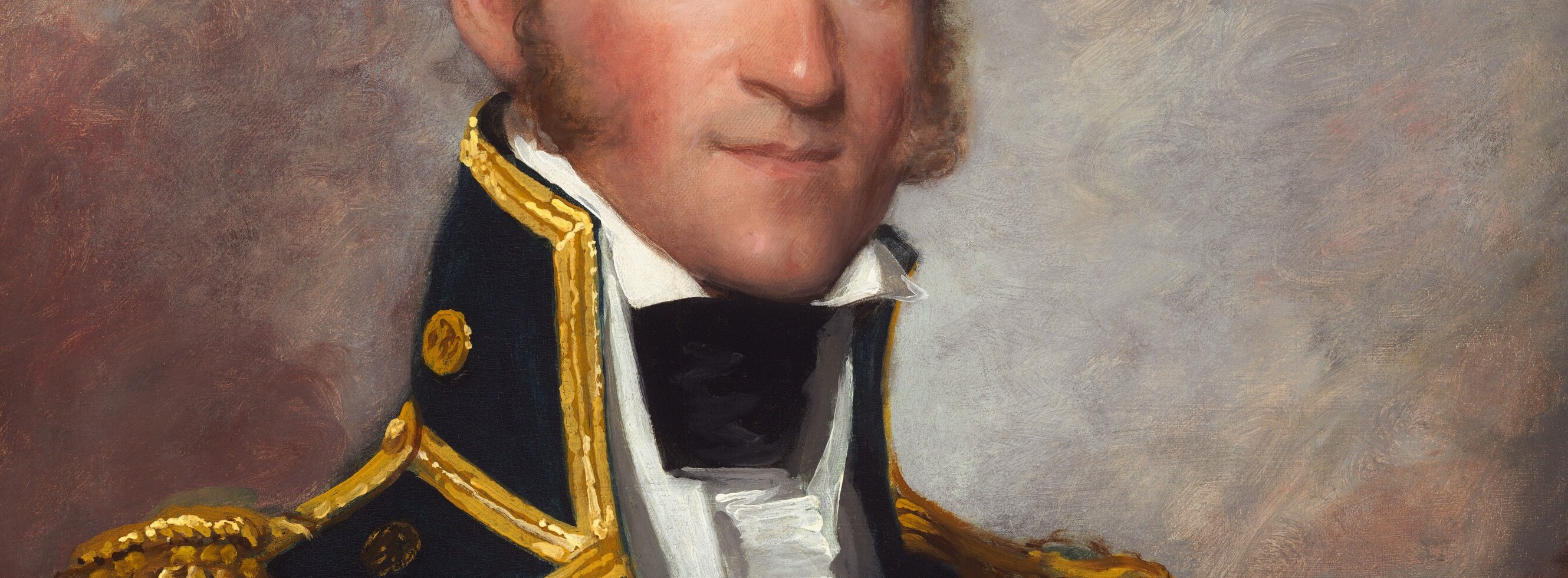
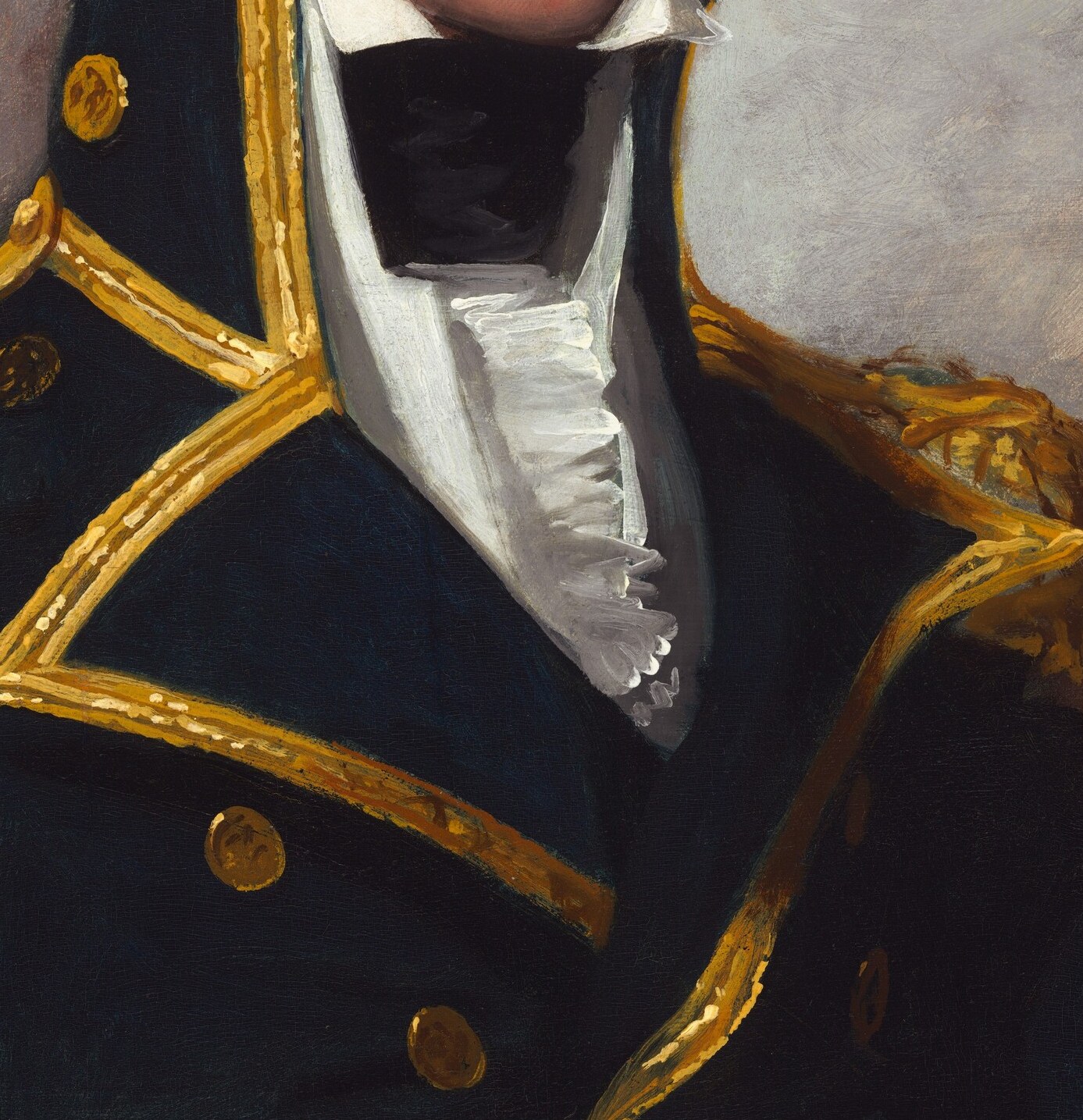
This is *Commodore Thomas Macdonough* by Gilbert Stuart, painted around 1815 to 1818 and now in the collection of the National Gallery of Art. Stuart was the preeminent portraitist of early America, famous for painting George Washington more than a hundred times. What makes his work so deceptive is the sheer economy of his brushwork, from a normal viewing distance, you see heavy gold braid and gleaming epaulettes; step closer and the illusion collapses into a few swift marks.
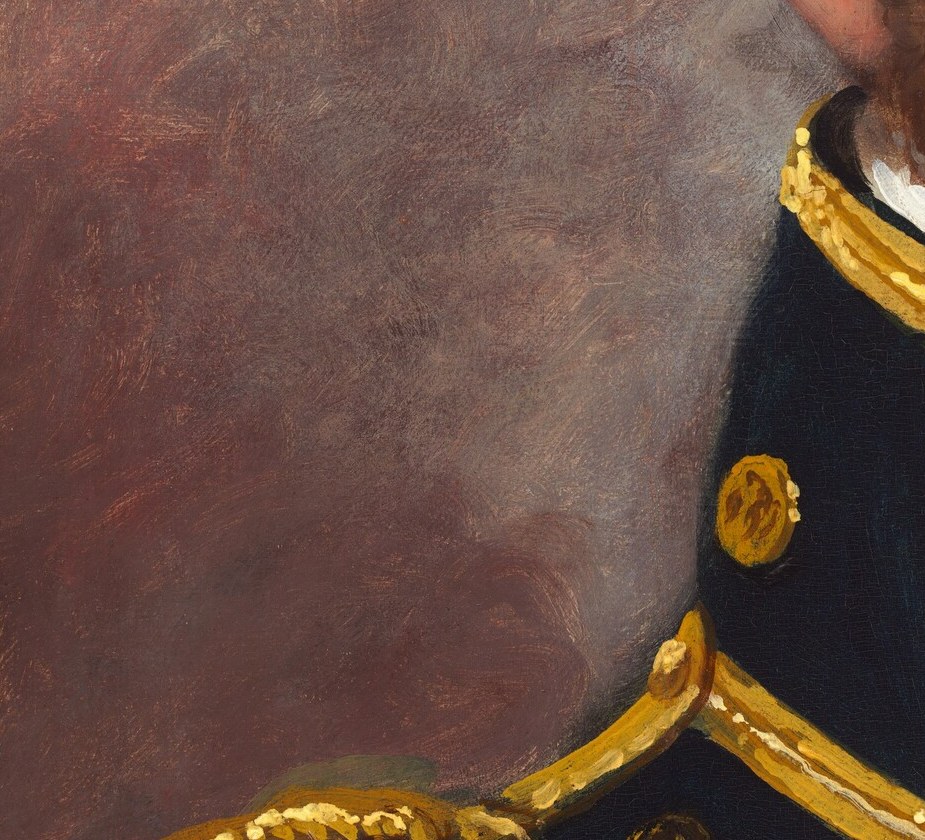
Look directly at the gold trim on Macdonough's chest and shoulders. The eye assembles intricate embroidery out of thick, casual strokes of ochre and white lead. The dangling fringe on the left epaulette is the best example: it is virtually nothing but a few confident commas of paint, yet it catches the light exactly right. Stuart painted the face last and the eyes most luminously, drawing you back to the man while the uniform performs its trick from the periphery.
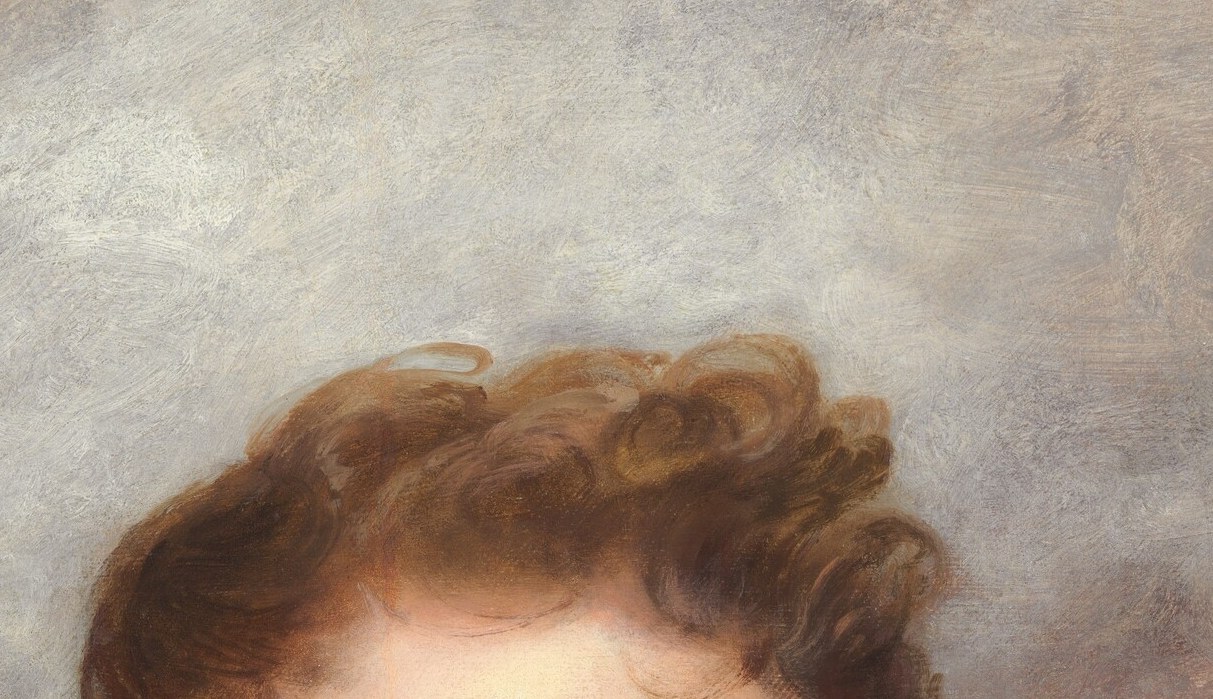
Thomas Macdonough was a genuine naval hero, the victor of the Battle of Plattsburgh during the War of 1812, which stopped a British invasion from Canada. This portrait was painted at the height of his fame, likely in Boston, where Stuart worked almost to his death in 1828. Macdonough's health declined soon after, and he died at sea in 1825 at the age of 41. The turbulent sky behind him does not depict a specific battle, but it frames him as a man shaped by storm and salt air.
Stuart never finished a painting he could not let go of, he would scrape it down and start again. The bravura shorthand in this uniform was earned through decades of that relentless economy. The next time you see a formal portrait with heavy gold decoration, ask yourself how much paint is really on the panel.
Details
Transcript
He looks like a man of solid gold authority. The epaulettes signal his senior naval rank instantly. From a distance, you see heavy, glinting braid. But Stuart worked with astonishing economy. Up close, the trim dissolves into loose, gestural flicks of paint. Thick ochre and a single stroke of white becomes solid gold. The dangling fringe is nothing but a few confident commas. A painter who understood that less is more, a century before the phrase existed.