Triptych with Scenes from the Life of the Virgin by Dieric Bouts
Dieric Bouts's "Triptych with Scenes from the Life of the Virgin," painted around 1445, is an early and significant work by this Early Netherlandish master, now housed in the Museo del Prado in Madrid.
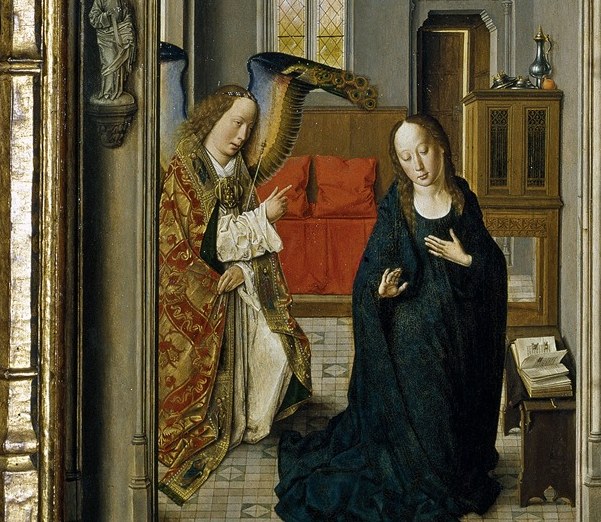
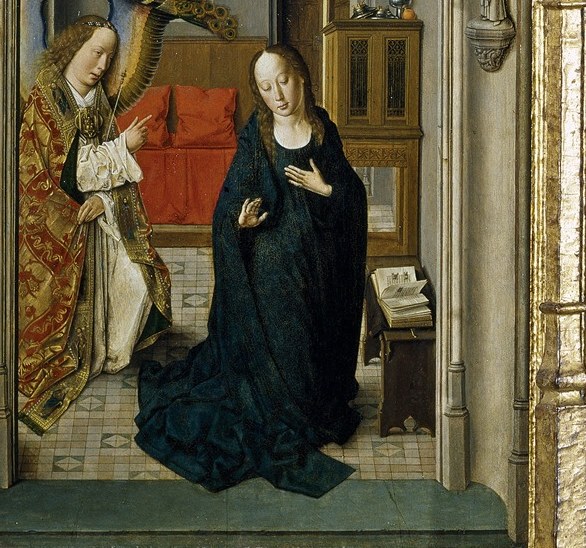
This painting guides the viewer through key moments in the life of Mary, from the Annunciation (left panel) to the Nativity (center) and the Epiphany (right panel). The artist uses rich detail, like Gabriel's iridescent wing or Mary's profound blue robe, to convey spiritual significance.
Bouts was a pioneer in oil painting, allowing for the luminous colors and meticulous textures seen here. As one of his earliest surviving works, it offers crucial insight into the development of his style, showcasing his interest in integrating figures within architectural settings and his observational realism.
The triptych format was typical for private devotion during this period, serving as an aid for contemplation. What details in the painting help you connect with the narrative?
Details
Transcript
This triptych tells stories from the life of the Virgin Mary. Dieric Bouts painted it around 1445, an early work for him. On the left, Gabriel's radiant wing signals a divine message. Her deep blue robe signifies Mary's purity and grace. On the right, the kneeling king acknowledges Christ's divinity. At the center, Mary's clasped hands show deep devotion. Her story is a guide for contemplation and spiritual devotion.