Plaque with Christ Before the High Priest Caiaphas by http://www.wikidata.org/.well-known/genid/7f813a58c61c490314a37f184f74602d
This 12th-century carved plaque, "Plaque with Christ Before the High Priest Caiaphas," is a powerful example of Romanesque art, likely intended for private devotion. It is held in a museum collection as an important artifact of medieval religious expression.
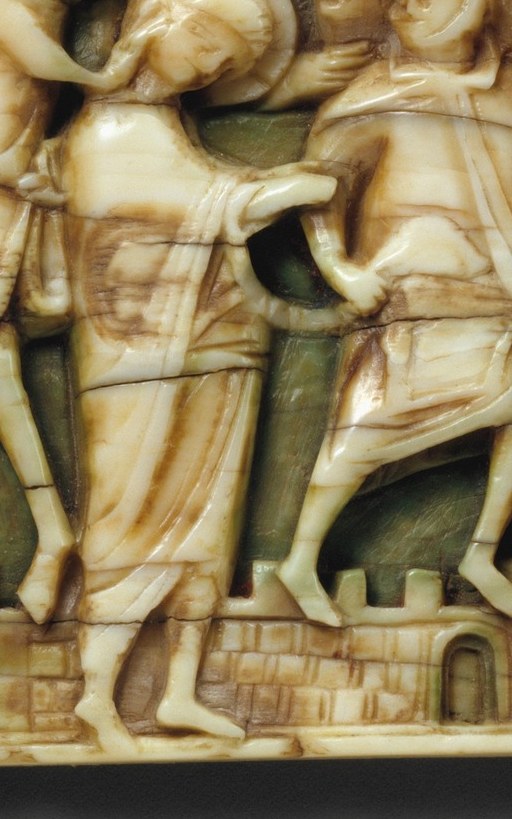
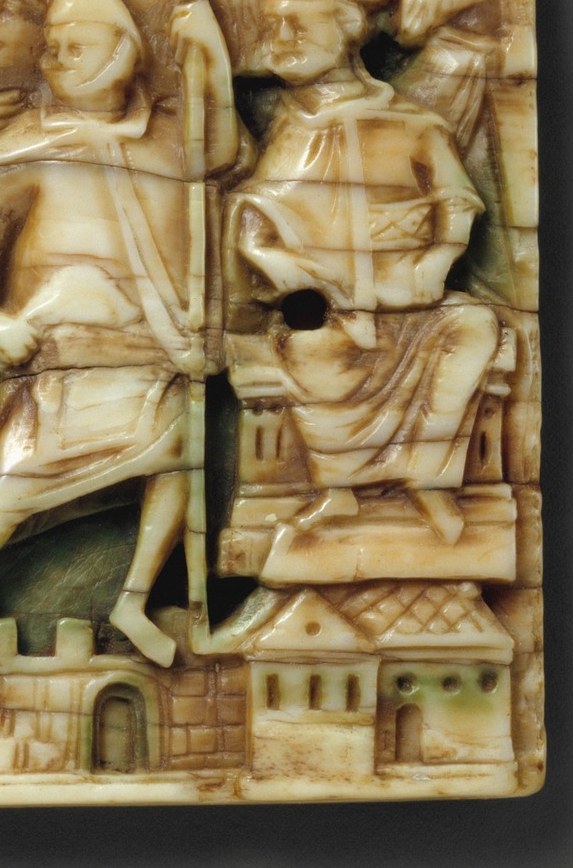
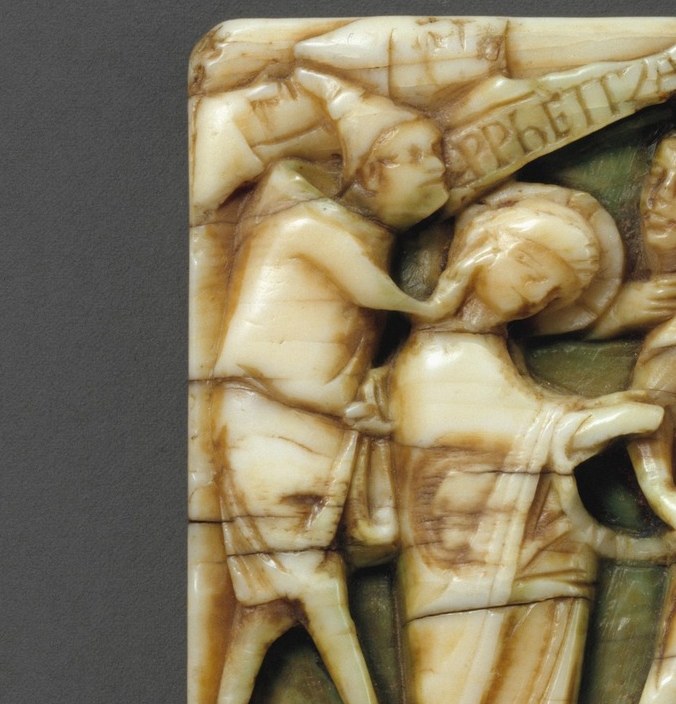
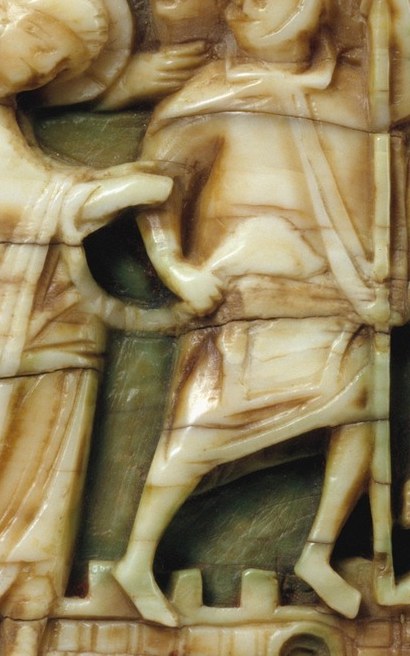
The central scene shows Christ with outstretched arms, facing the High Priest Caiaphas, whose commanding gesture conveys judgment. Surrounding them are other robed figures, representing the Sanhedrin, with postures that suggest a range of emotions, from introspection to apprehension. Despite centuries of wear, the intricate drapery and dense composition remain clear.
Created around 1150, during the flourishing Romanesque period, such plaques were common in Europe. They served as vital visual aids for understanding biblical stories and were often part of larger church furnishings or personal devotional items. The artist's use of shallow relief carving allowed for detailed storytelling in a compact form.
This piece continues to offer a window into the spiritual and artistic practices of the Middle Ages. What emotions do you see in the figures' stances?
Details
Transcript
This 12th-century plaque depicts a pivotal moment. Christ stands before the High Priest Caiaphas. Caiaphas, with a commanding gesture, presides over the trial. The dense crowd of robed figures represents the Sanhedrin. Their varied postures hint at their complex emotions. This shallow relief carving was made for devotion.