John Adams by Stuart, Gilbert
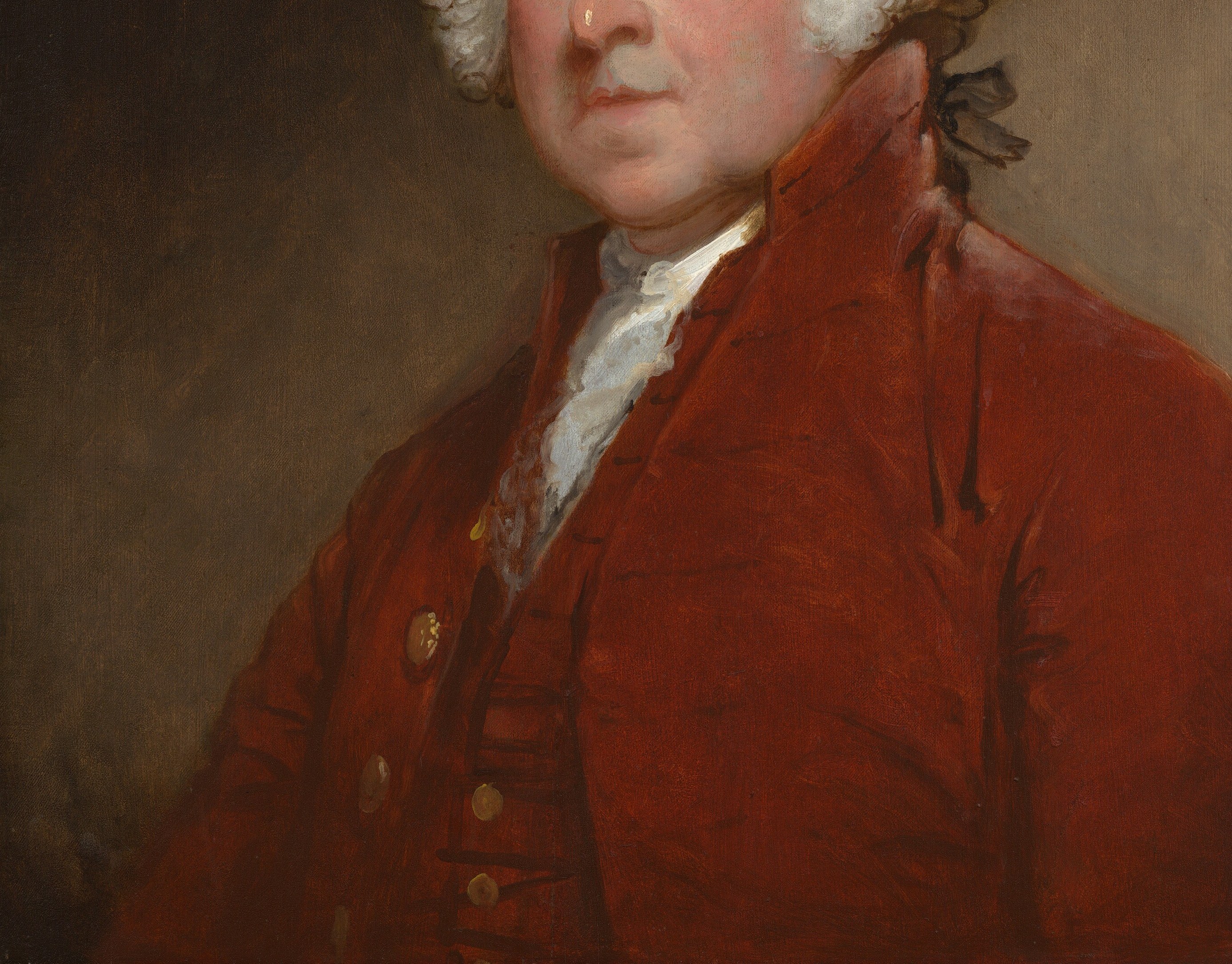
Gilbert Stuart painted this portrait of John Adams around 1821, when the second president was deep into his eighties. It hangs today at the National Gallery of Art in Washington, D.C. The painting is not a presidential likeness from Adams's time in office. It is something more deliberate: an elder statesman defining how he wanted to be remembered.
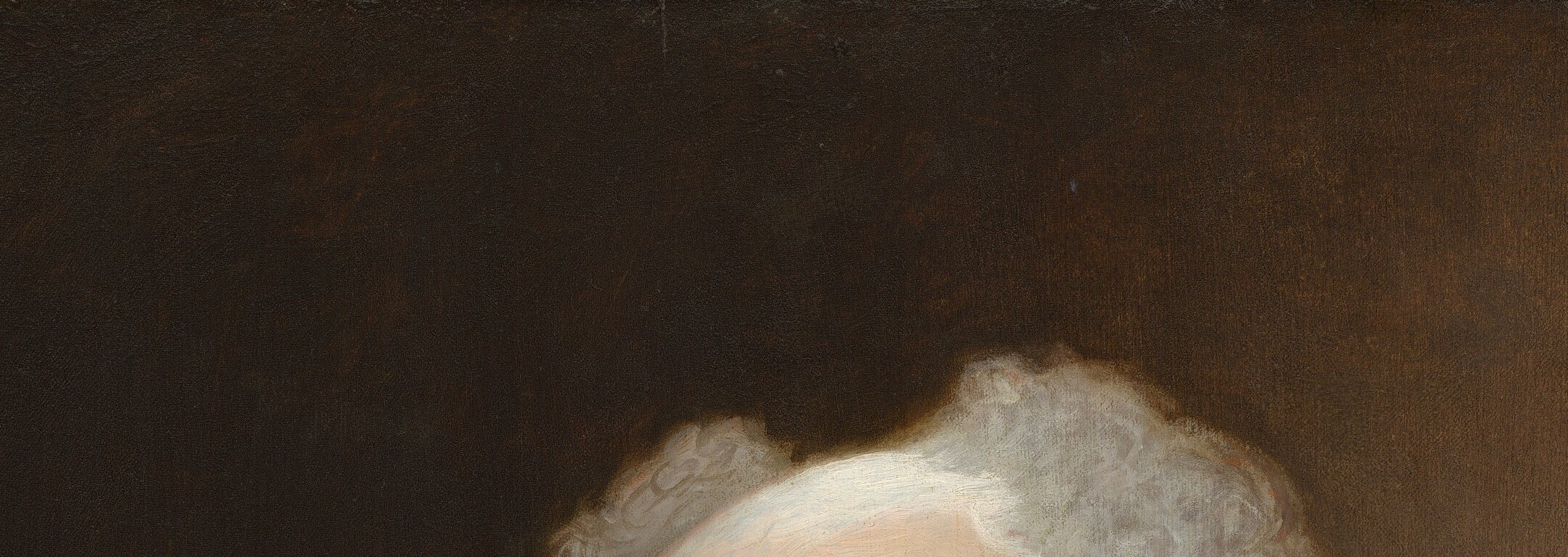
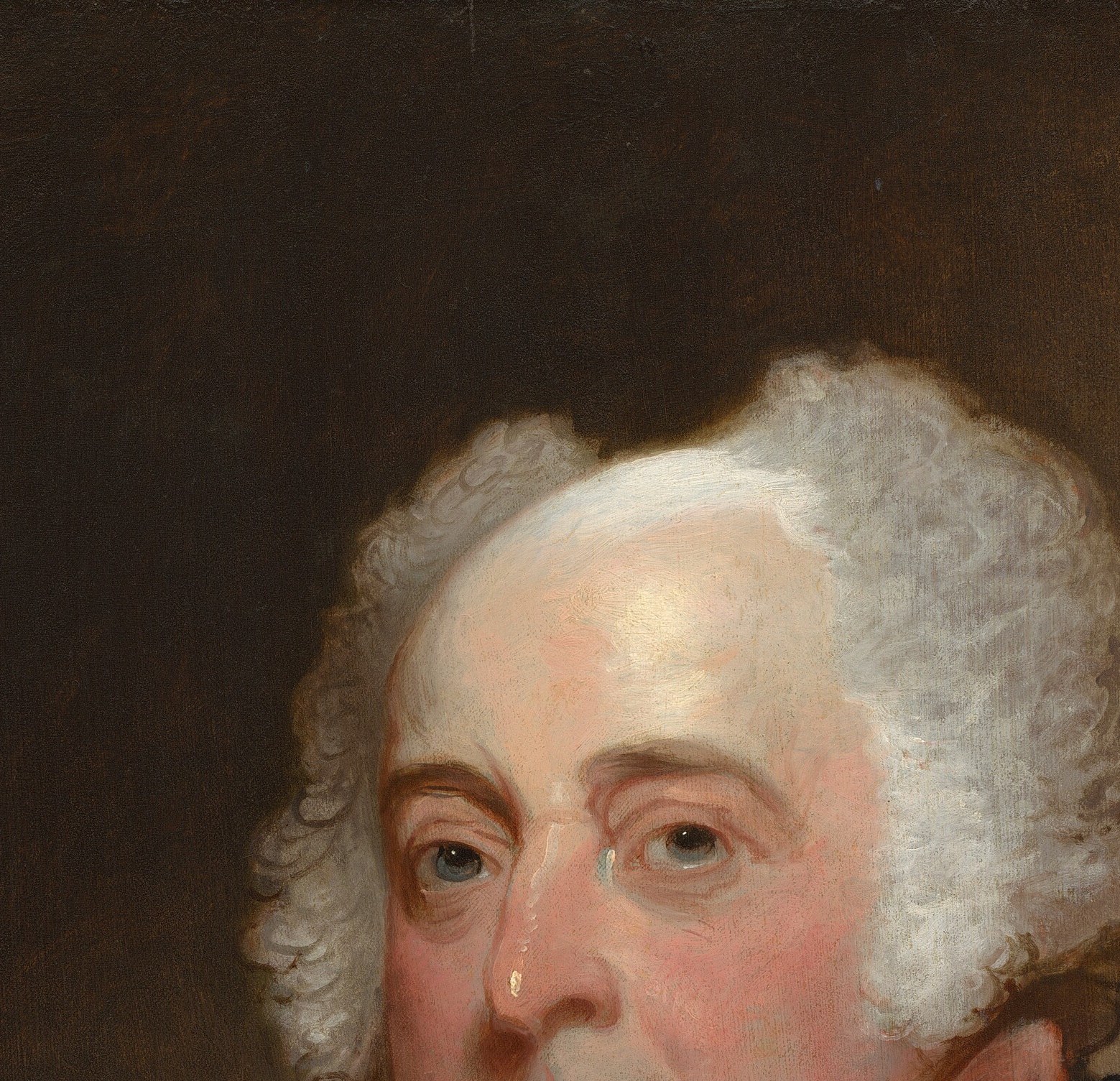
Look at the powdered wig with its side curls. By the 1820s, younger men had long since abandoned the style. Adams kept it. The wig connects him visually to Washington and the revolutionary cohort who wore it at Philadelphia in 1776. He is placing himself inside a founding mythology that was already taking shape in his lifetime.
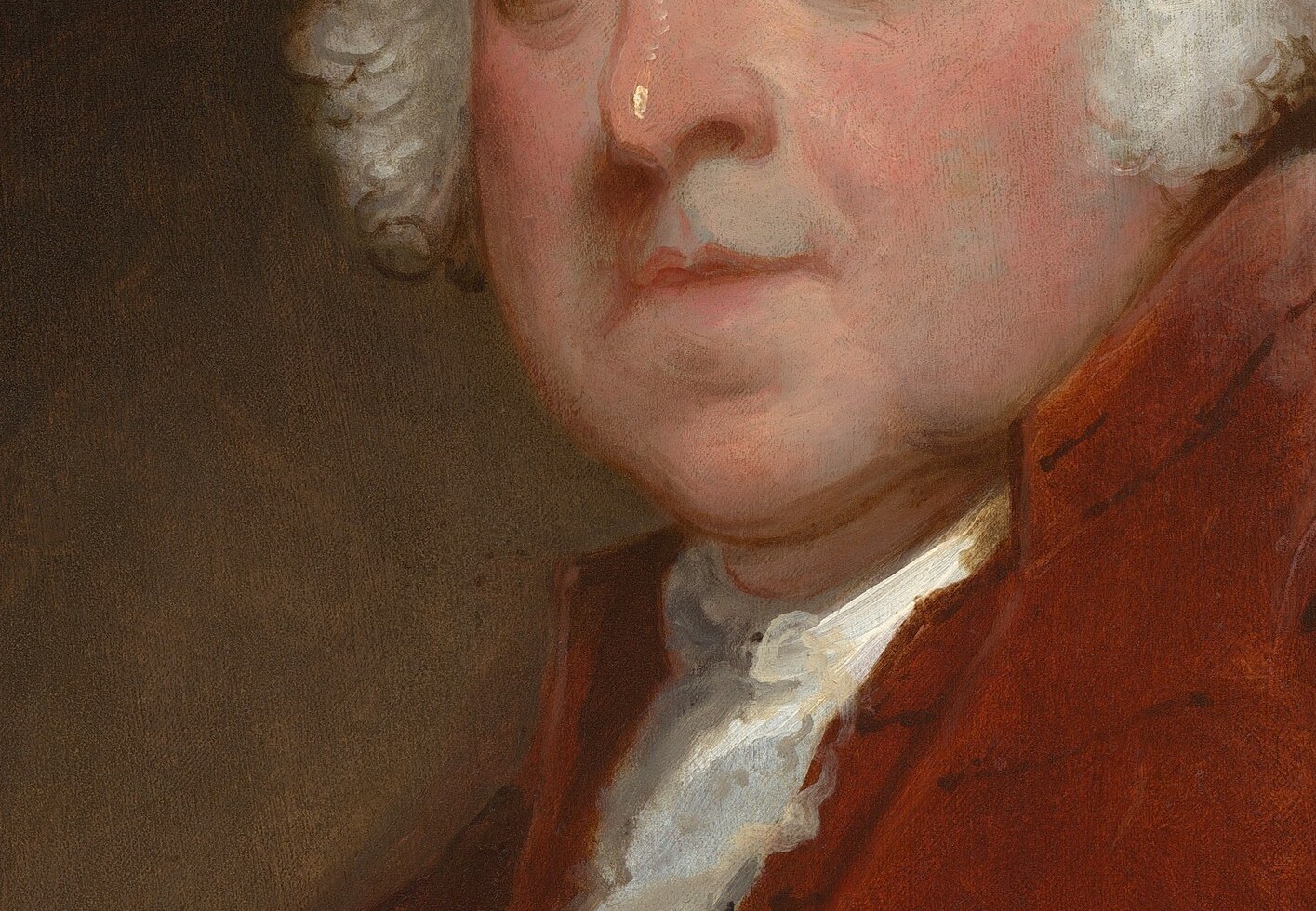
The deep crimson coat creates a productive tension. Red dye was an old English luxury, not an obvious choice for a Massachusetts man who helped break from the Crown. Scholars debate whether the color is aspirational, defiant, or simply Gilbert Stuart's preferred warm tonal ground. Stuart was famously pragmatic: he often finished faces exquisitely and blocked in bodies quickly, and the looser brushwork on the red shoulder suggests exactly that hierarchy.
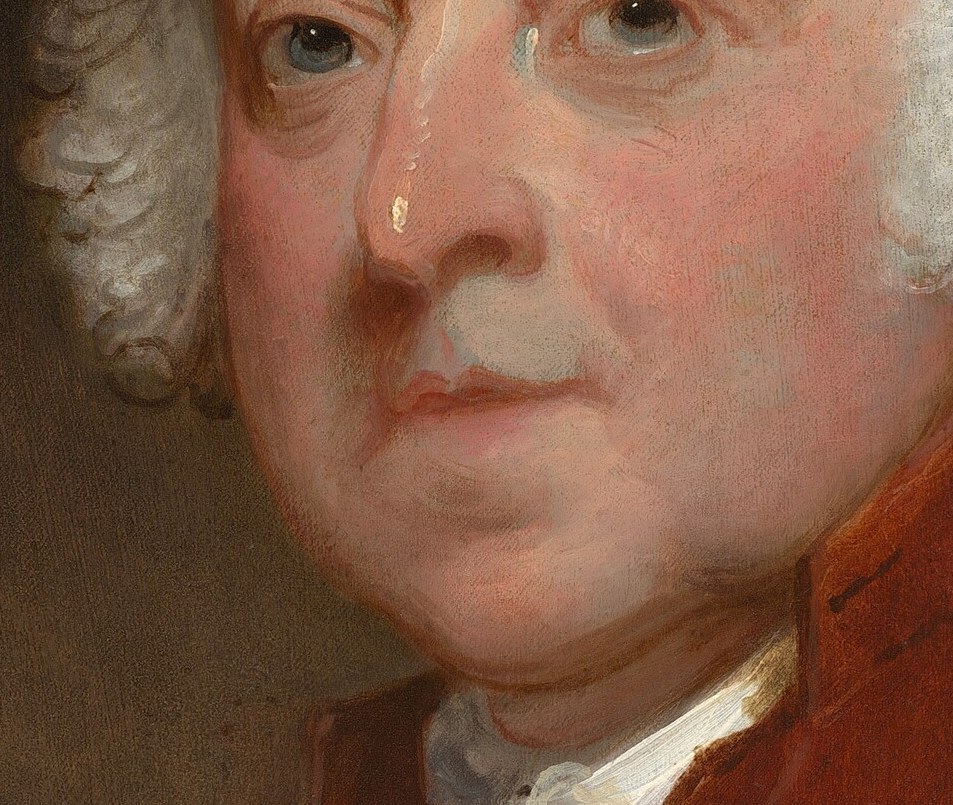
Stuart anchors the composition on the brilliant white cravat, the single brightest note in the frame, then lets Adams's face read against that pure white. The eyes are sharp and asymmetrical: the right eye alert, the left in shadow, a man watching more than being watched. Adams hated sitting for portraits, and the tightly controlled mouth records that impatience without complaint. Together, the dress and the face make a quiet argument: old, republican, and unwilling to vanish.
Details
Transcript
By 1821, powdered wigs were a relic. John Adams wears one anyway. This is not a man who chases fashion. The wig signals allegiance to the founding generation. Now look at the coat. A New England republican in saturated crimson. Red was expensive. It projected English gentry status. The brightest passage in the whole painting is the white cravat. It lifts the face upward: a symbol of moral clarity.