The Crucifixion by Bernardo Daddi
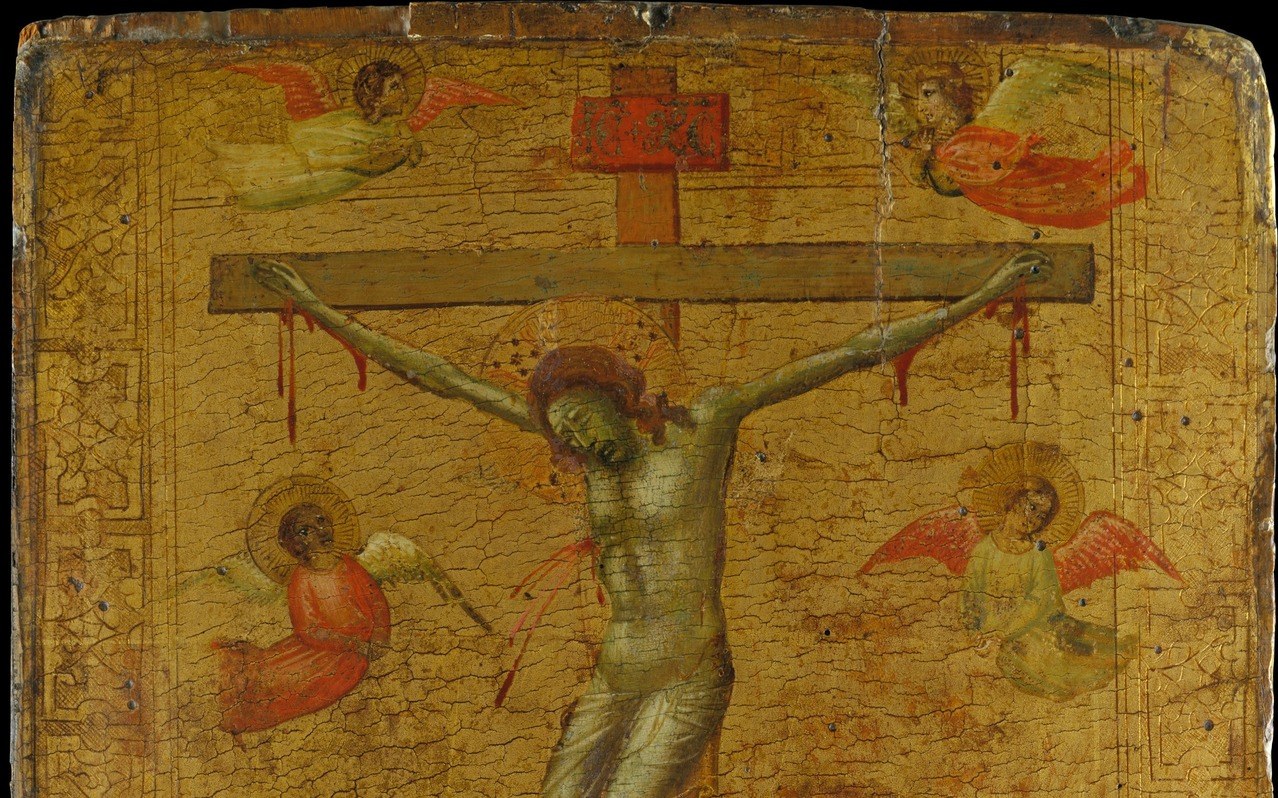
Bernardo Daddi's 'The Crucifixion' (c. 1325), at the Fogg Art Museum, rewards a closer look. While nearly 700 years old, its intricate details still shine through.
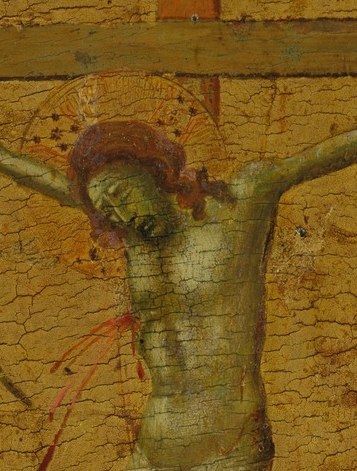
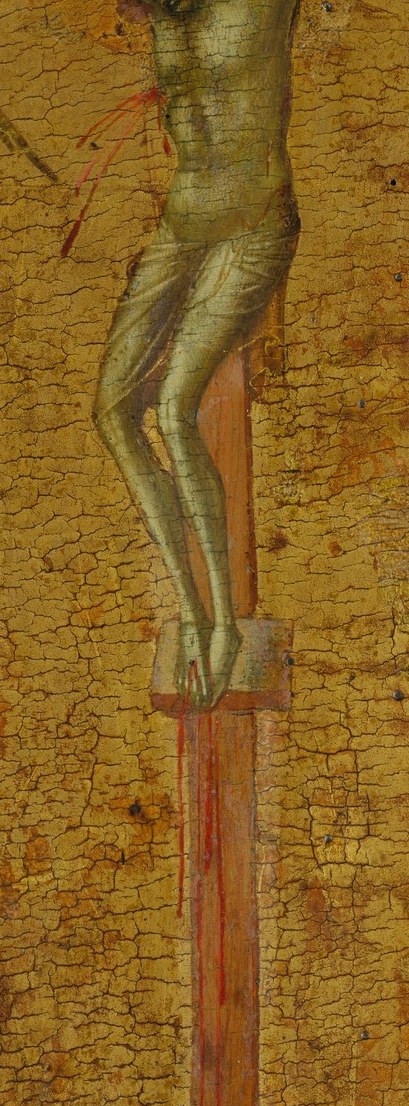
Most viewers notice the figures of Christ, Mary, and St. John. But look at the background: the golden sky is not just painted, but crafted from real gold leaf, painstakingly applied. Then, the artist punched tiny patterns into the gold by hand, a detail almost invisible from a distance.
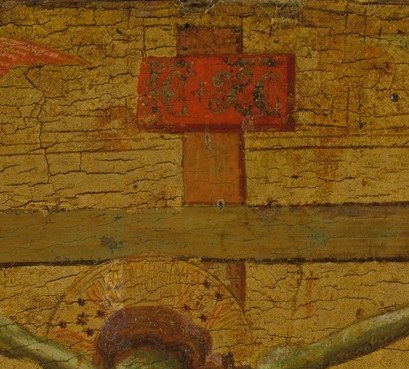
Also, observe the small red tablet above Christ's head. With a keen eye, you can discern faint red letters: INRI. This inscription, meaning 'Jesus of Nazareth, King of the Jews,' was a common feature on crucifixions, but its survival here, almost hidden by time, adds a remarkable layer to Daddi's work.
Daddi was a leading Florentine painter of his generation, celebrated for his ability to merge Giotto's emotional realism with the decorative elegance of earlier styles. What other hidden details do you think ancient paintings might hold?
Details

Transcript
This painting is nearly 700 years old. Notice how the golden background glows. It’s not just gold paint, but real gold leaf. Tiny patterns were punched into the gold, by hand. Look closely at the tablet above his head. Can you see the faint red lettering, INRI?