Madonna and Child with the Infant Saint John by Yáñez de la Almedina, Fernando
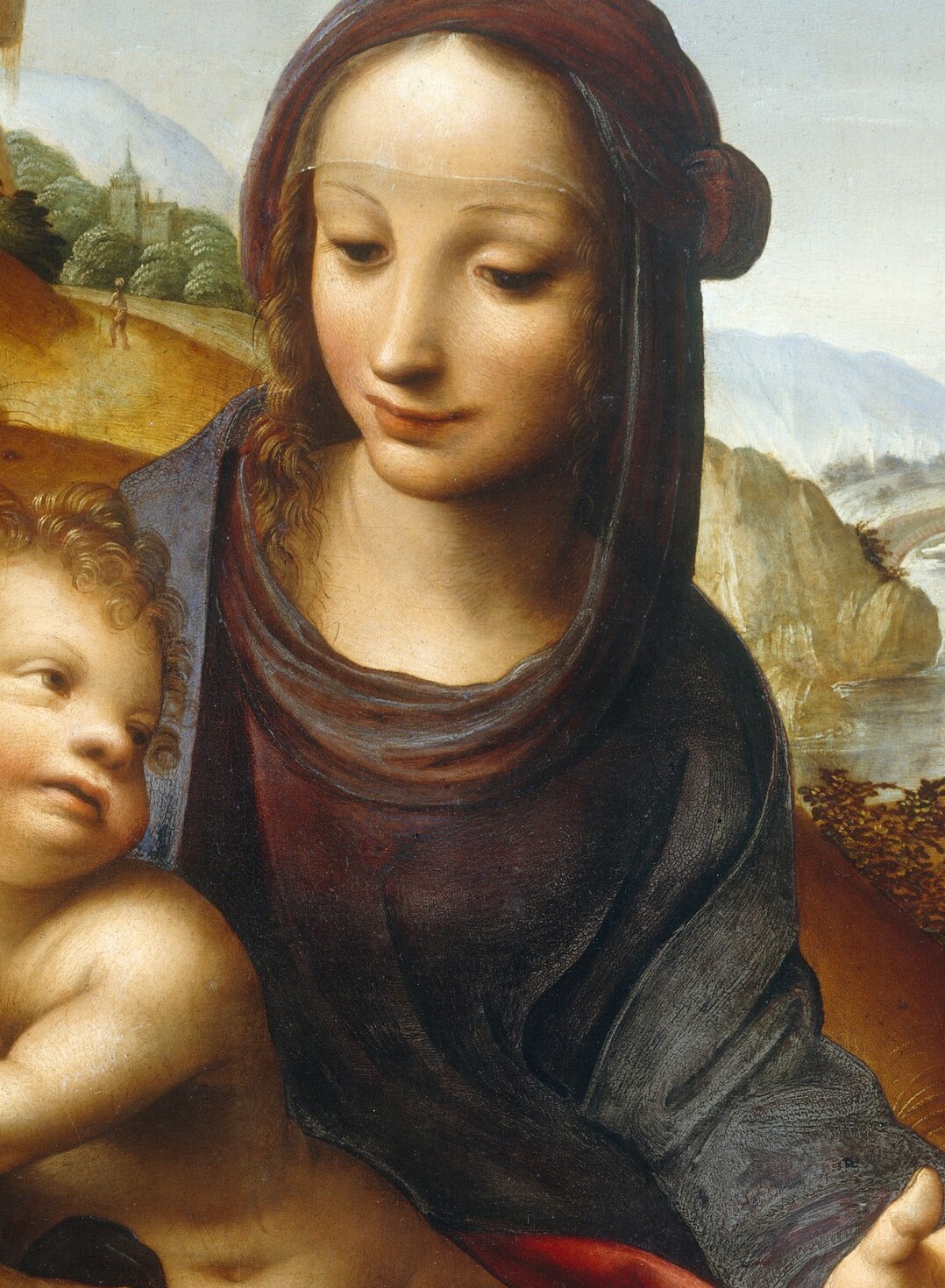
Fernando Yáñez de la Almedina's Madonna and Child with the Infant Saint John, painted around 1505, holds a quiet miracle: it is one of the earliest works to bring Leonardo da Vinci's sfumato technique into Spanish art. The Madonna's face has no hard outlines; light and shadow model her features so softly that she seems to breathe. Yáñez traveled to Italy and studied Leonardo's work directly, then carried that knowledge back to Valencia, where he became a foundational figure of the Spanish Renaissance.
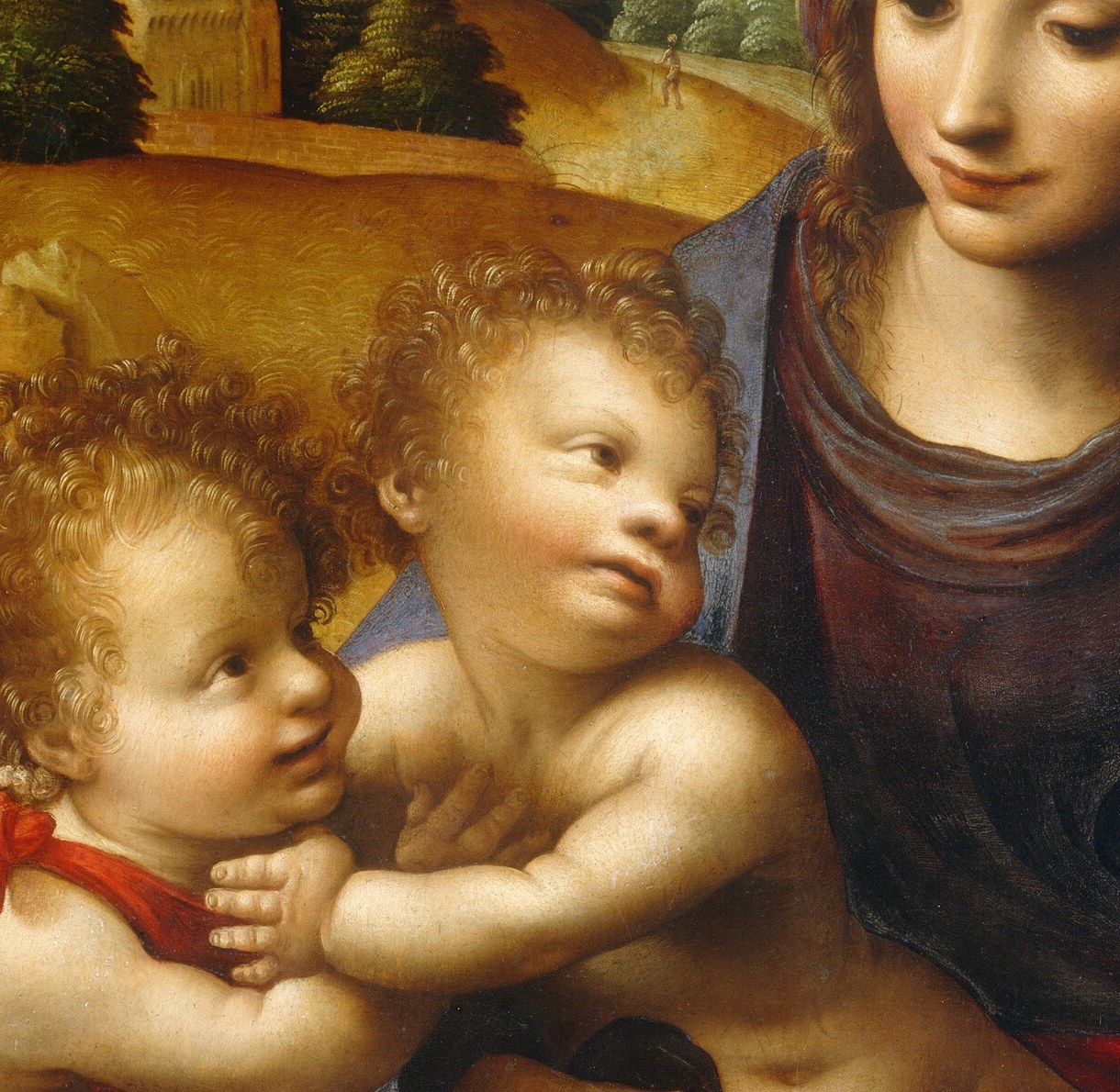
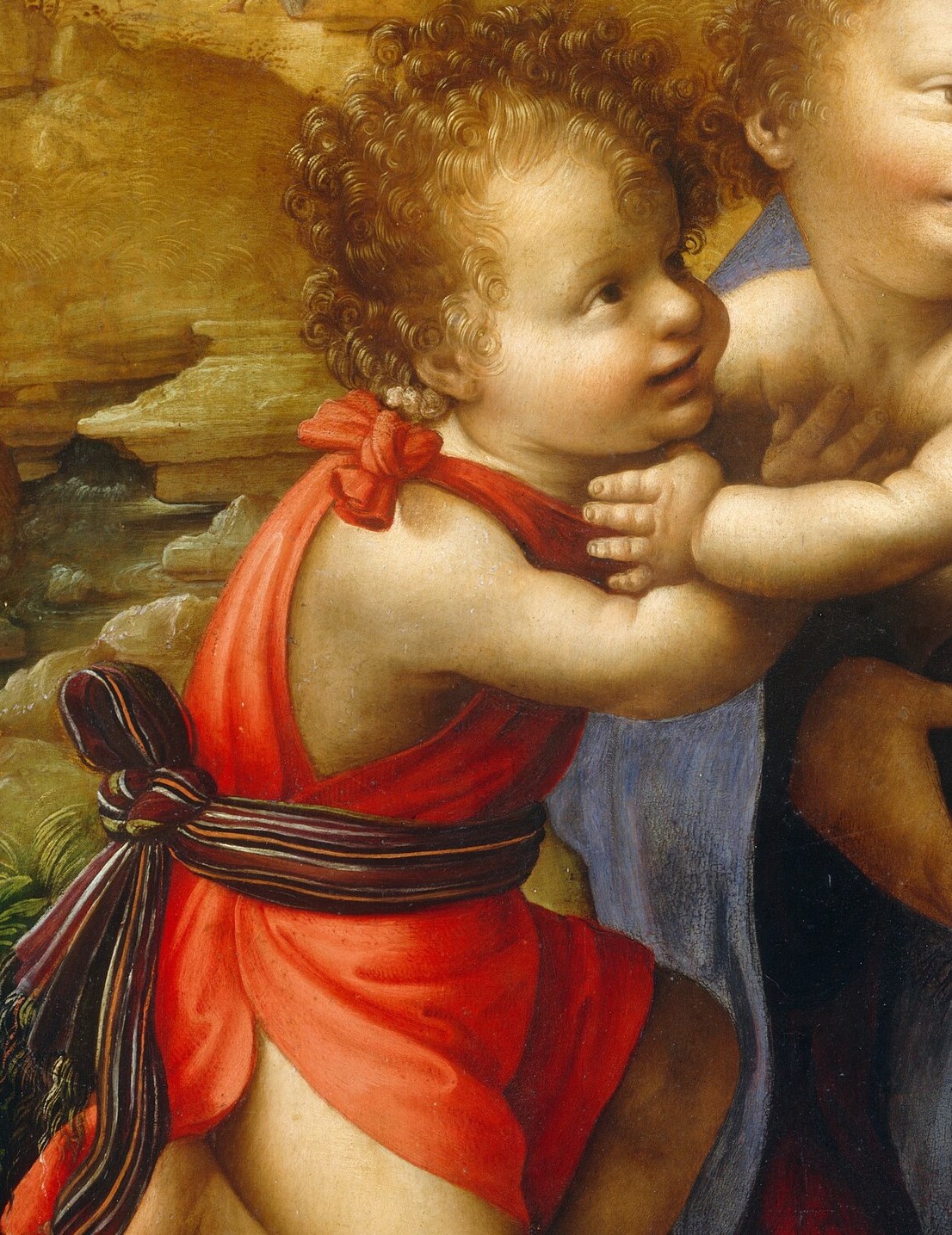
Look first at the Virgin's lowered eyes. Her expression is not vacant serenity but a specific, weighted tenderness, a mother holding a child whose fate she knows. Then let your eye fall to the two infants. The exchange of hands at center frame is the painting's theological engine. John leans in, his upturned face a mirror of the moment he leapt in Elizabeth's womb at Mary's visit. Christ receives him. The whole arc of John's ministry, precursor, baptizer, martyr, is compressed into a single gesture of infant recognition.
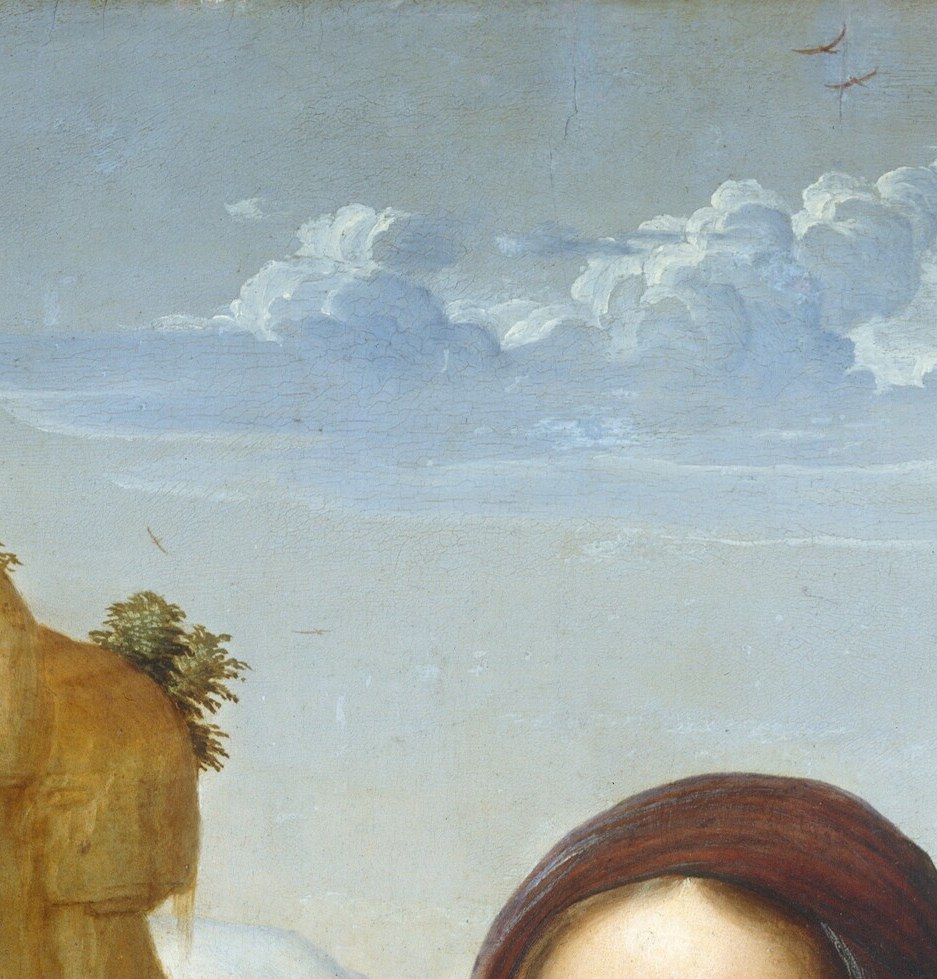
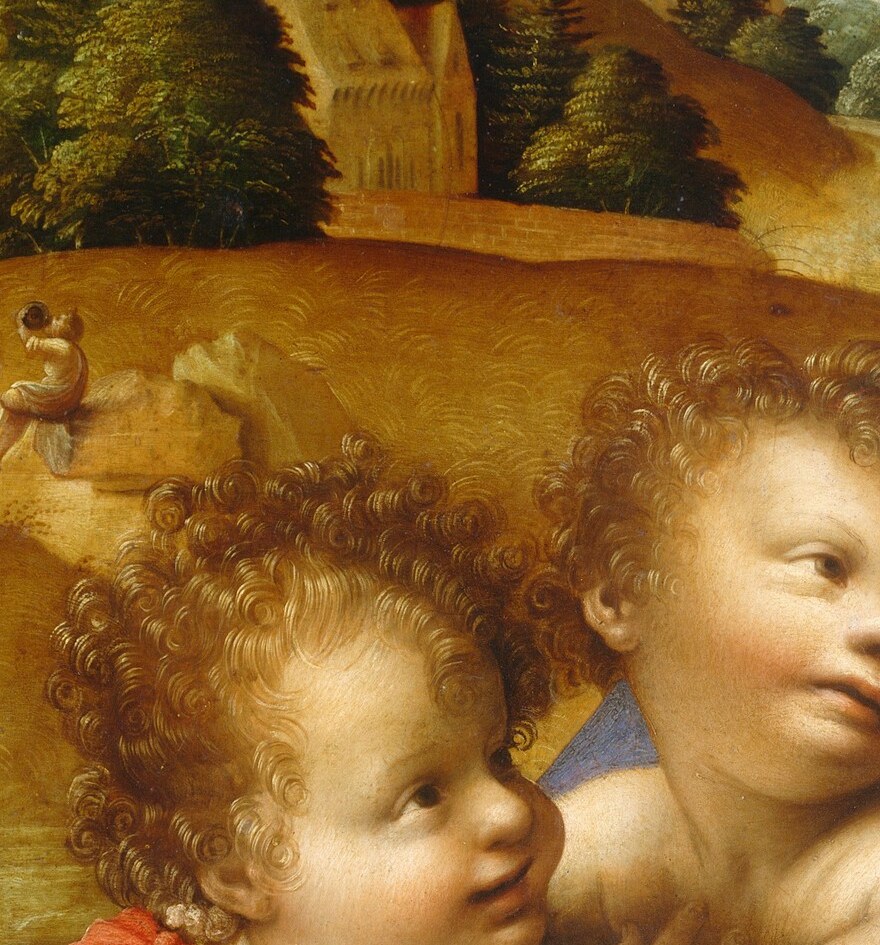
The landscape reinforces the story. Jagged wilderness rock rises behind John, the desert ascetic's future home, while a luminous gap in the sky casts an ambient sacred glow that needs no gold halo. The red drapery on John is the only warm primary color in a cool blue-green world: the martyr's color, placed exactly on the child who will lose his head. The painting is tempera and oil on panel, a mixed technique that let Yáñez build the deep, luminous blues of Mary's mantle and the misty atmospheric recession of the valley, both lessons absorbed from his Italian sojourn.
A Spanish painter went to Italy, stood before Leonardo, and came home to paint a family scene that contains an entire theology in the touch of two children's hands.
Details
Transcript
Her face emerges from shadow with no hard edges. The painter learned this trick in Italy, studying Leonardo. Her downcast eyes already know what lies ahead. Now look at the infants in her lap. One reaches forward, leaning in with urgent recognition. This is John. He recognized Christ even in the womb. His red garment marks the martyr he will become. A family moment holding a complete theology.