Plains Indian by Bradshaw, J.W.
Painted in 1888, "Plains Indian" by J.W. Bradshaw offers a poignant glimpse into the American West. This oil on canvas, housed in a regional collection, captures a moment of heightened public interest in frontier subjects and Native American cultures.
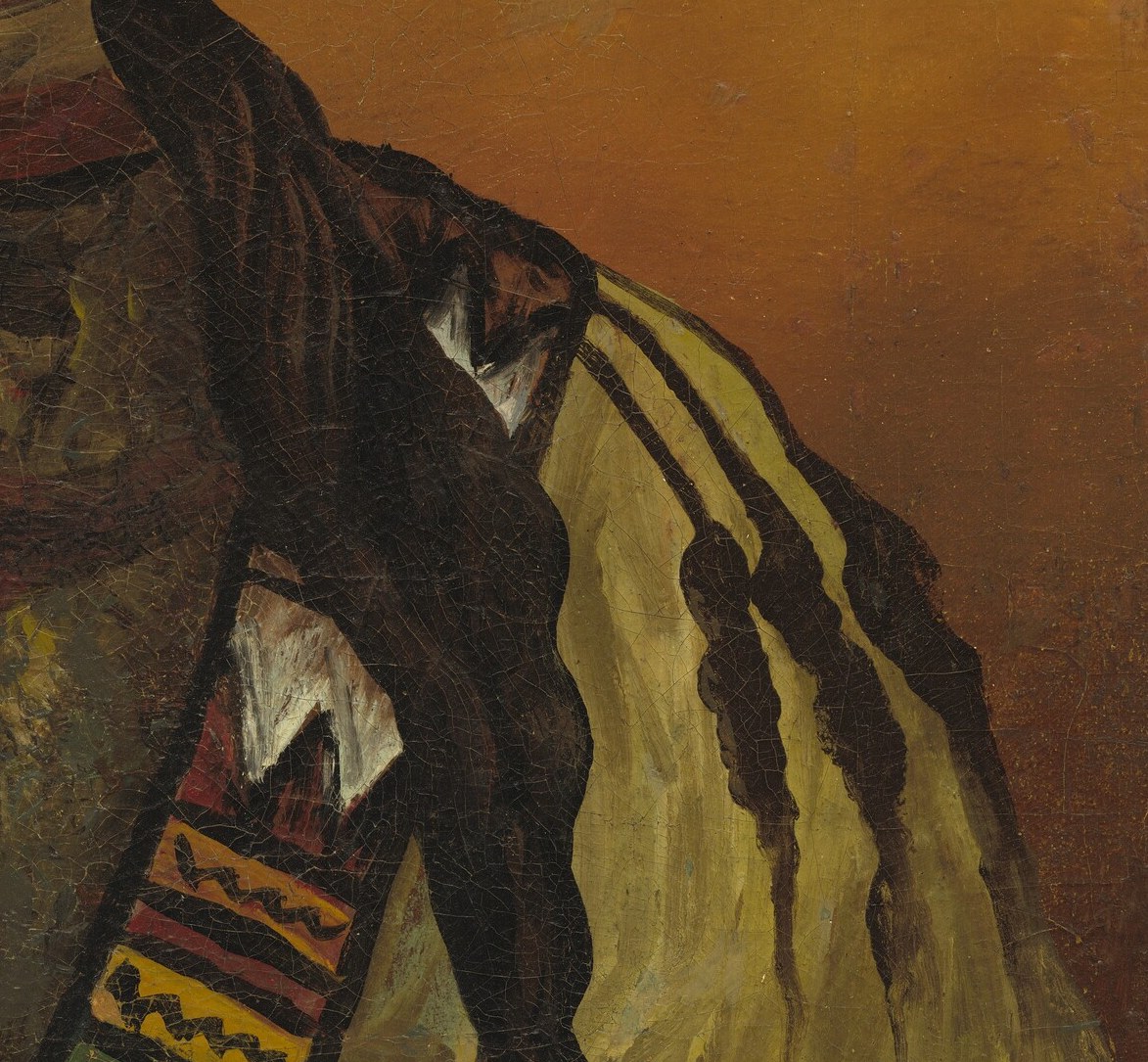
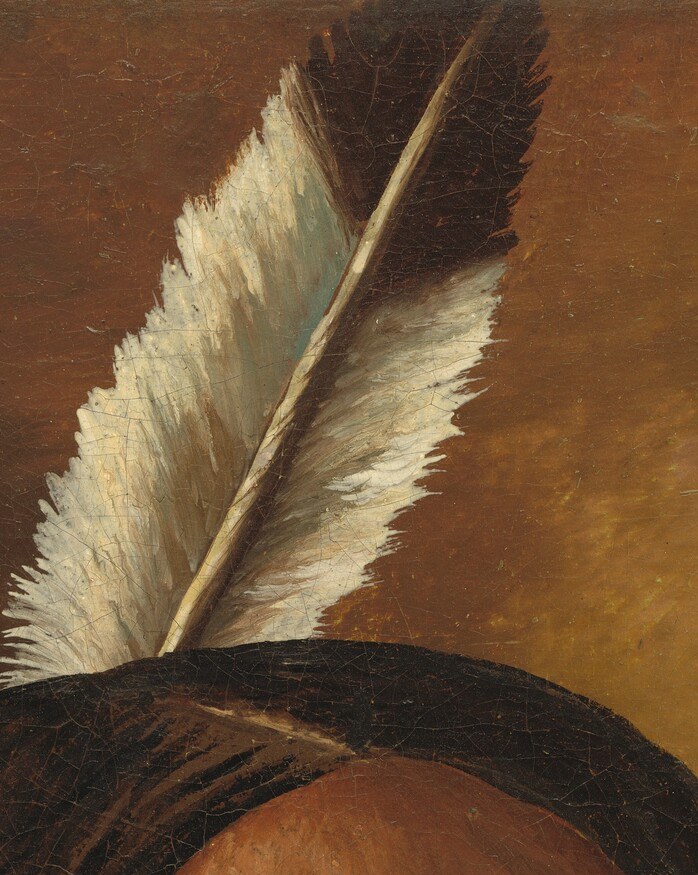
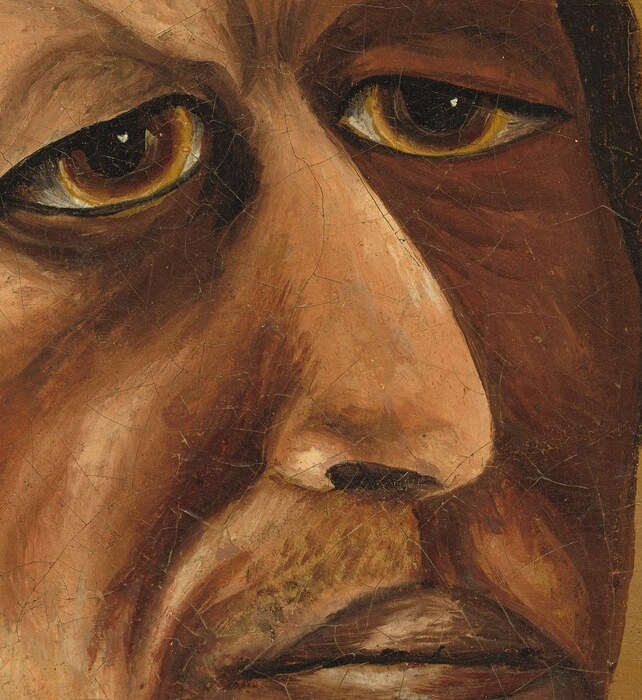
The artist employed a loose, sketch-like brushwork to create a sense of immediacy. Notice the vibrant, geometric patterns on the subject's shirt and the delicate feather in his hair, both cultural markers rendered with striking detail against the warm, unadorned background. His solemn, direct gaze invites viewers to connect with his inner strength.
Bradshaw's work is characteristic of late 19th-century American painting, focusing on realistic representation without the high gloss of academic finish. The painting's modest scale belies its straightforward presentation, which encourages close observation of both the subject's expression and his attire.
What stories do you imagine this figure might hold?
Details
Transcript
This portrait was painted in 1888, during a pivotal time. The artist, J.W. Bradshaw, used bright yet restrained colors. Look closely at the single feather tucked into his hair. It hints at status or a spiritual connection for the sitter. His direct, solemn gaze invites you to connect with him. The painting emerged when interest in the American West was high.