Swiss Landscape by Calame, Alexandre
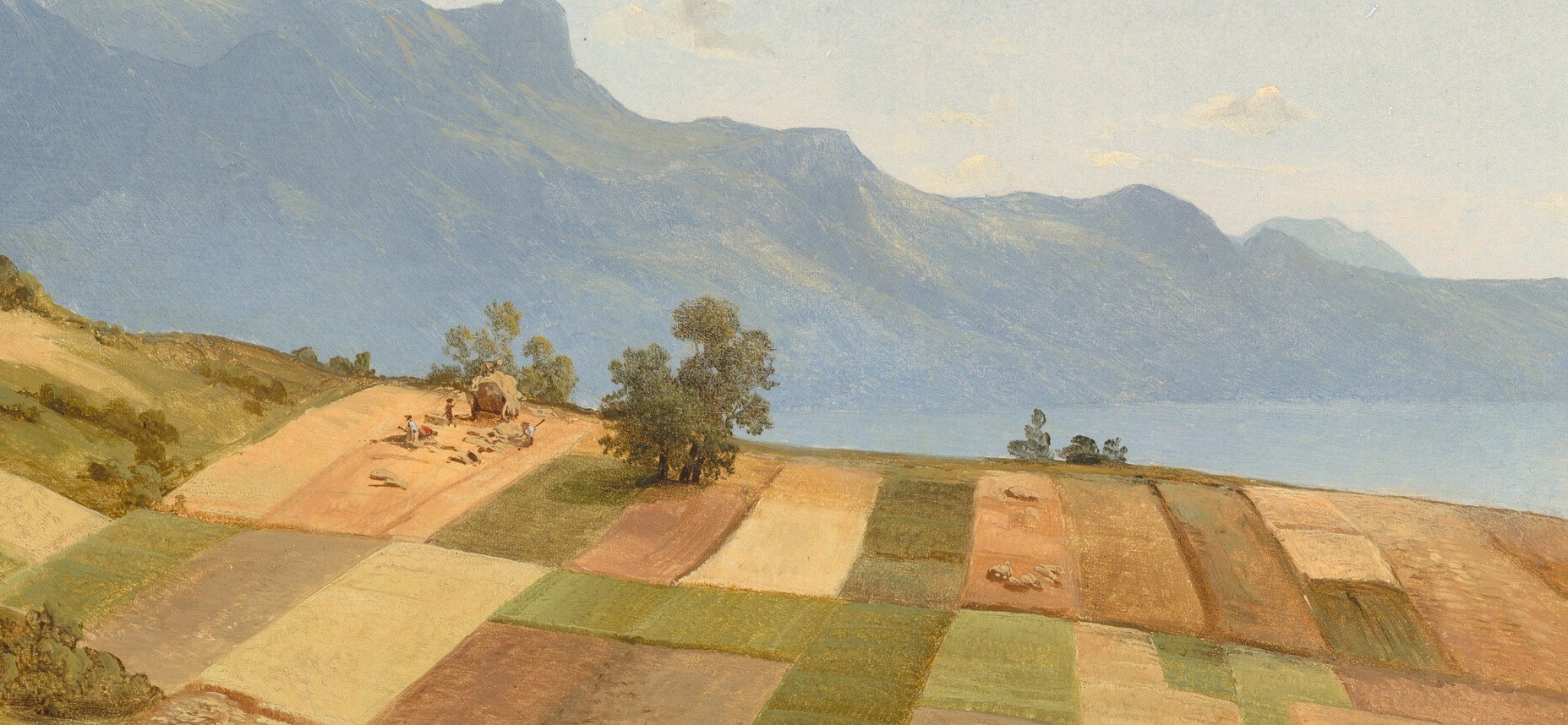
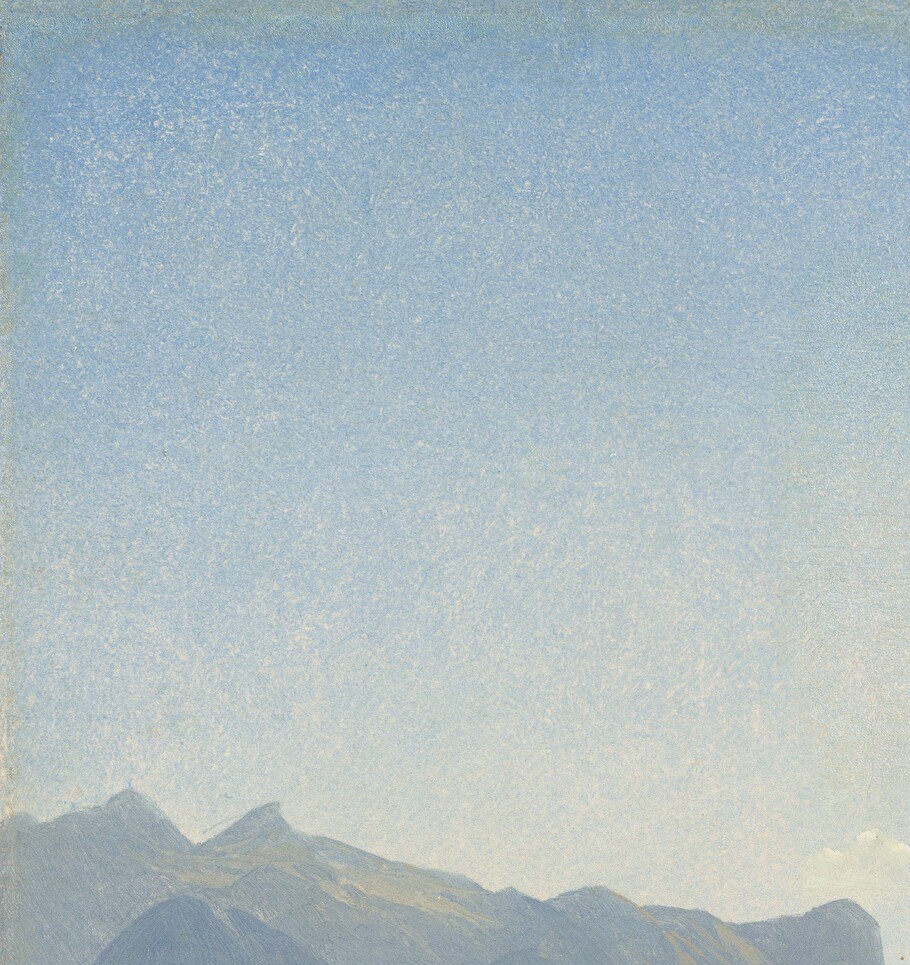
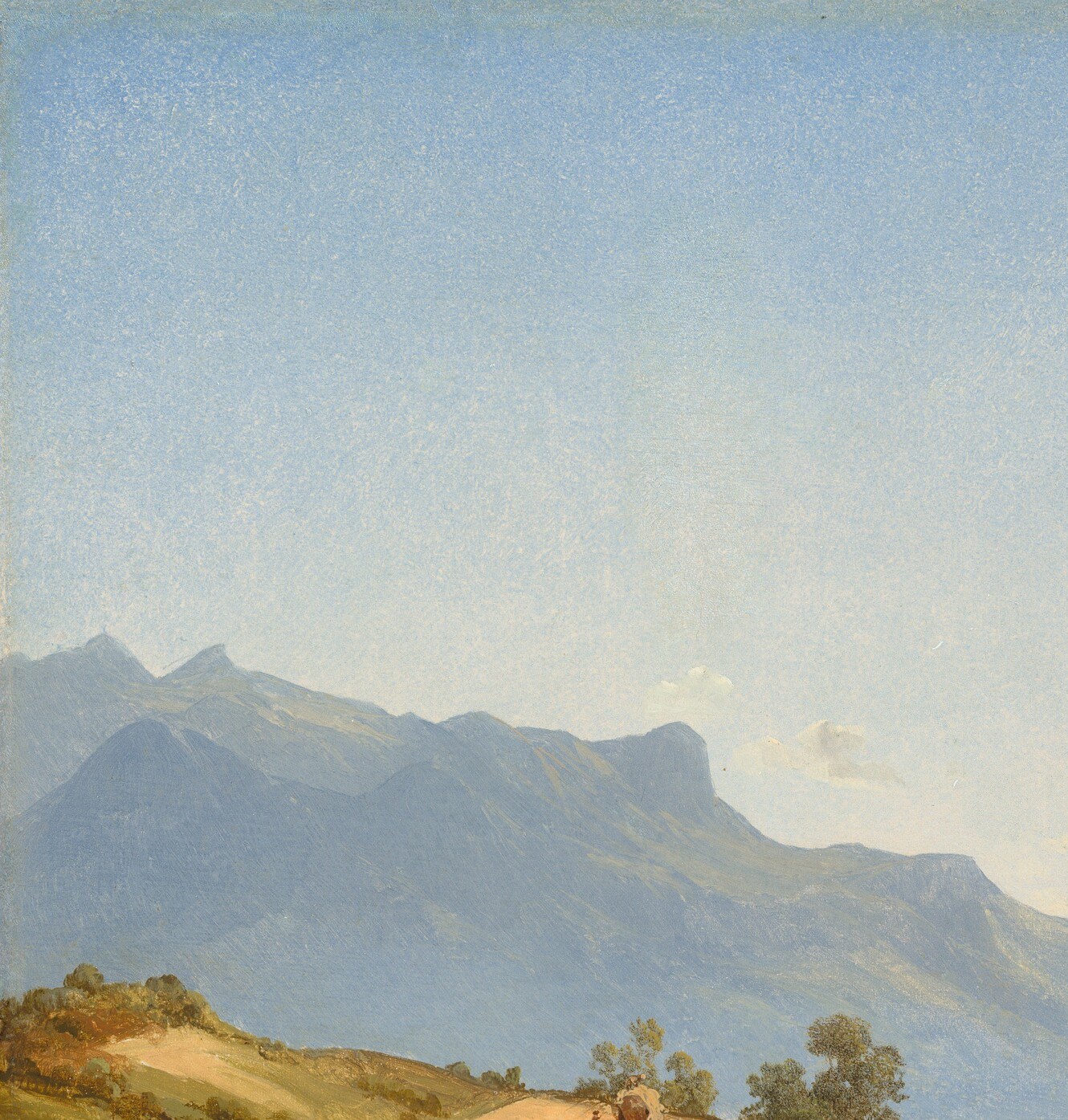
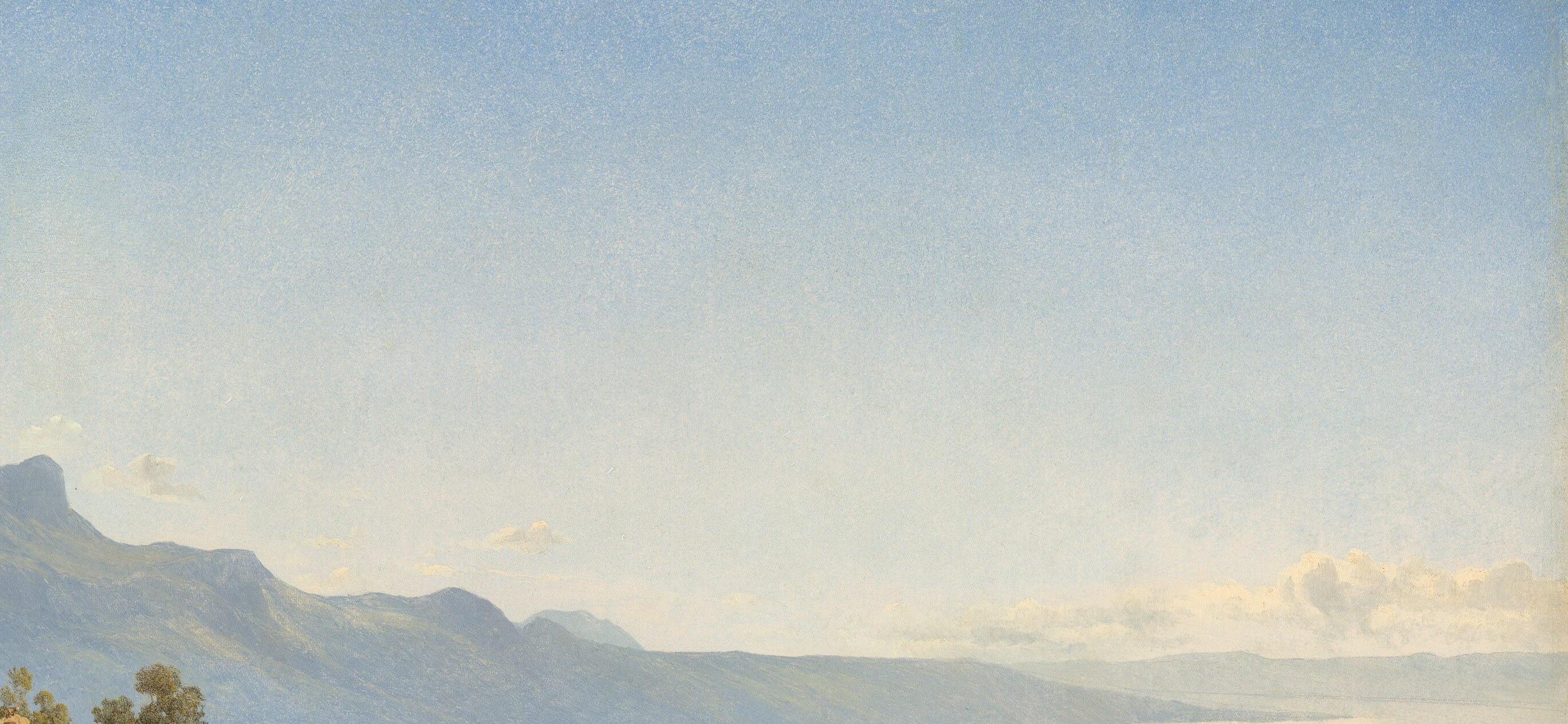
Alexandre Calame's "Swiss Landscape," painted around 1830, offers a timeless view of the Lake Geneva region, revealing how human endeavor shaped the formidable alpine environment. This oil on paper work, mounted on canvas, is a testament to the artist's keen observation of nature and local practices.
The painting's detailed depiction of terraced vineyards along the lakeside is particularly striking. These terraces, an ancient and labor-intensive method of cultivation, would have been a defining feature of the Swiss landscape in the early 19th century, just as they are in some areas today. Look also to the distant, hazy peaks, almost certainly the Haute-Savoie Alps, offering a specific geographical anchor.
Calame, a notable figure in 19th-century landscape painting, frequently explored the sublime beauty of the Alps. His works align with the Romantic sensibilities of the era, which often emphasized the individual's relationship with the grandeur of nature. This piece, though perhaps less famous than some of his larger canvases, showcases his mastery in capturing light and atmosphere, and his dedication to documenting the unique character of his native Switzerland.
This landscape invites us to consider how much, or how little, the essence of a place can change over nearly two centuries. What aspects of this scene still resonate with today's Switzerland?
Details

Transcript
This Swiss landscape by Alexandre Calame captures a specific moment. Look closely at the distant mountains on the far shore. Those are the peaks of the Haute-Savoie Alps across Lake Geneva. In the foreground, terraced vineyards shape the hillside. This ancient farming practice defined the Swiss lakeside in 1830. The light catches the peaks as it would that far off lake. It records the enduring grandeur of the Alps, as it was then.