Cossack Camp, 1813 by Louis Moritz
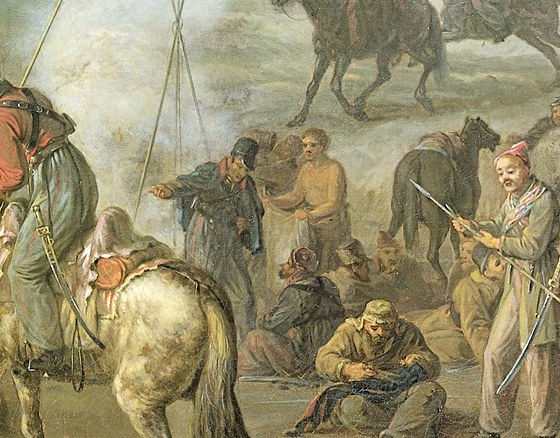
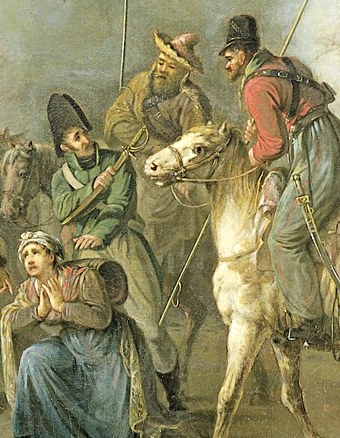
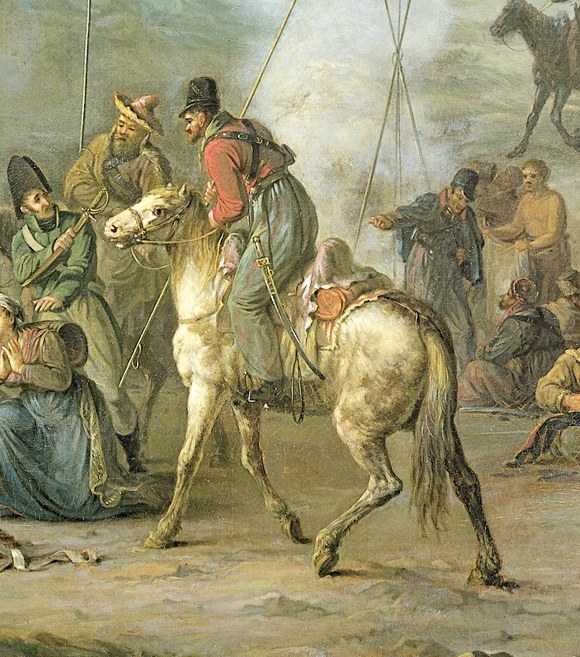
Louis Moritz's 'Cossack Camp, 1813' offers a rare glimpse into the quiet moments of military life, far from the battlefield. In this painting, held at the Rijksmuseum, a Cossack encampment is depicted with striking realism, but it is the lone woman in blue who draws the eye and sparks curiosity.
Her direct gaze and vulnerable posture make her an emotional anchor in a scene dominated by soldiers and horses. She is an intriguing figure, perhaps listening intently to the man pointing nearby, her presence raising questions about the roles of women in these mobile military communities of the early 19th century.
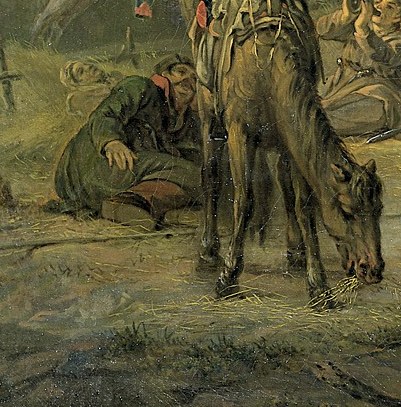
Moritz, a Dutch artist, captured a moment of respite within the harsh realities of a frontier environment. While the acquisition history of this particular work is not extensively documented, it is part of a broader interest in military genre paintings of the period. The painting reminds us that even in bustling camps, individual stories and quiet human dramas unfold.
What do you imagine her story might be?
Details
Transcript
In 1813, Cossack camps were a common sight. This painting captures a moment of rest. But look closely at the woman in blue. Her gaze is direct, her posture vulnerable. She is an unusual presence in a military scene. Perhaps she is listening to the man pointing. Her story remains a quiet mystery.