The Crucifixion by Master of Saint Veronica
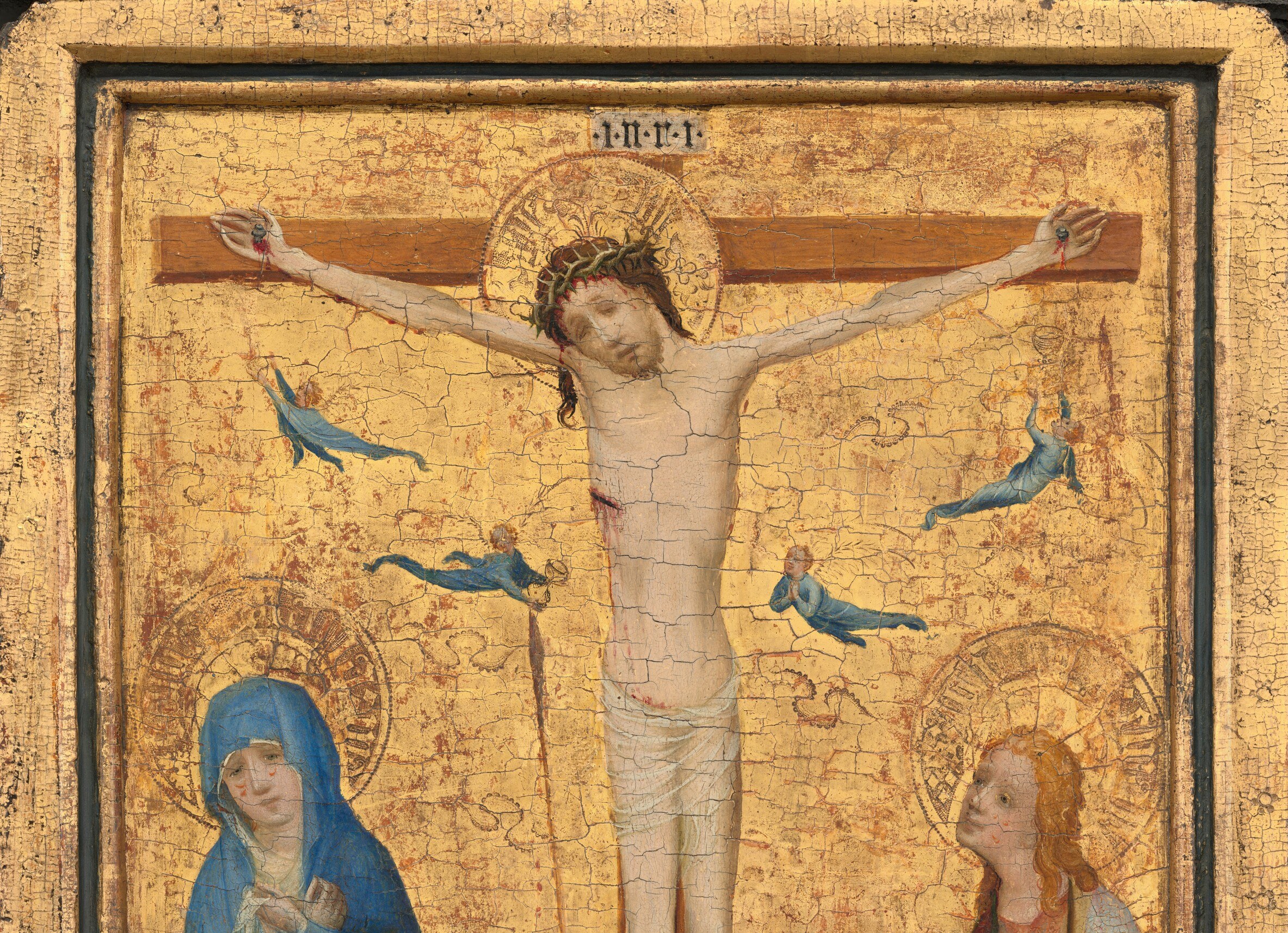
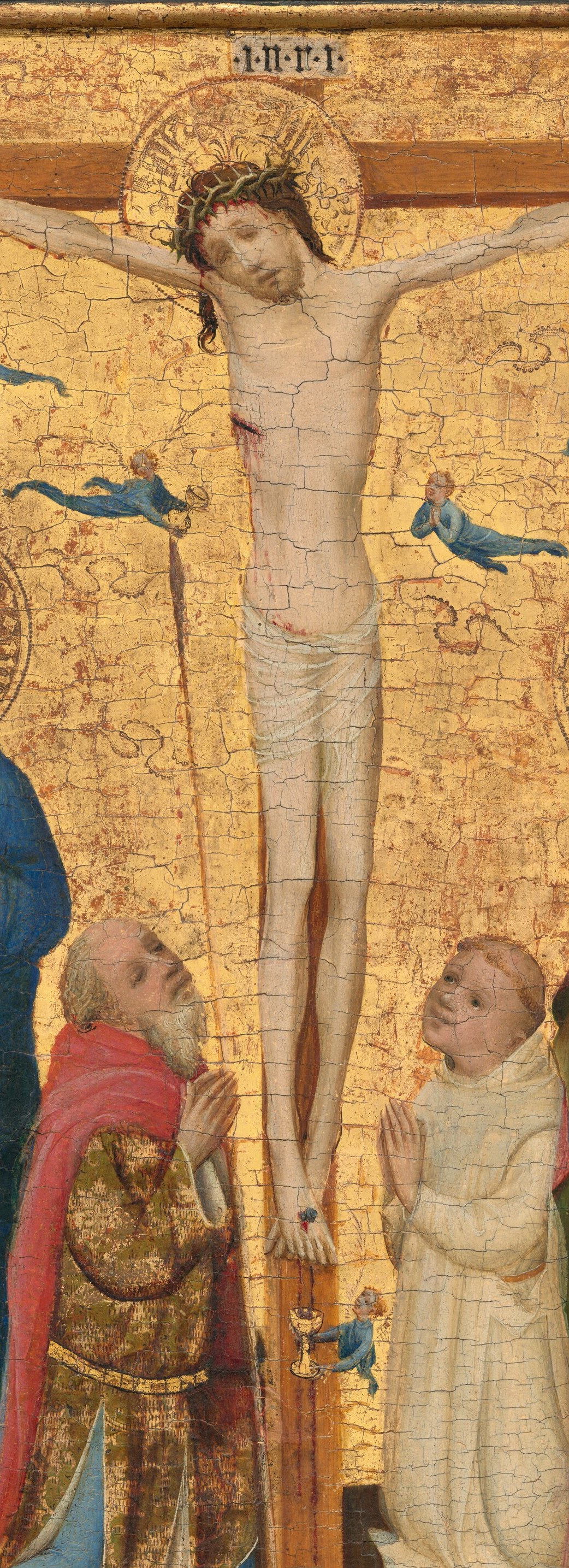
This is The Crucifixion, painted in egg tempera on panel around 1405 by the unidentified artist known as the Master of Saint Veronica. The scene is a standard Calvary, but the economics hiding in plain sight are extraordinary.
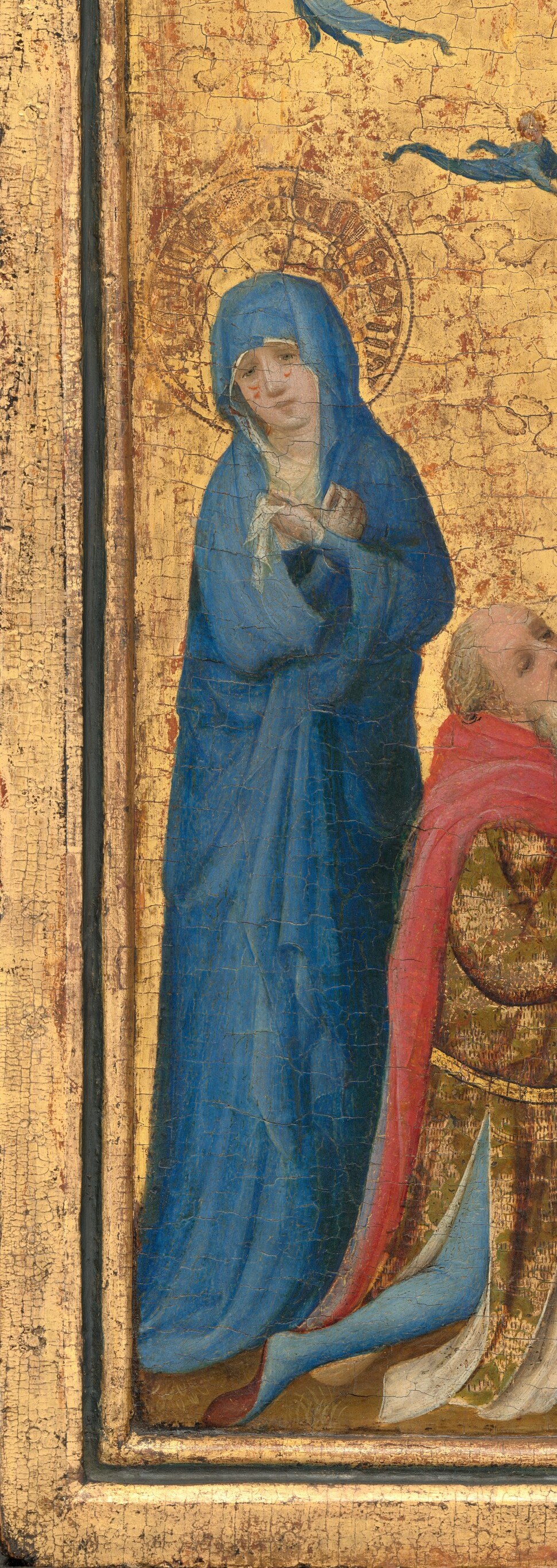
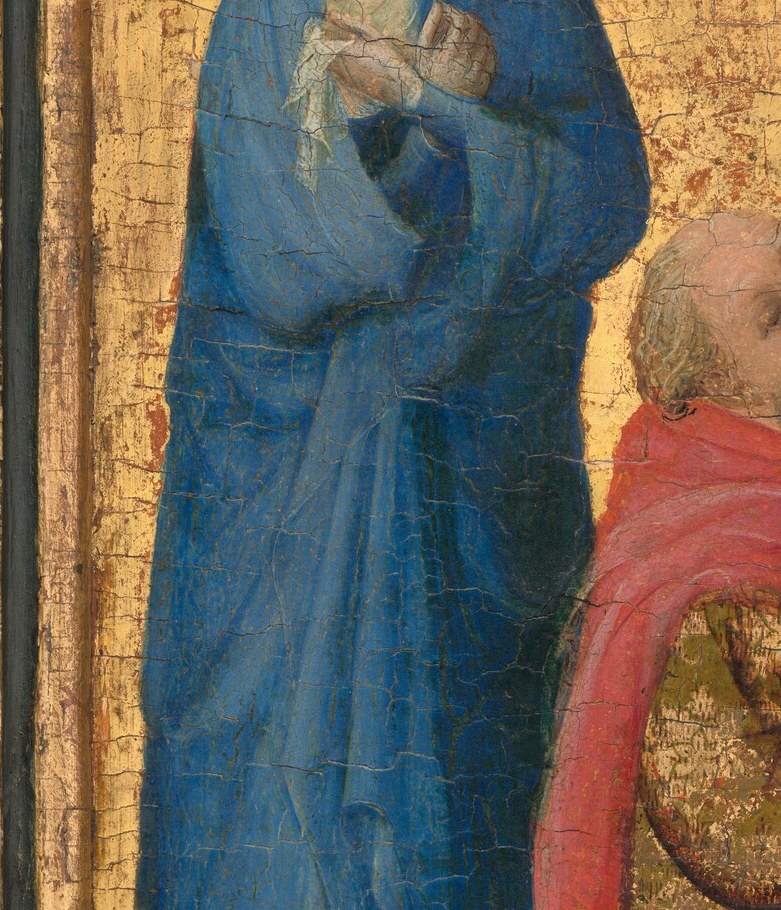
Look at the Virgin Mary on the left. Her mantle is painted in ultramarine, a pigment ground from lapis lazuli mined only in Afghanistan. In the early 15th century it cost more than gold by weight, and patrons sometimes specified how much of it a painter was allowed to use in a contract. Here it is given entirely to Mary, creating the dominant note of color in the composition.
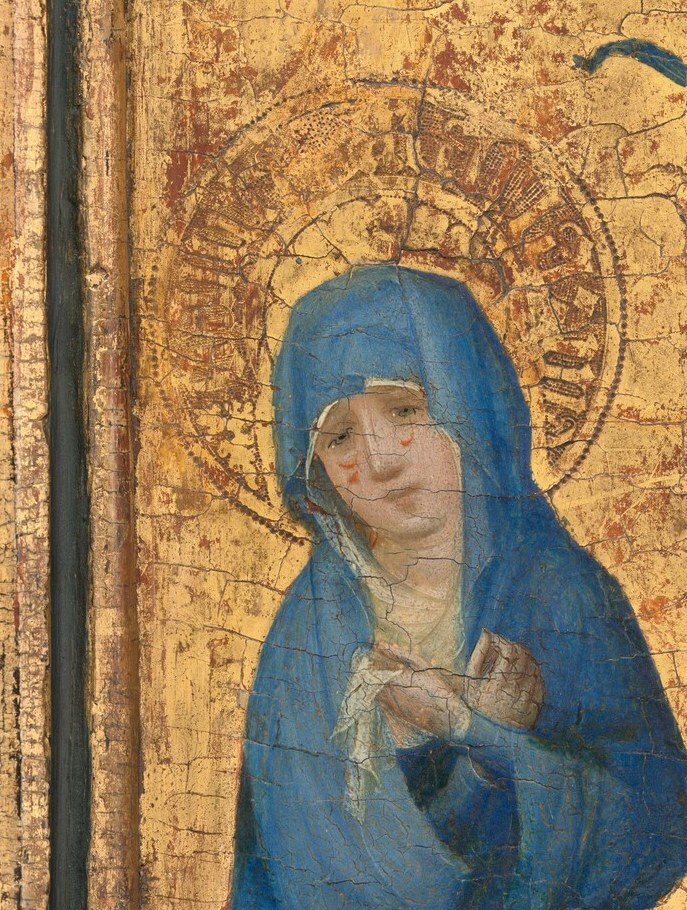
The painter could have dispersed the blue across other figures or the sky. Instead he concentrated it on her mantle alone, and paired it with the most openly anguished face in the panel. Her brow is furrowed, her lips tight, her eyes raised toward the cross. A costly pigment becomes a statement about who matters in this moment and who is paying for it.
The panel belongs to a transitional moment around 1400 when the International Gothic style was still dominant but painters were beginning to push facial expression toward something more personal. The gold ground, which at first reads as decoration, is a theological claim: the crucifixion takes place outside earthly time, and the burnished surface would have flickered in candlelight. Close magnification would likely reveal tooled punch-work in the gold, a workshop signature invisible at reproduction scale.
The Master of Saint Veronica is an unnamed Cologne painter active between roughly 1400 and 1410, known from a small group of panel paintings. Like many early northern painters, he remains a working identity pieced together from technique and style rather than documents. This Crucifixion is one of the works that defines him, and the ultramarine on Mary's shoulders tells you more about the commission than any lost contract ever could.
Details
Transcript
Every inch of this panel was painted in egg tempera, around 1405. The gold ground places the scene outside ordinary space and time. Now look at Mary, on the left. That blue is ultramarine, the most expensive pigment a painter could buy. Ground from Afghan lapis lazuli, it cost more than gold by weight. The patron paid for that blue. The artist gave it to her grief.