Oneida Chief, His Sister, and a Missionary by Catlin, George
George Catlin, a lawyer turned painter, dedicated his career to documenting Native American life. His painting, *Oneida Chief, His Sister, and a Missionary*, from 1861/1869 and held at the Smithsonian American Art Museum, captures a pivotal moment of cultural encounter in the American frontier.
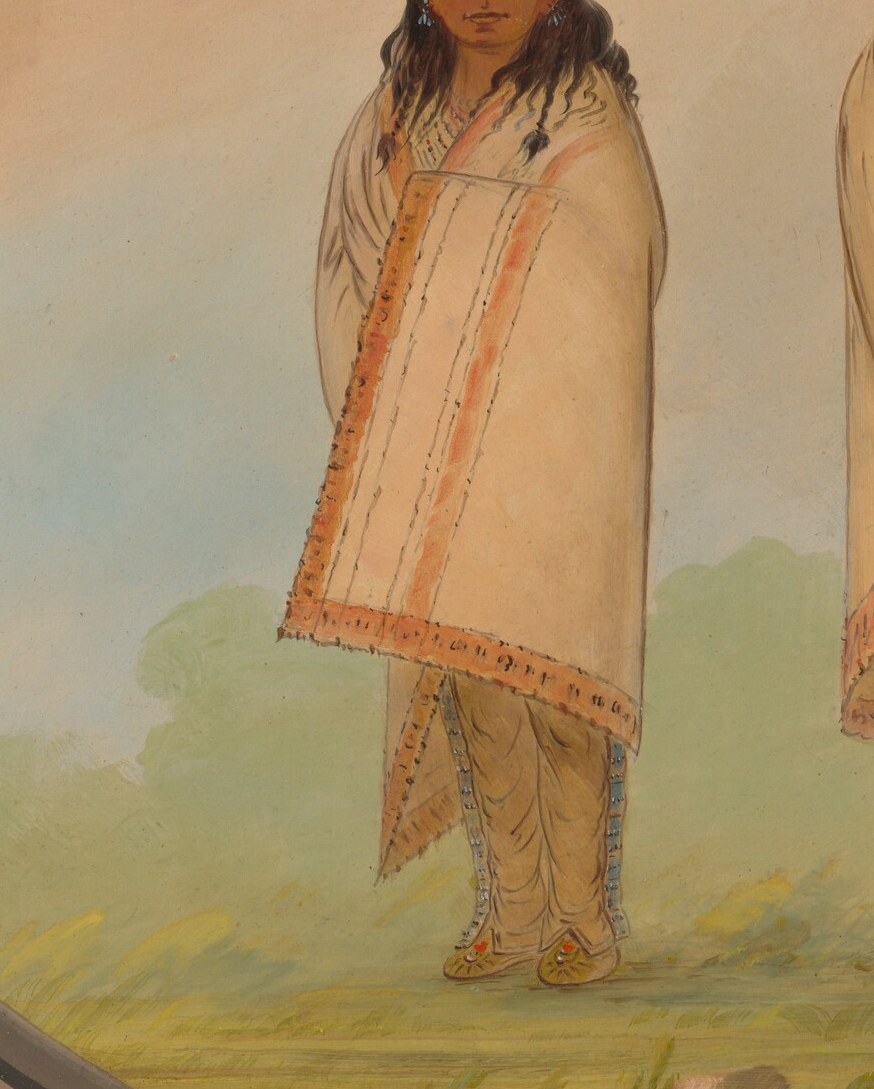
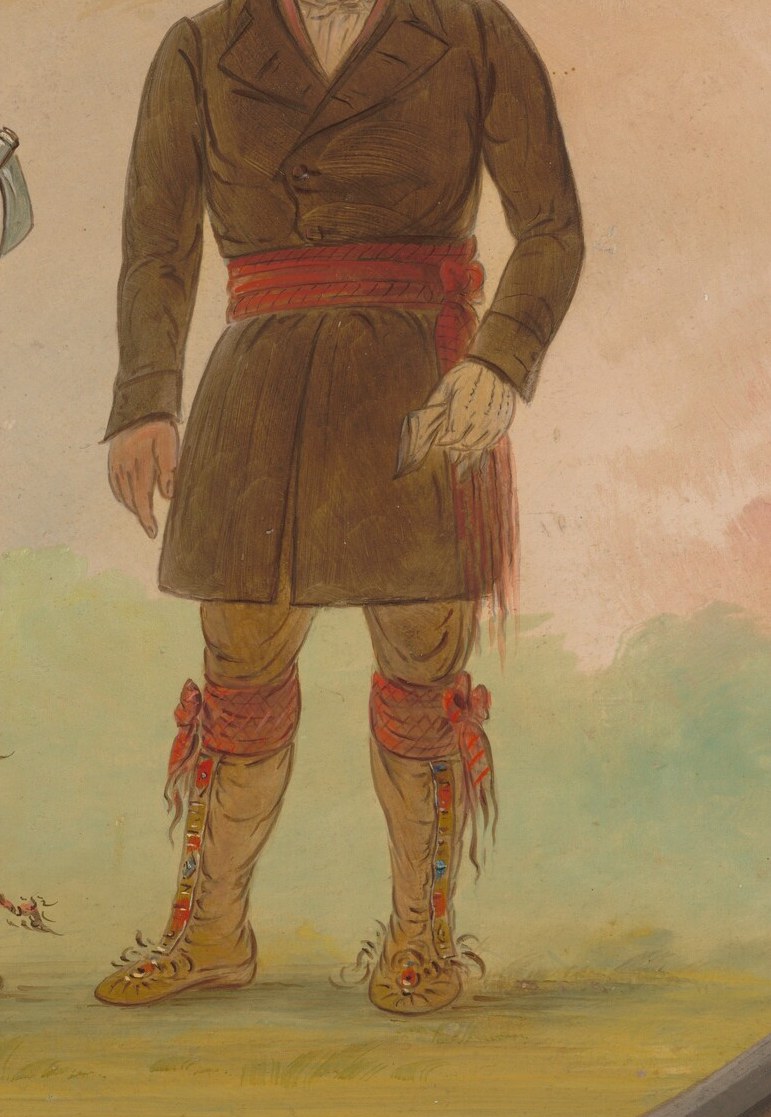
Observe the details in their clothing: the chief's feathered headdress and axe symbolize his status and role as a protector, while his sister's embroidered robe showcases traditional craftsmanship. These details stand in stark contrast to the missionary's European-style dark coat, highlighting the distinct cultural identities present in the scene.
Catlin traveled the American West five times in the 1830s, creating portraits and written accounts of Plains Indians. This work reflects his continued interest in recording the complex dynamics between Indigenous communities and increasing Christian missionary activity during the mid-nineteenth century.
The painting serves as a visual record of a changing landscape, inviting us to consider the perspectives of all involved in these historical exchanges.
Details
Transcript
This painting captures a moment of cultural encounter. The chief's feathered headdress signifies his status. His axe, a tool and weapon, shows his role as protector. His sister's robe displays intricate, traditional craftsmanship. The missionary's dark coat contrasts with their traditional attire. This painter, George Catlin, documented Native American life. He captured the intersection of Indigenous identity and Christian outreach.