Retable by Master of Cubélls
The Retable by the Master of Cubélls, circa 1400, is a striking example of late medieval devotional art from The Metropolitan Museum of Art. Despite its age, this tempera painting on carved wood teems with intricate details and symbolic figures.
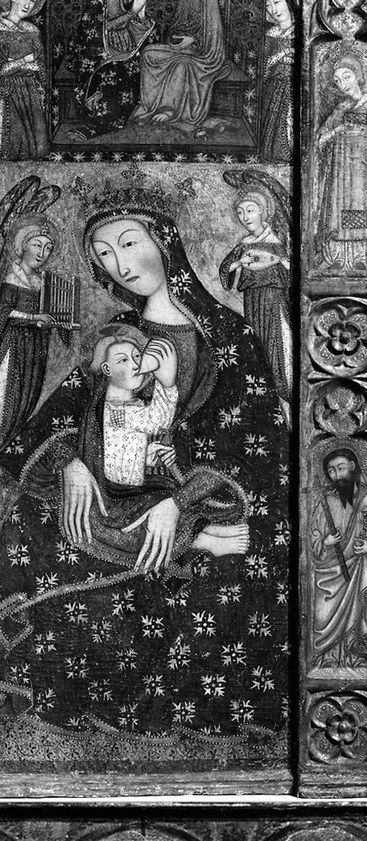
Notice the ornate gothic architectural framing that encloses various religious scenes. Within these, look for figures like the one wearing a crown, signifying royalty or sainthood, and the angel gracefully playing a lute, suggesting heavenly music.
Created around the turn of the fifteenth century, altarpieces like this served as focal points for worship in churches. The Master of Cubélls used tempera, a medium known for its sharp, enduring colors, combined with carving and gold leaf to enhance the visual impact.
Each figure, whether holding a scroll or reading a sacred text, contributes to the complex devotional narrative of this remarkable altarpiece.
Details
Transcript
This altarpiece is crowded with figures. Look at the ornate gothic architectural framing. The Master of Cubélls created this around 1400. Here, a figure wears a crown. A figure holds a scroll with unknown text. This is tempera paint on carved wood. See the angel playing a lute. Look closer: a saint reads a book.