River View with a Village Church by http://www.wikidata.org/.well-known/genid/2589388b4804bfc7dce1155101bcfa74
This is "River View with a Village Church," painted around 1700 by the Dutch master Jacob van Ruisdael. It is held in a public collection and stands as one of the most complete visual documents of a Dutch riverside community at the end of the Golden Age. The painting looks quiet, but it is an inventory of an entire way of life.
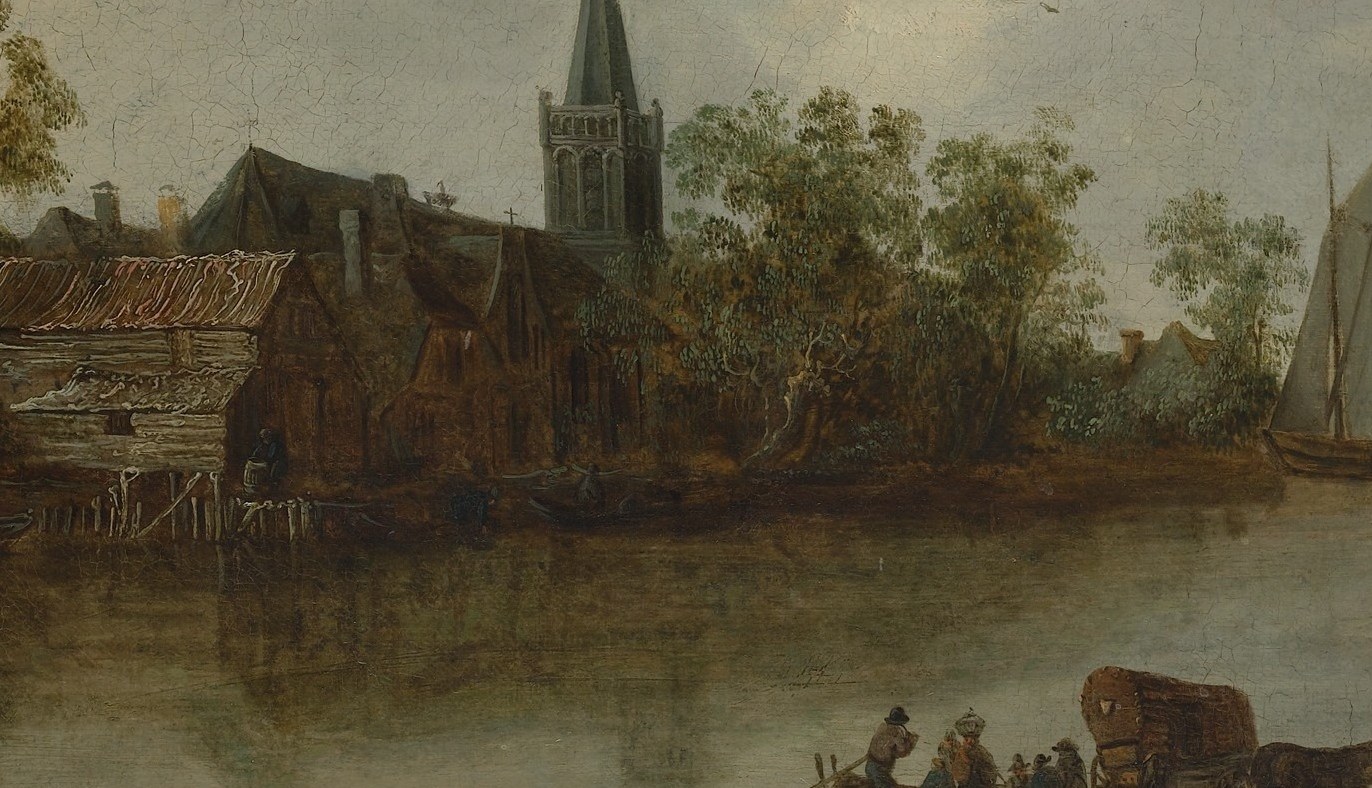
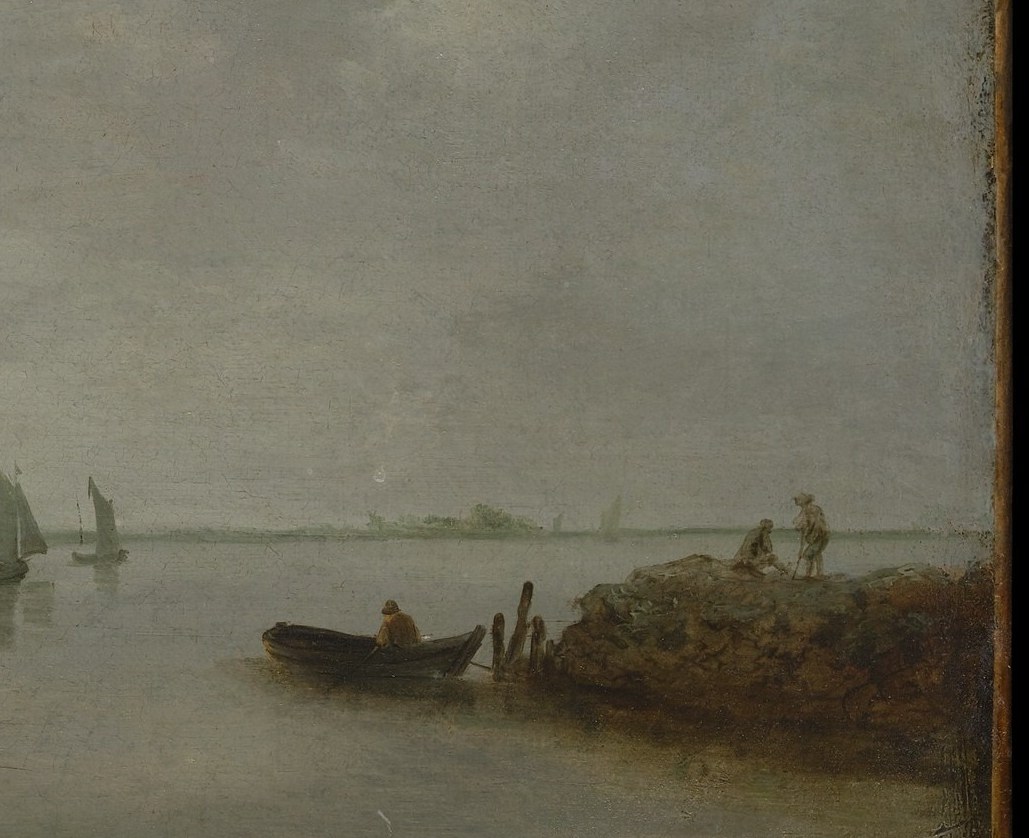
Look first at the horizon. Those thin masts are seagoing vessels; even this inland village was wired into the global trade that made the Dutch Republic wealthy. Then drop your eye to the ferries and docks. You can see a flat-bottomed boat loading on the left and a wooden pier on the right, with small silhouetted figures working. The river was a road.
The real argument of the painting, though, is vertical. Nothing in the landscape comes close to the height of the village church steeple. Van Ruisdael sends a shaft of warm light right onto it while the surrounding clouds stay heavy and gray. That is not a weather report: it is a statement about what anchored a community when the money, the ships, and the century were changing fast.
The cattle at the water's edge and the modest clustered houses are easy to miss, but they are the honest baseline the painter keeps returning to. This is not a heroic seascape. It is a place report, and it is astonishingly precise.
Details
Transcript
Around 1700, the Dutch Golden Age was quietly ending. The fortunes of an empire were visible in a single river view. Those distant masts connect this village to the trade routes of the world. Closer in, a flat-bottomed ferry loads at the left bank. And over on the right, a wooden dock, with people working. The river is a working artery, and it moves slowly. But the tallest thing for miles is not a mast, a crane, or a market hall. A shaft of light picks out the church. It was meant to.