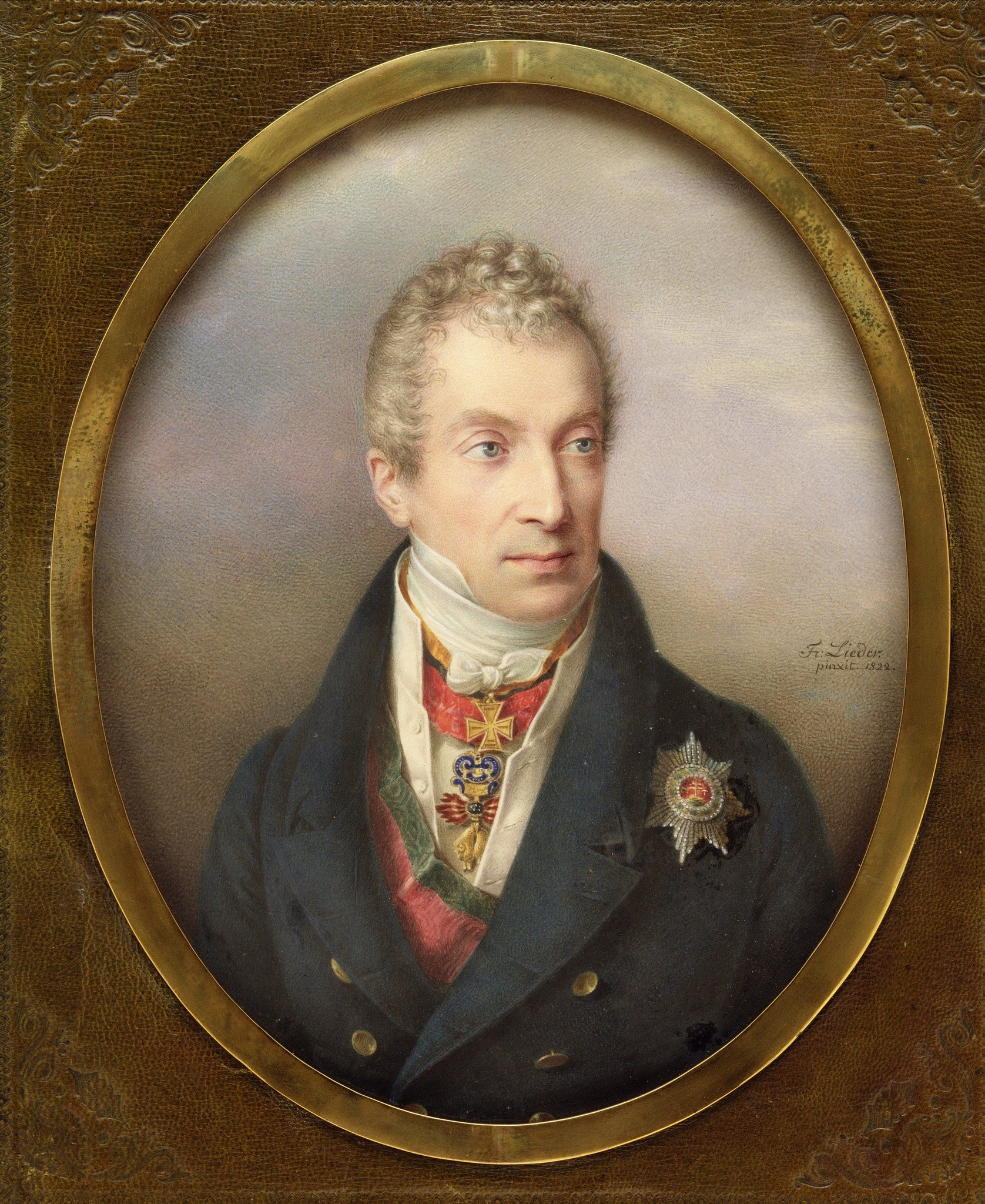
Prince Klemens Wenzel Lothar von Metternich (1773–1859) by Friedrich Lieder
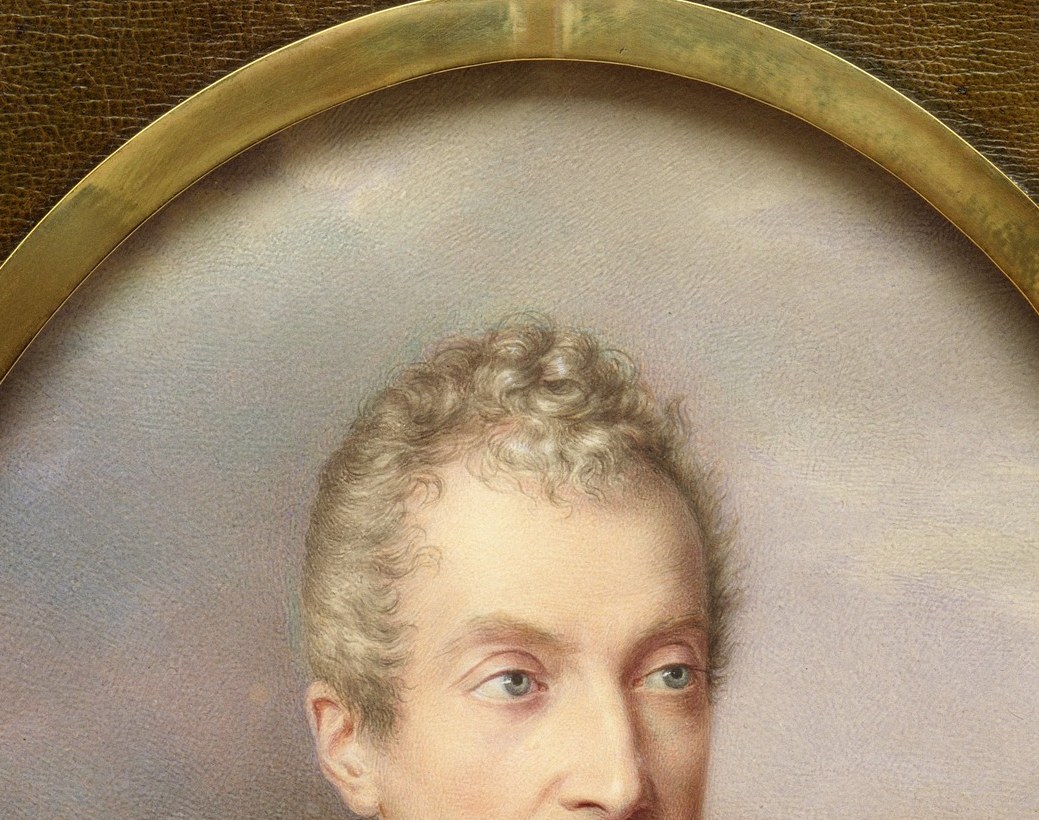
This is Friedrich Lieder's 1822 portrait of Prince Klemens von Metternich, held at The Metropolitan Museum of Art. It is not a grand oil painting but a miniature, a format made for diplomatic gifts between courts. The object itself was meant to be carried in a pocket or presented in private, not hung in a ballroom.
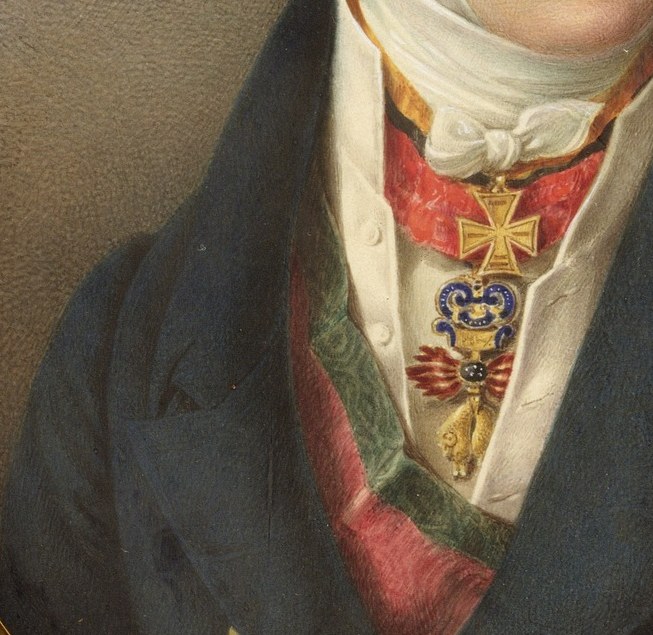
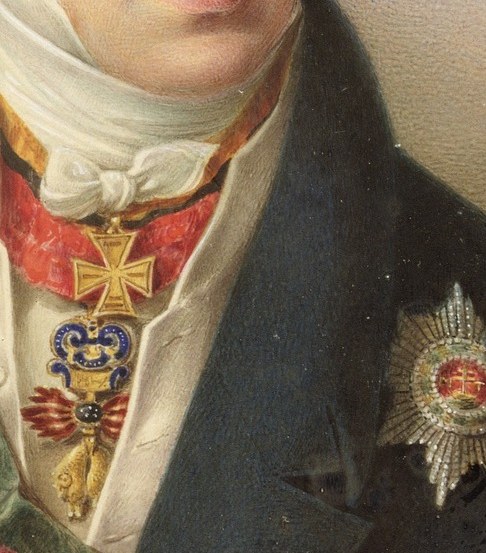
Look at his chest. The large silver starburst and the red-and-gold cross beside it are not generic decorations. Metternich chose each one carefully for this portrait, encoding his network of alliances with Russia, Prussia, and the Habsburg crown. Every medal is a political debt made visible.
In 1822, Metternich was at the height of his power. The Congress of Vienna had remade Europe after Napoleon, and his conservative system, suppressing revolution, managing monarchies, held the continent in an uneasy peace. He was called the 'Coachman of Europe,' and this portrait shows exactly how he wanted that role seen: civilian, controlled, unassailable.
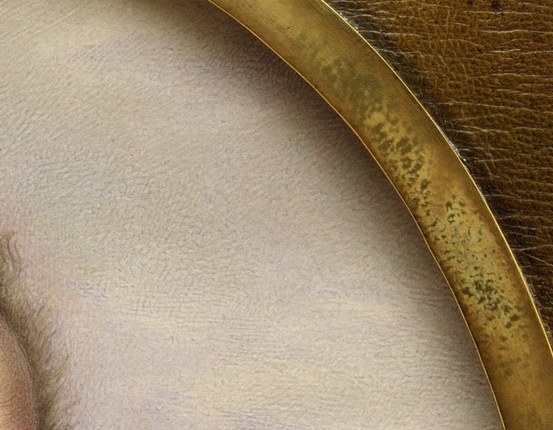
Find the signature. It is almost lost in the pale background near the upper-right edge: 'F. Lieder.' Friedrich Lieder was the Viennese court's portraitist, a German-born miniaturist trusted to render the most powerful face of the age in a space smaller than your palm.
Details
Transcript
An Austrian prince. The 'Coachman of Europe.' In 1822, Metternich held the continent together after Napoleon. Look closely at his chest. The silver star and red-and-gold cross are diplomatic code. Each medal declares an alliance with a different sovereign. Now look toward the upper right edge. A nearly illegible signature: 'F. Lieder.' The court painter who captured the era's most powerful man.