The Sea by John Frederick Kensett
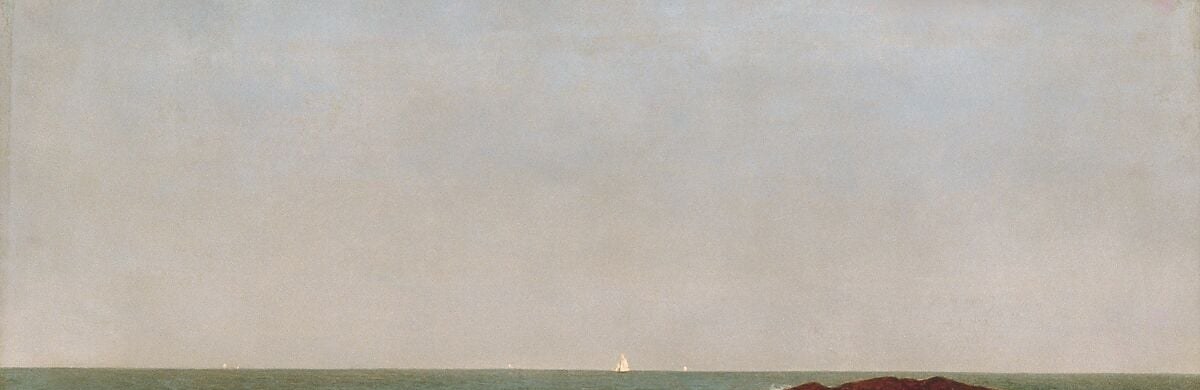
This is "The Sea" by John Frederick Kensett, painted in 1872. Kensett, a key figure of the Hudson River School, used a technique of thin, translucent oil glazes to create a signature luminous effect. The light in the painting seems to emanate from within the sky and water itself, not merely reflect from the surface.
Look at how the pale sky and the calm sea surface absorb and radiate light. Kensett masterfully applied layers of paint so subtle, they achieve an ethereal, almost watercolor-like quality. This technique allows the viewer to see the nuanced textures of water and atmosphere.
Completed in the final year of his life, "The Sea" is often seen as a contemplative farewell. The painting exemplifies Kensett's late-period Luminism, focusing on the serene interplay of light and atmosphere over dramatic detail. It is a testament to his lifelong reverence for the tranquil beauty of the American coast.
The quiet stillness of this work invites a moment of peaceful reflection, a serene conclusion to a prolific artistic career.
Details



Transcript
The sky seems to glow from within. Kensett used thin, translucent oil glazes. This technique makes colors radiate softly. Light appears to emanate from the water. He painted this in the year of his death. A quiet farewell to the world.