The Sewer by William P. Chappel
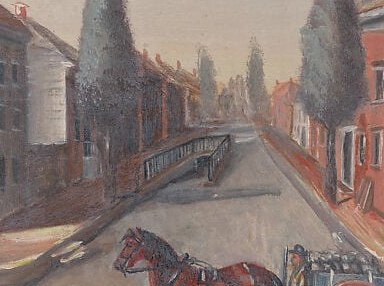
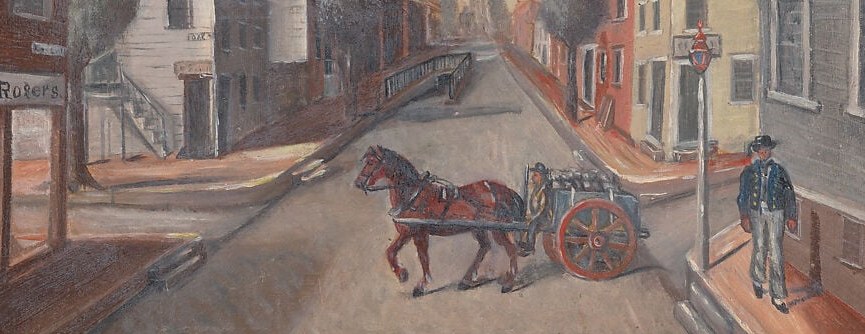
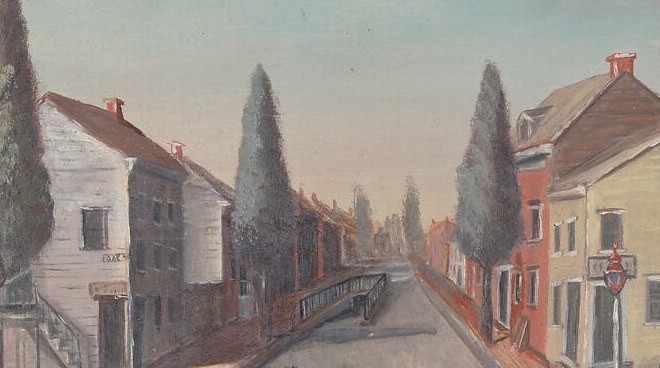
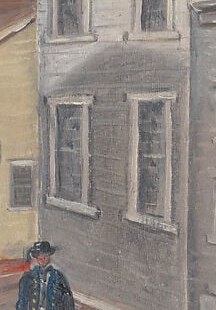
William P. Chappel's 'The Sewer,' painted around 1874, isn't just a simple street scene, but a subtle commentary on urban life. While it depicts everyday activity with a horse-drawn wagon on a muddy street, its title draws attention to a critical issue of the time: public sanitation. The painting is part of the collection at the Museum of the City of New York.
Notice the detailed rendering of the muddy street, which at first glance seems purely atmospheric. Yet, in the context of the title, it alludes to the unsanitary conditions of 19th-century cities where sewers were often open ditches, contributing to widespread disease.
Chappel, a professional sign painter, often brought a direct, unembellished approach to his art. His choice to use the title 'The Sewer' for such a seemingly mundane scene elevates it, transforming a typical genre painting into a piece with social resonance. He captures the authentic character of the burgeoning metropolis, presenting the city as it truly was, without idealization.
'The Sewer' reminds us that even in the most ordinary moments, artists often embed deeper messages about the world they inhabit. What other hidden meanings might Chappel have included?
Details
Transcript
This looks like a simple street scene from the 1870s. A wagon full of goods, pulled by a pair of strong horses. But the painting's title is 'The Sewer.' This artist, William P. Chappel, was a sign painter. His choice of name highlights a dirty urban reality. City sewers were still open ditches, causing disease. He captures the city, with all its grime, in plain sight.