The Meeting of Saint Anthony and Saint Paul by Master of the Osservanza
View the artwork: The Meeting of Saint Anthony and Saint Paul →
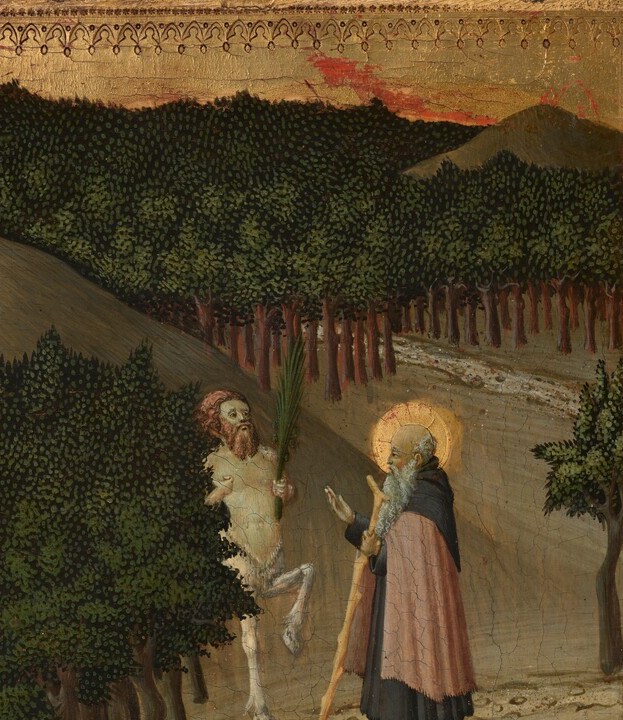
The Meeting of Saint Anthony and Saint Paul was painted by an artist whose real name we still don't know, known only as the Master of the Osservanza. It was made around 1430 in Siena, in tempera on a poplar panel, and it tells the story of two early Christian hermits finding each other in the Egyptian desert.
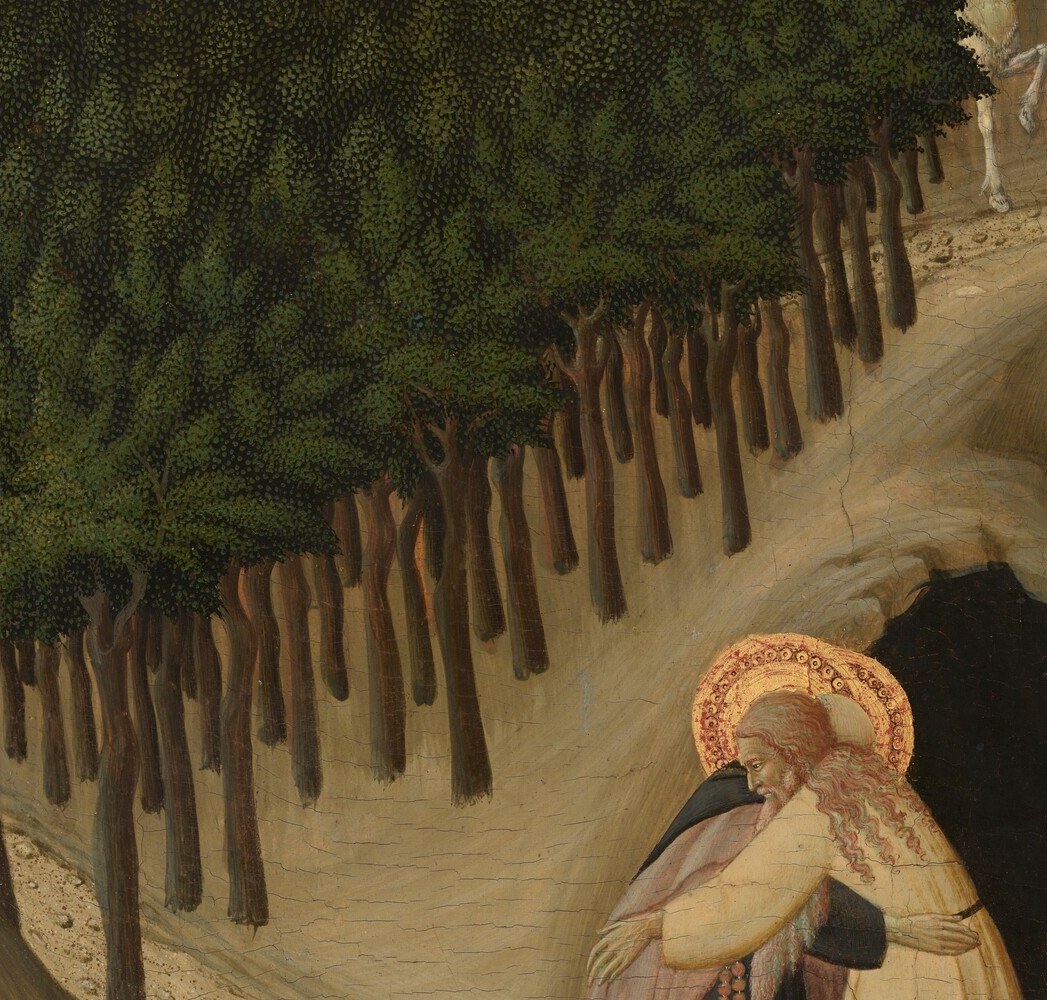
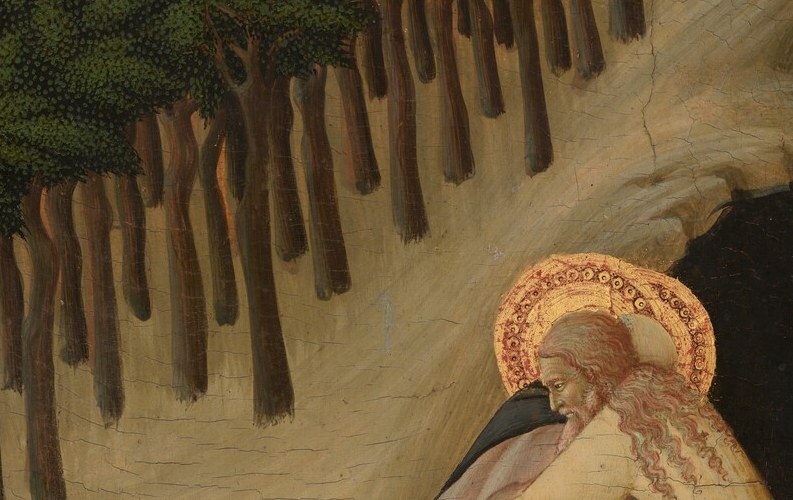
Look at their halos. They're the same size, the same gold, perfectly symmetrical. That might seem like an obvious choice, but in a lot of fifteenth-century painting, one holy figure stands higher, or their halo sits slightly above the other's. Here, Saint Anthony the Great and Saint Paul the First Hermit meet as complete equals. Even their hands clasp at the exact center of the composition.
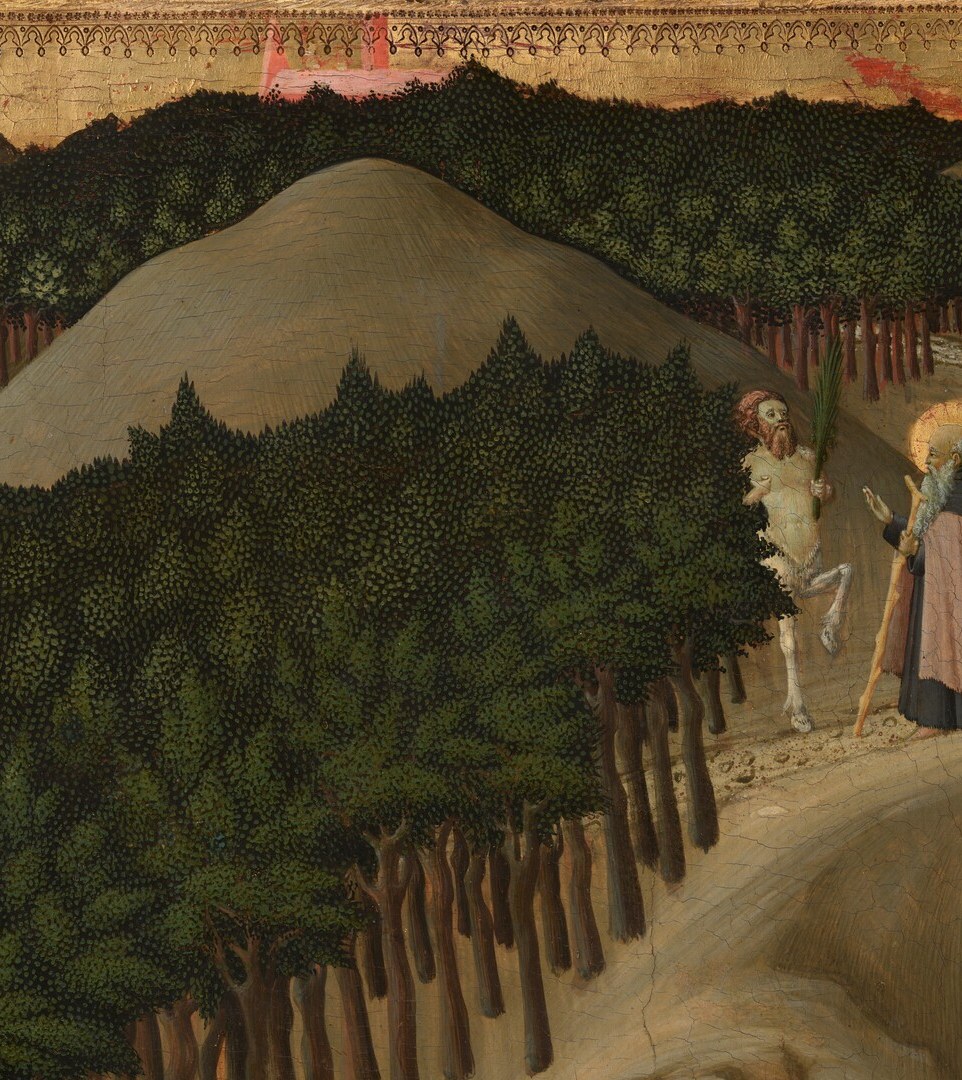
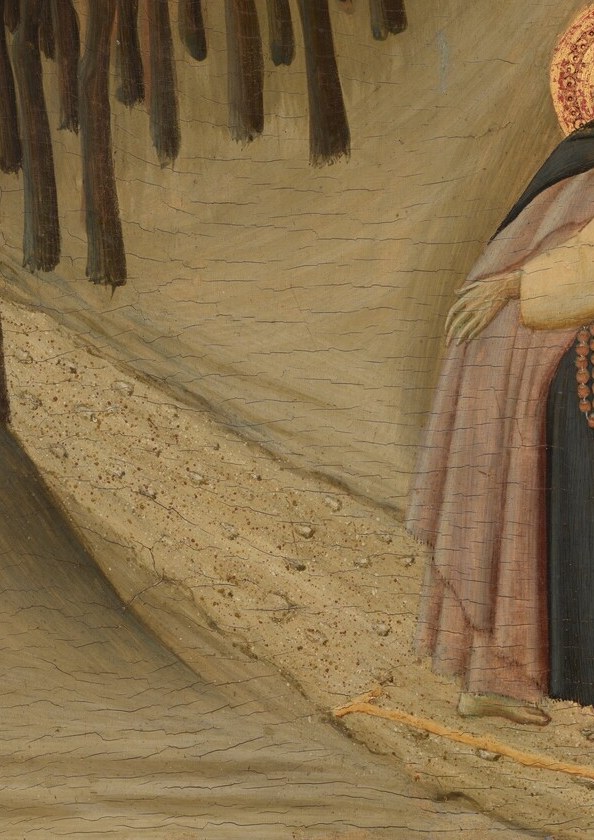
The painting is a continuous narrative: the tiny figure on the winding pale path is Anthony earlier in his journey, following a raven through the wilderness. The dark mass of trees works like a theatrical curtain, pushing your eye down that perilous road to the embrace. Paul wears a robe woven from palm fronds, a specific hagiographic detail that confirms his identity, and the bare, rocky ground at their feet can't sustain a single crop. The environment itself defines who they are.
The panel is a strong example of the transition from International Gothic to early Renaissance painting in Siena. We don't know the Master's name, but we can see exactly what he thought about sanctity: two men, alone in the desert, meeting on the same ground.
#arthistory #sienesepainting #renaissance
Details
Transcript
Two old men in the desert. That's the whole painting. But look at their halos. They're the same size. Most paintings of saints put one above the other. Here, Anthony and Paul meet as complete equals. We don't know the painter's real name. He's called the Master of the Osservanza.