Artwork
The Meeting of Saint Anthony and Saint Paul
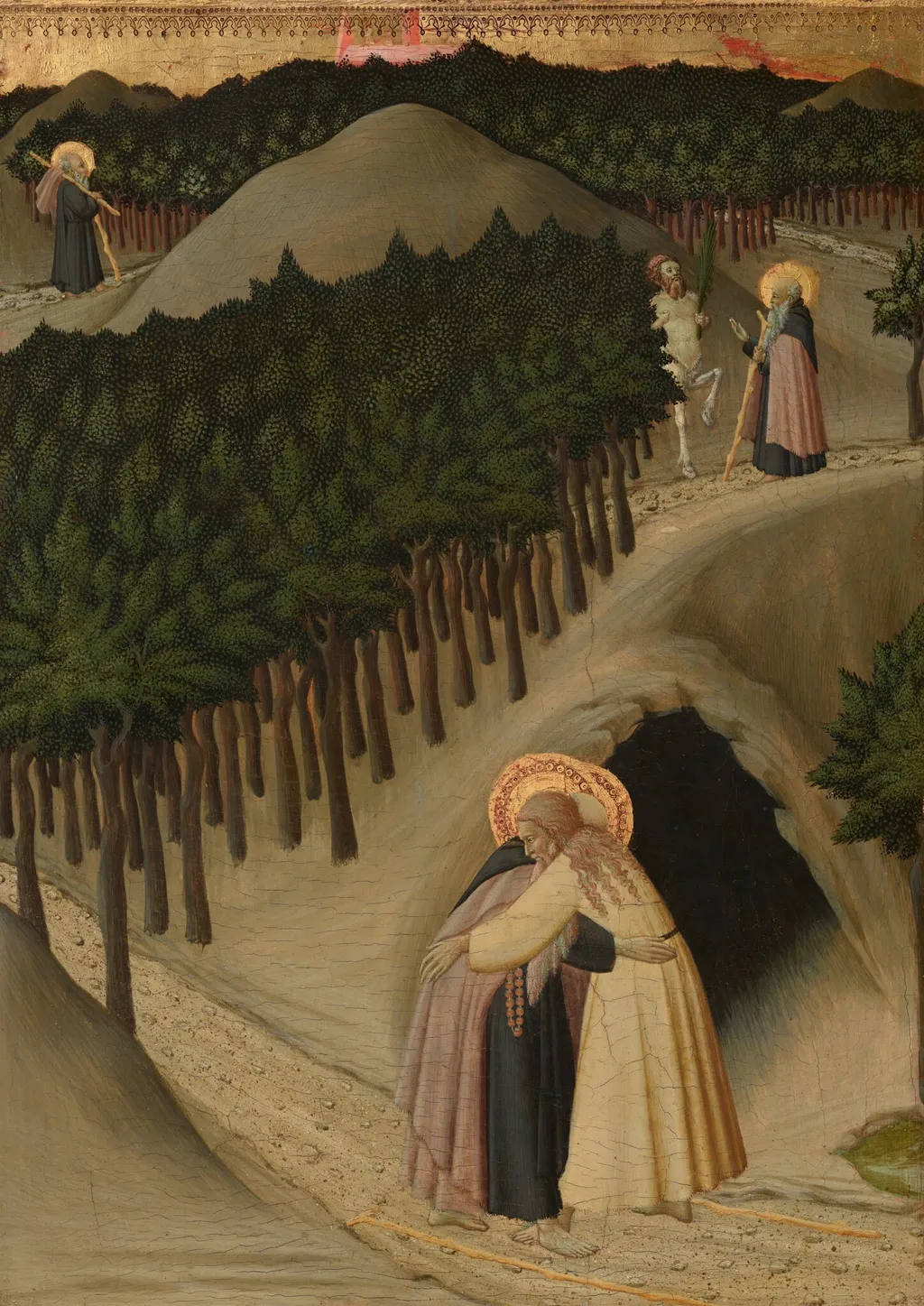
The Meeting of Saint Anthony and Saint Paul is a tempera painting by the Early Renaissance artist Master of the Osservanza. It dates from 1432 and is held in the collection of the National Gallery of Art.
About this work
Two old saints meet in a desert, dressed in plain robes with animals around them, suggesting a simple, peaceful life. They stand as equals, unusual for a time when saints were often shown in formal settings. The Master of the Osservanza painted it in tempera around 1432.
Subject & Meaning
The work depicts Anthony the Great and Paul of Thebes, two desert hermits, embracing at the foot of a mountain, a detail reflected in an early title of the painting. As a religious genre panel, it illustrates the legendary meeting of these saints recounted in hagiographic sources, symbolizing their shared ascetic life and spiritual fellowship. The image underscores the eremitic ideal of solitary devotion complemented by mutual support, conveying the virtue of solitude and the communion of holy hermits within the Christian tradition.
Technique & Style
The medium and support are characteristic of early Italian panel painting, utilizing egg-based tempera to build form and color on a prepared wooden surface.
The Meeting of Saint Anthony and Saint Paul is executed in tempera on a poplar panel support. Measuring 47 by 33.6 centimeters, the painting is a religious work created around 1430 by the Master of the Osservanza. The medium and support are characteristic of early Italian panel painting, utilizing egg-based tempera to build form and color on a prepared wooden surface.
Stylistically, the work aligns with the 15th-century Sienese school, reflecting the formal, linear, and narrative qualities typical of the Master of the Osservanza's approach to religious subject matter, specifically depicting the embrace of the hermit saints Anthony the Great and Paul of Thebes at the foot of a mountain.
History & Provenance
Dated to 1430, this tempera on poplar panel was created by the Master of the Osservanza. The work's documented ownership begins with Granville Edward Harcourt Vernon at Grove Hall, Nottinghamshire, before passing by inheritance to his wife, Lady Selina Vernon. Following her tenure, the painting was sold at Christie's in London on June 17–18, 1864, where it was attributed to P. Laurenti and purchased by Anthony.
It subsequently entered the collection of Wentworth Blackett Beaumont, 1st Baron Allendale, remaining within the Beaumont family through two generations of inheritance until 1937. In that year, the piece was sold to Duveen Brothers, Inc., who resold it in June 1938 to the Samuel H. Kress Foundation. The foundation gifted the work to the National Gallery of Art in Washington, D.C., in 1939.
The Meeting of Saint Anthony and Saint Paul is held in the National Gallery of Art, Washington, D.C., where it forms part of the Samuel H. Kress Collection, having been gifted to the gallery by the Kress Foundation in 1939. Its exhibition history includes a showing at the 1857 Art Treasures exhibition in Manchester, where early Italian works from the Vernon collection were displayed.
Overview
The Meeting of Saint Anthony and Saint Paul, painted by the Master of the Osservanza between 1430 and 1435, depicts the legendary encounter of two early Christian hermits in the Egyptian desert. The composition centers on the two elderly figures, Saint Anthony the Great and Saint Paul of Thebes, who embrace in a moment of recognition amidst a sparse, rocky landscape. Rendered in tempera on poplar panel, the work is characterized by the artist's distinctive linear style and a palette of muted earth tones that emphasize the ascetic nature of the scene.
The saints are dressed in simple, tattered garments, reflecting their life of penance, while a small fox and other desert fauna populate the foreground, adding a layer of symbolic detail common in Sienese painting of the period. Created during the early 1430s, this panel represents a key example of the Master of the Osservanza's contribution to the transition from International Gothic to the early Renaissance in Siena. The narrative illustrates the hagiographic tradition where Saint Anthony, guided by a raven, discovers Saint Paul living in solitude, highlighting themes of spiritual kinship and divine providence.
Own this work as a print
Artist & collection

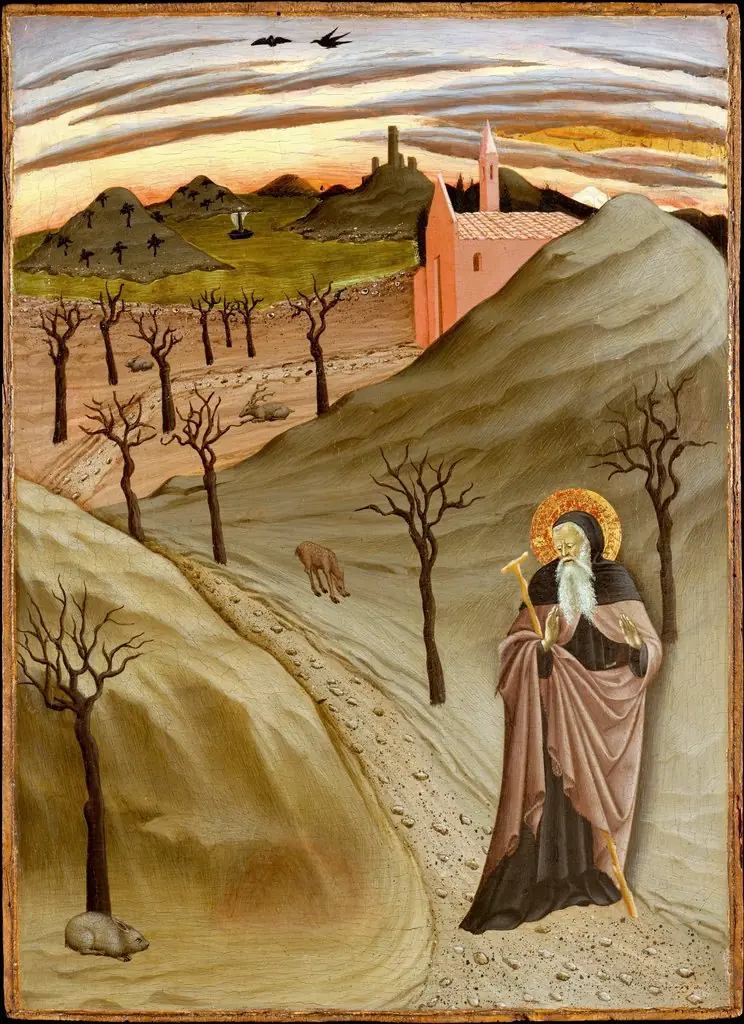
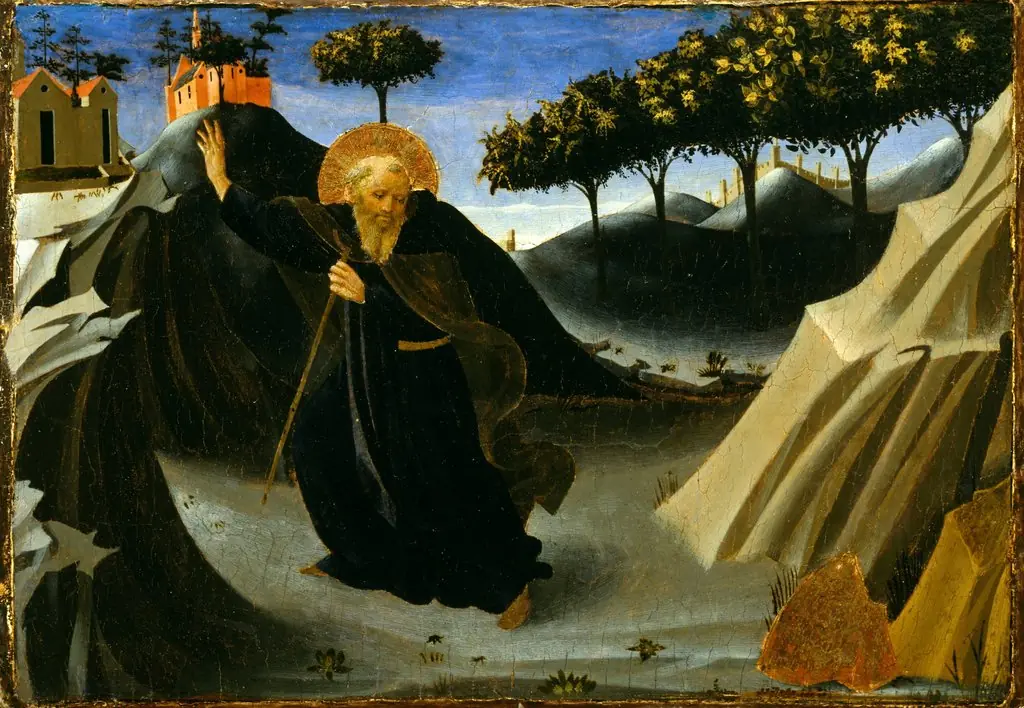 Saint Anthony Abbot Shunning the Mass of Gold
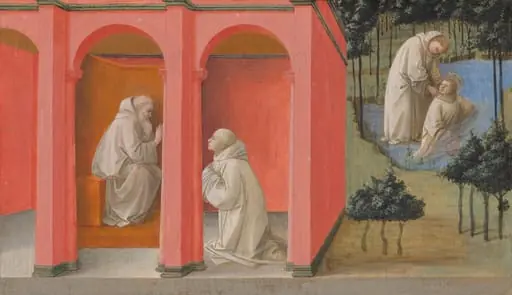 Saint Benedict Orders Saint Maurus to the Rescue of Saint Placidus
![The Papacy Offered to Saint Gregory the Great [?], by Fra Angelico](https://artifactworldgallery.com/img/fra-angelico--the-papacy-offered-to-saint-gregory-the-great--6c28505dc47c9093-w320.webp) The Papacy Offered to Saint Gregory the Great [?]
The Papacy Offered to Saint Gregory the Great [?]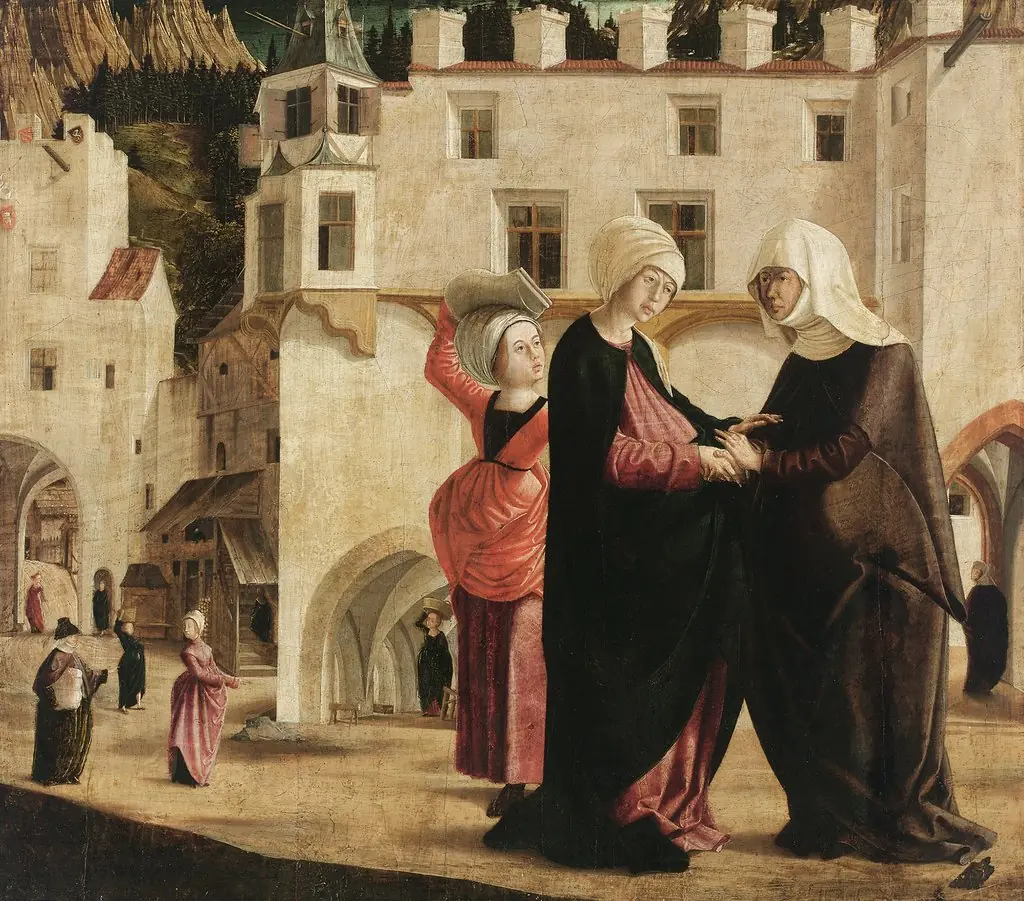 The visitation
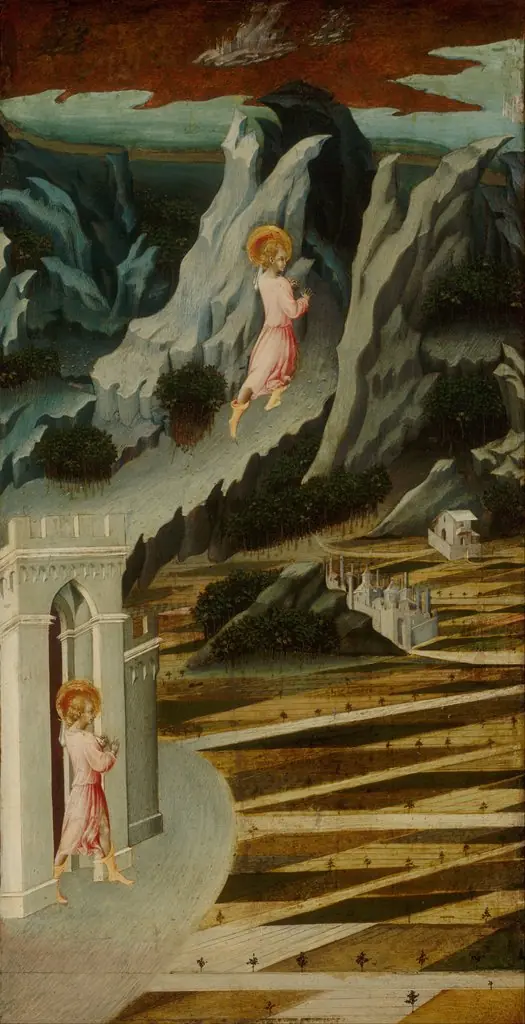 Saint John the Baptist Entering the Wilderness
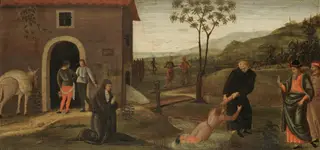 Saint Nicholas of Tolentino Rescuing a Boy from Drowning
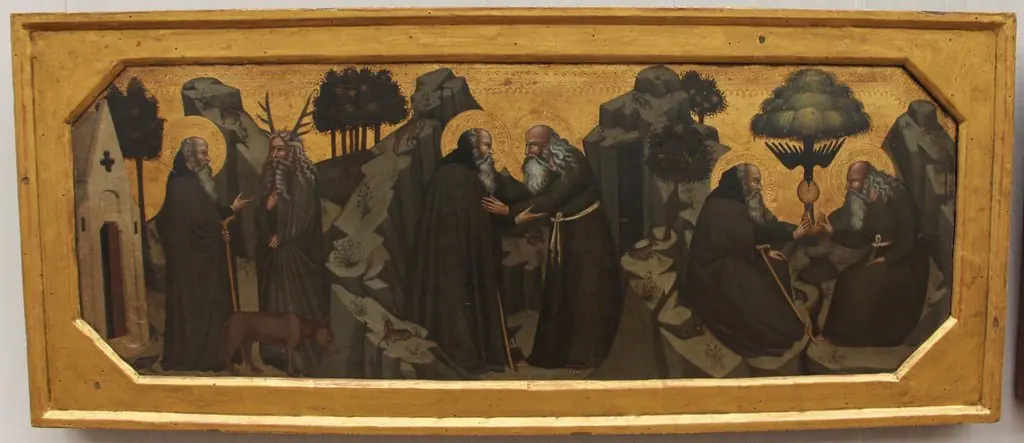 Scenes from the Life of Sacred Hermits
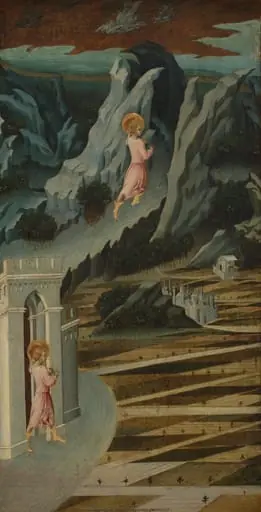 Saint John the Baptist Entering the Wilderness
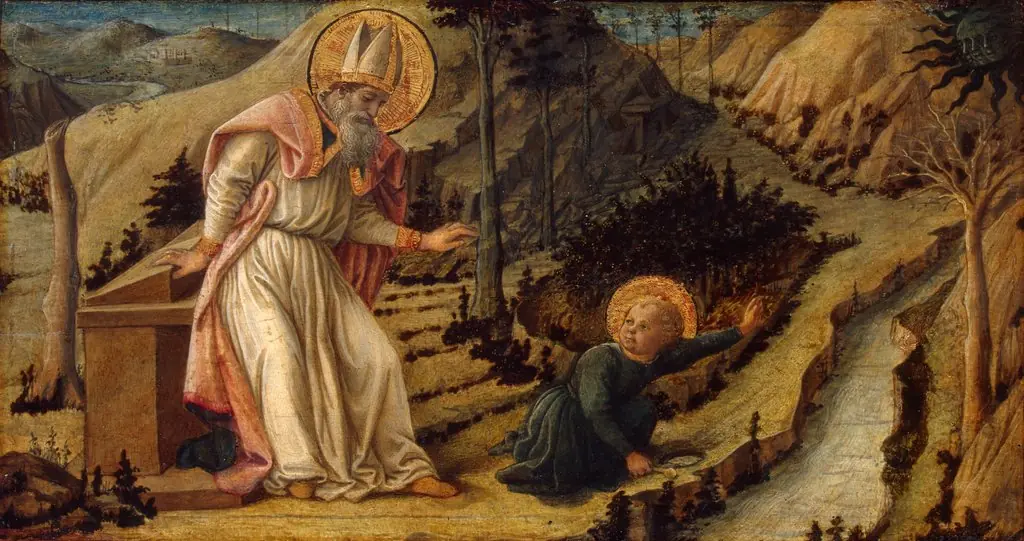 Vision of St Augustine