宋/明? 佚名 仿王齊翰 挑耳圖 卷|Library Scene by After Wang Qihan
View the artwork: 宋/明? 佚名 仿王齊翰 挑耳圖 卷|Library Scene →
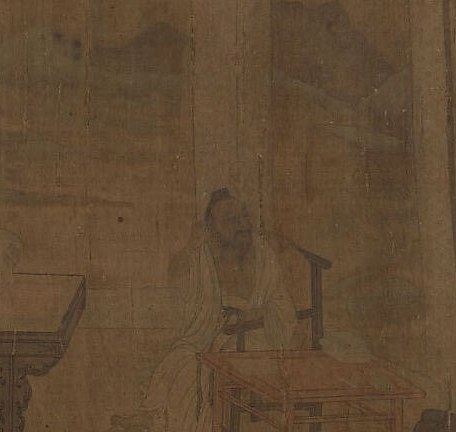
This is 'Library Scene' (挑耳圖), attributed to an anonymous artist working after the 10th-century painter Wang Qihan, and it is one of the earliest surviving Chinese paintings to explicitly depict a private library. Look past the quiet interior and you will find a deeply human moment of permissible leisure, hiding in plain sight.
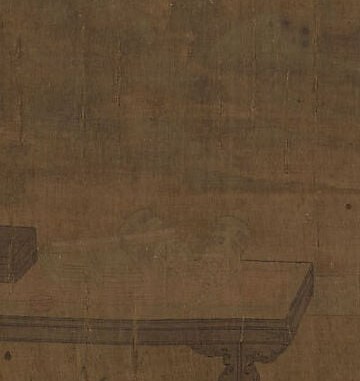
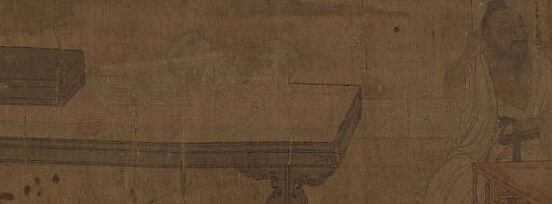
The painting codes scholarly ease through a series of deliberate choices. The low desk is bare, signaling that serious work has been paused. Shelves of books and bundled scrolls line the walls, proving the sitter's identity as a man of letters. But the defining detail is the small ear pick in his hand, an intimate, even slightly comedic grooming gesture that intentionally undercuts the dignity expected of a formal portrait. A female attendant stands by, yet the scholar reclines without a trace of performance.
The work survives as a handscroll from the Song or Ming dynasty, a period when private scholarship and book collecting were becoming central markers of elite identity. Its detailed depiction of stacked scrolls and shelved books offers a rare material record of how texts were stored and accessed. The room's architectural framing and floor-level seating anchor the idealized scene in the real domestic spaces of the period.
What the code adds up to is a quiet manifesto. The true scholarly life, this painter argues, is not one of rigid duty but of tranquil ease, a mind at rest, free to think, amid the books it loves.
#arthistory #chinesepainting #songdynasty
Details
Transcript
A scholar leans back, deep inside his private library. This is one of the earliest paintings of a private library. His desk is bare. Study has been set aside. In his hand, the real message: an ear pick. Ear-picking is an intimate, undignified act. He is completely at ease. A female attendant stands by, yet he feels no need to perform. The code resolves: true scholarly life is not solemn duty, but peaceful leisure.