Crow Chief, His Wife, and a Warrior by Catlin, George
George Catlin, a lawyer-turned-artist, dedicated his career to documenting Native American life in the American frontier. His painting, *Crow Chief, His Wife, and a Warrior* (1861), depicts three figures in their traditional regalia, offering a valuable visual record of Indigenous culture in the mid-19th century.
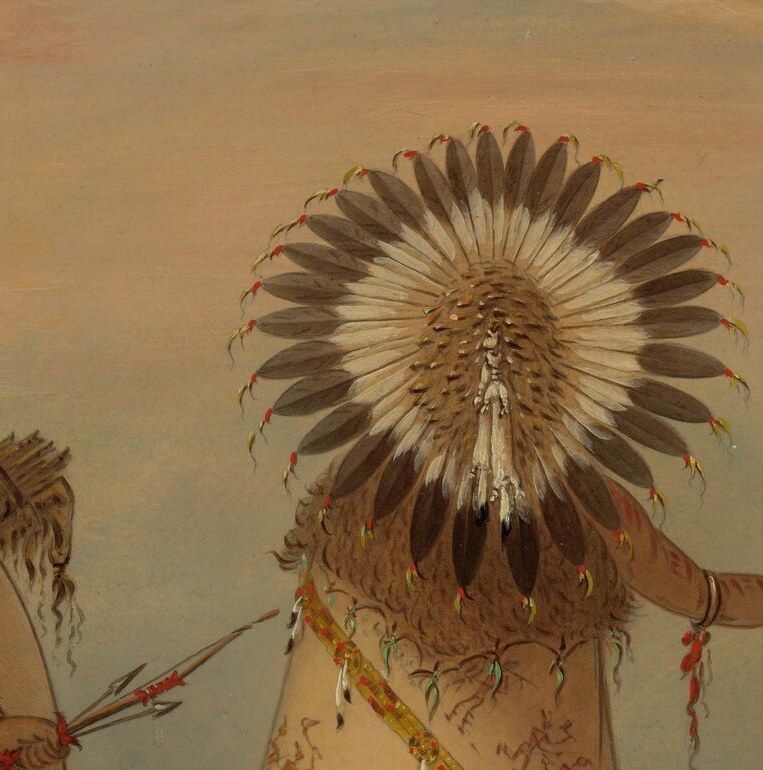
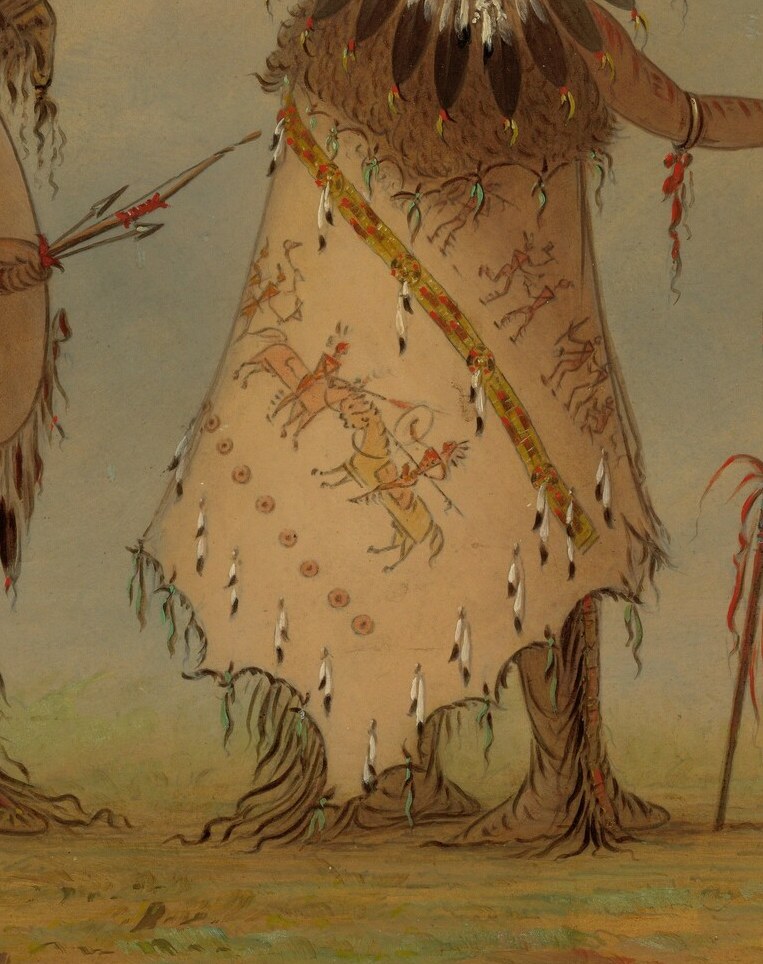
Notice the intricate details: the chief's elaborate feathered headdress, the warrior's fur-trimmed shield, and the woman's patterned shawl. Catlin's precise, observational brushwork aimed to accurately represent their attire and social roles within the tribe.
Traveling extensively in the 1830s, Catlin created a vast body of work to counter prevailing stereotypes. He sought to portray Indigenous peoples with dignity and specificity, making his collection an important ethnographic project that preserved a visual archive of the era.
What details in their clothing or expressions strike you most?
Details
Transcript
This painter traveled the American West in the 1830s. He sought to document Native American life through portraits. Here, a Crow Chief stands with his wife and a warrior. Look at the chief's stoic face, conveying leadership and authority. The warrior's shield is adorned with animal fur. This painting records Indigenous dress and hierarchy. The artist aimed to present Indigenous individuals with dignity.