Caritas: Joanna de Geer (1629-1691) with her Children Cecilia Trip (1660-1728) and Laurens Trip (b. 1662) by Ferdinand Bol
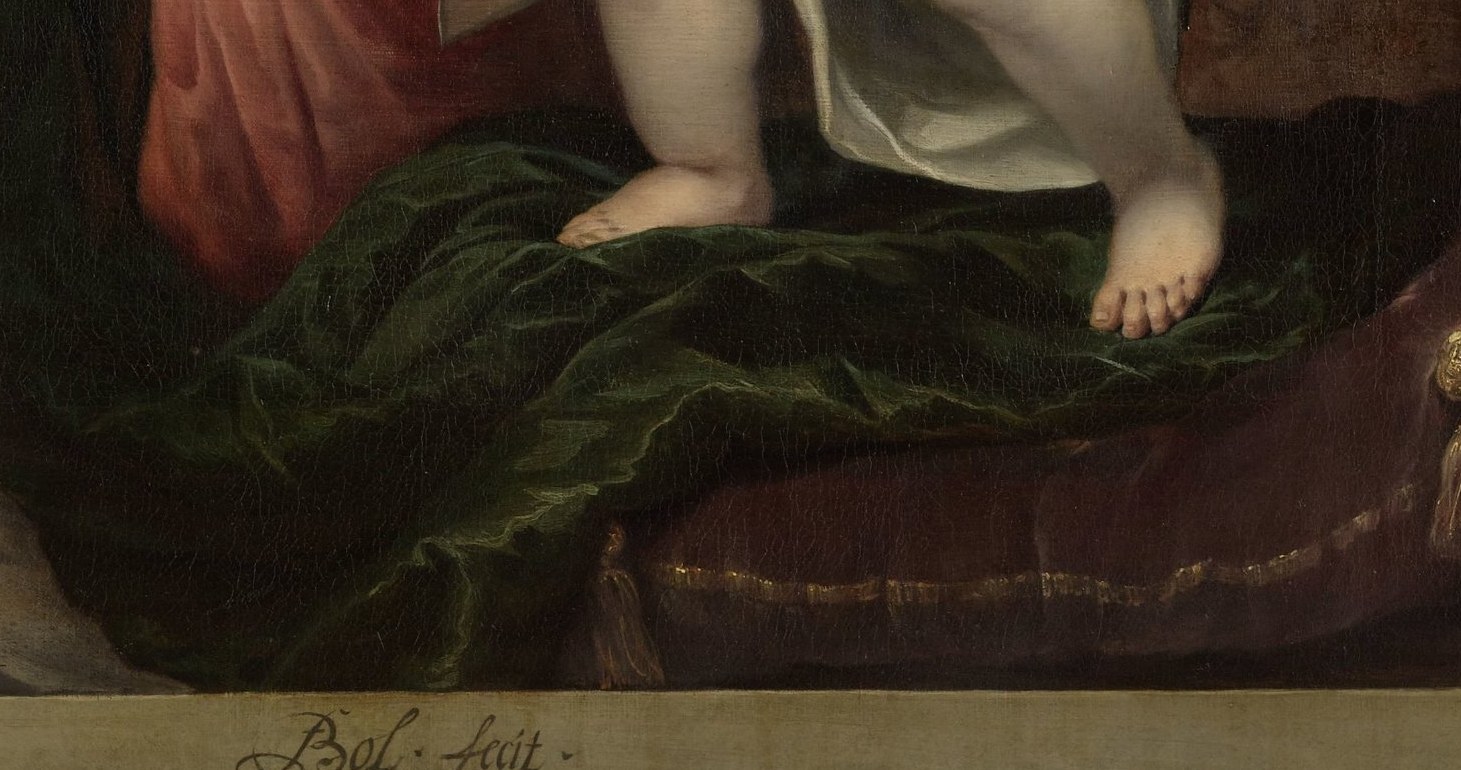
Painted in 1666 by Ferdinand Bol, a prominent pupil of Rembrandt, "Caritas: Joanna de Geer with her Children" depicts Joanna de Geer personified as Caritas, the allegorical embodiment of motherly love. However, the painting's subtle choices challenged societal norms, making a quiet statement about virtue over status.
Look closely at Joanna de Geer's attire; she is dressed in simple, modest clothes rather than the opulent court dress expected of her social standing. This deliberate choice emphasized the purity of charity and maternal affection over material wealth, a bold departure for a wealthy patron's portrait in the 17th century.
Bol's work showcases the psychological depth of his teacher Rembrandt, blended with a refined elegance. The intimate portrayal of Joanna de Geer with her children, Cecilia Trip and Laurens Trip, highlights the emotional bond and the ideal of selfless love, subtly pushing against the conventions of allegorical portraiture.
This painting is a fascinating example of how artists subtly wove social commentary into their work. What do you notice about her expression?
Details
Transcript
This looks like a tender family portrait. But its message was subtly scandalous in its time. This is Joanna de Geer, posed as Caritas, motherly love. She wears modest attire, not the usual rich silks of her status. This emphasized virtue over wealth, a bold statement. Her hands gently cradle her child, a pure vision of affection. The painter was Rembrandt's student, Ferdinand Bol.