The Last Supper by Juan de Juanes
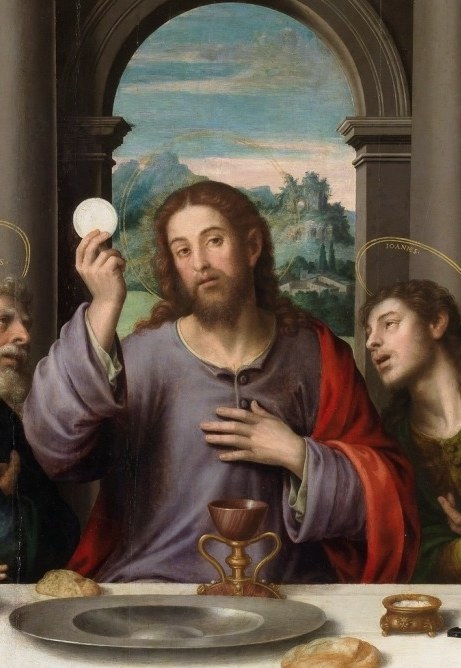
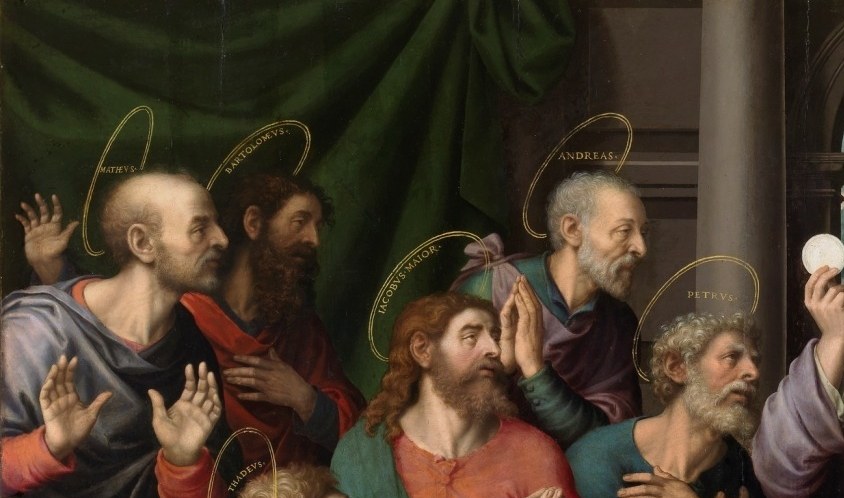
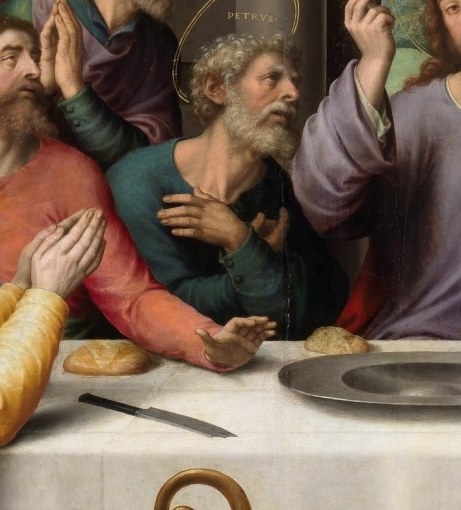
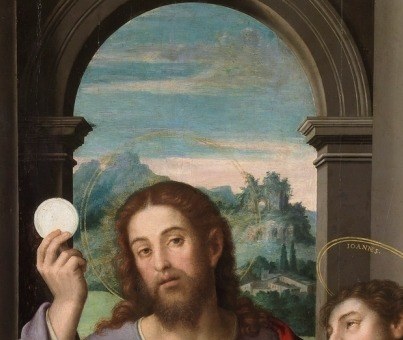
Juan de Juanes painted *The Last Supper* around 1555 in Valencia, Spain. The large oil painting captures the exact moment Christ institutes the Eucharist, lifting the host as the twelve apostles process the announcement. But two deliberate choices in the painting do a lot of quiet work.
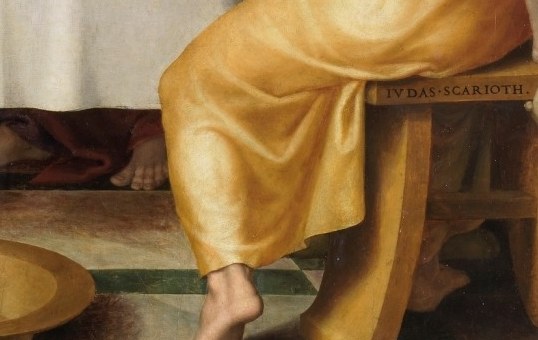
Look first at the haloed heads. Every apostle wears a golden disk except one: Judas, leaning forward left of center, has no halo. His hand clutches near his purse, and his tense posture already separates him from the sanctified gathering. Juanes made the betrayal visible before the viewer even reaches the table.
Then drop to the lower right corner. A wide basin sits on the white tablecloth, easy to miss. This is the bowl Christ used when he washed the disciples’ feet earlier that evening. The painter leaves it empty and expectant on the table, a reminder that humility precedes the sacred meal.
The painting belongs to the Prado Museum in Madrid. Juan de Juanes was the leading painter of the Valencian Renaissance, and his two daughters were also painters. Have you spotted the basin before the halos?
Details
Transcript
A moment of consecration freezes twelve men in place. Christ raises the host. The apostles reel back. Juan de Juanes painted this in Spain, around 1555. He gave every apostle a halo. Every one but one. Lean in close, left of center. Judas has no halo. Now drop your eye to the lower right corner. A wide, empty basin sits at the very edge of the table. It is the bowl Christ used to wash their feet. Left waiting.