Enthroned Virgin and Child by http://www.wikidata.org/.well-known/genid/6e4692663e3c2b98bb5efcd6ab633127
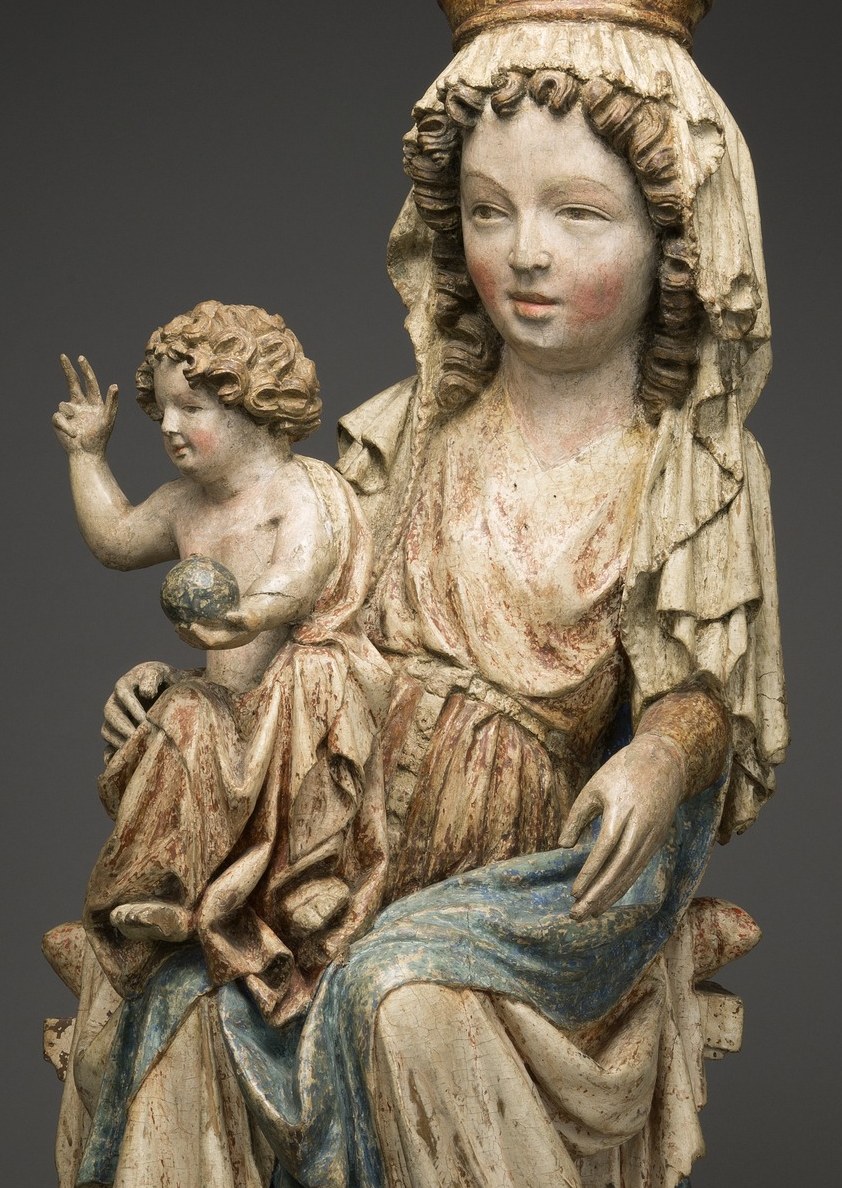
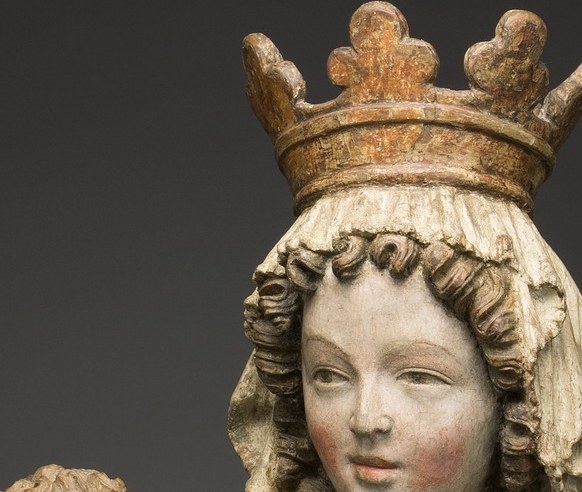
This is the Enthroned Virgin and Child, carved around 1350 by an unknown Bohemian master, now in the collection of the Metropolitan Museum of Art. At first glance it reads as a conventional Gothic Madonna: a crowned Virgin seated on an architectural throne, the Christ Child standing at her side in an active, sovereign pose. But the real astonishment here is not the iconography. It is the drapery.
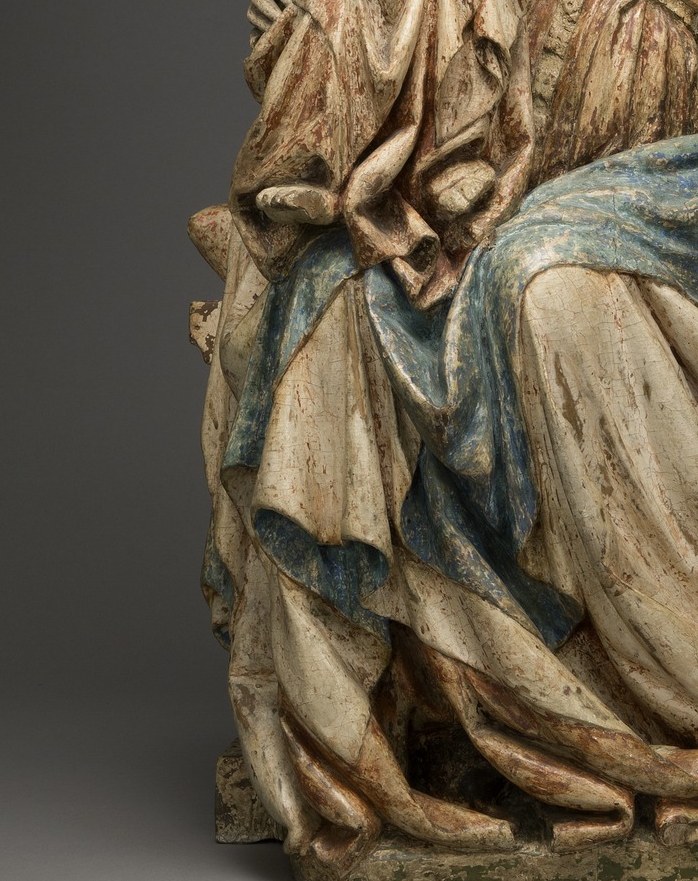
Look at the Virgin's blue mantle and follow the folds into the deepest recesses. Those shadows are not painted. The sculptor undercut the limewood so aggressively that the overhanging wood actually blocks ambient light from reaching the hollow, what curators call a trapped shadow. A painter working in two dimensions would need to mix a dark glaze and fake it with a brush. Here the chisel simply removes material until the void itself does the work. Under flickering candlelight in a fourteenth-century church, these folds would have shifted with every flame, alive in a way no painted altarpiece could match.
The piece still carries traces of its original polychromy, the blue of the mantle was once brilliant ultramarine, the gold trim luminous leaf, but most of that surface has worn or flaked over nearly seven centuries. What remains untouched, what no amount of handling or humidity can erode, is the actual carved volume. The Gothic workshop system valued this virtuoso woodcarving above almost anything, and you can see why. The shadow was the point.
The next time you stand in front of a painted altarpiece from the same period, notice something: the best of them are trying to imitate exactly what this chisel did. The painters were chasing the sculptor the whole time.
Details


Transcript
Fourteen hours. That is how long a candle burned in a Gothic church. And the flame would catch these folds. Look at the deep hollows under the blue. That shadow is not painted. It is real. The sculptor undercut the wood so deeply it traps the dark. Six hundred and seventy-five years. The paint has flaked away. But the shadow the chisel made is still there.