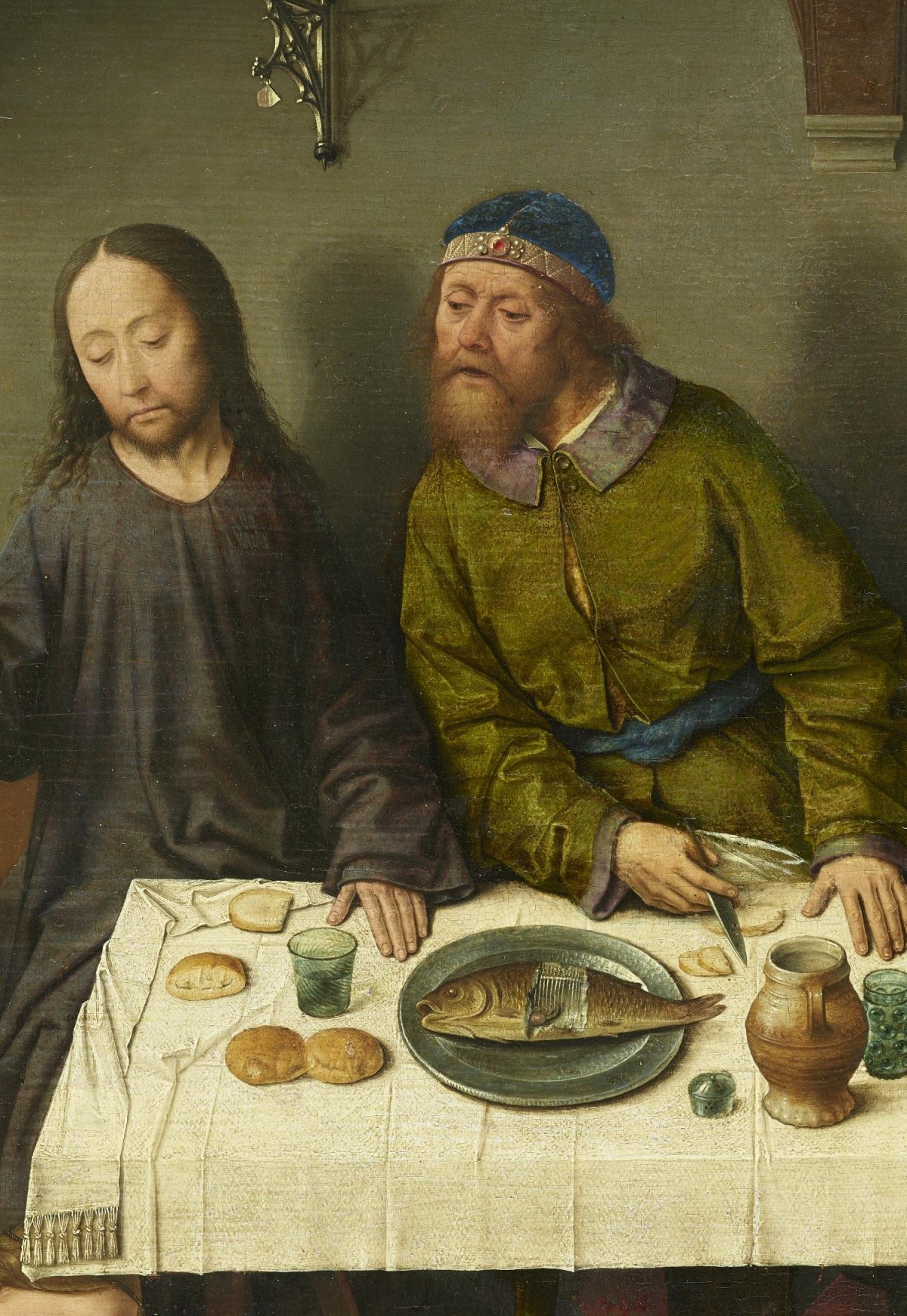
Christ in the house of the Pharisee Simon by Dieric Bouts
Dieric Bouts painted a dinner party that is not about dinner. Christ in the House of the Pharisee Simon (c. 1460, Gemäldegalerie Berlin) shows the moment Mary Magdalene anoints Christ's feet, and Bouts encodes the whole argument of the biblical story into the objects on the table.
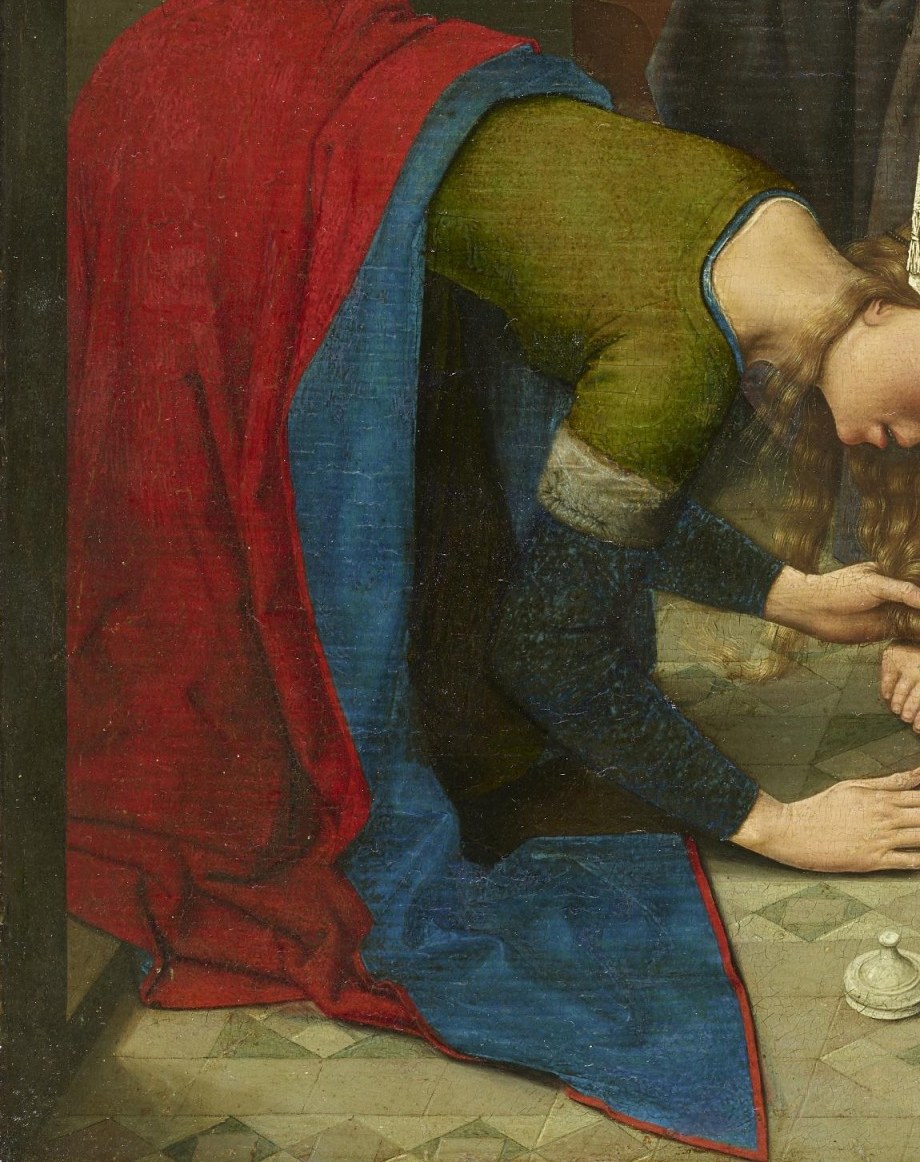
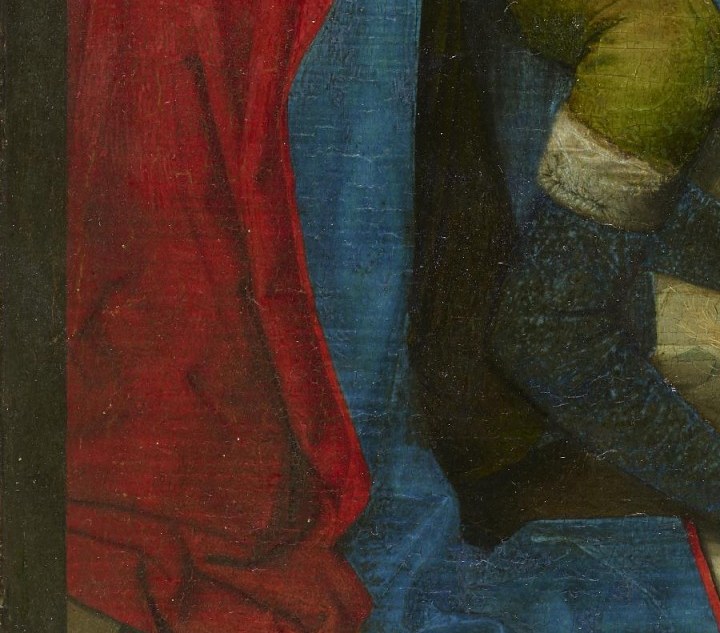
Start low: Mary Magdalene kneels at the left, her ointment jar open. That jar held nard, a perfume worth three hundred denarii, effectively a year's income for a laborer. She pours it out in an act the host, Simon the Pharisee, finds offensive. You can see his objection in the yellow-robed figure across the table, the largest color mass in the painting, his posture mid-argument.
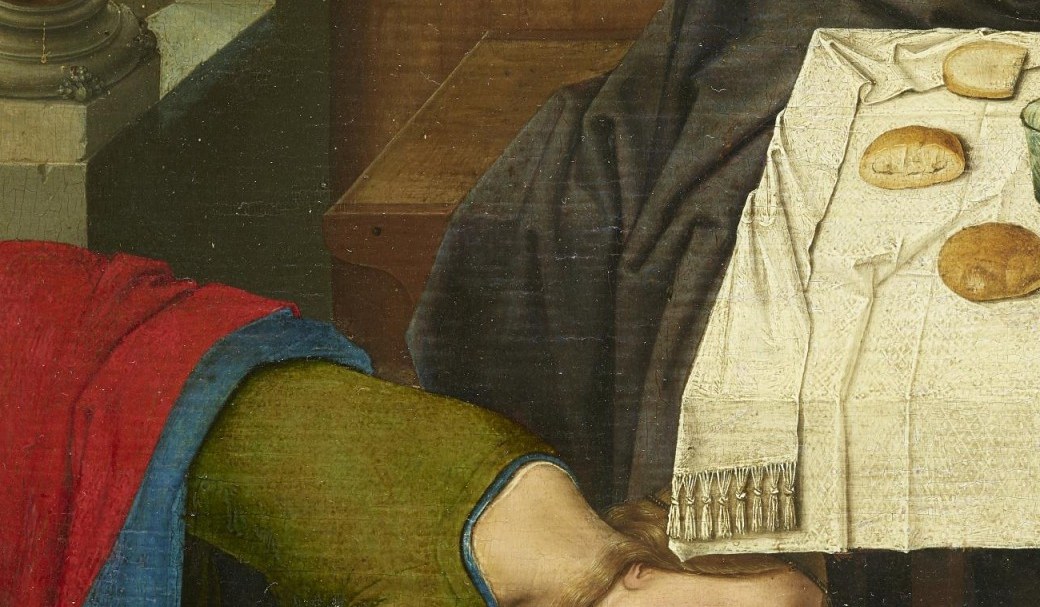
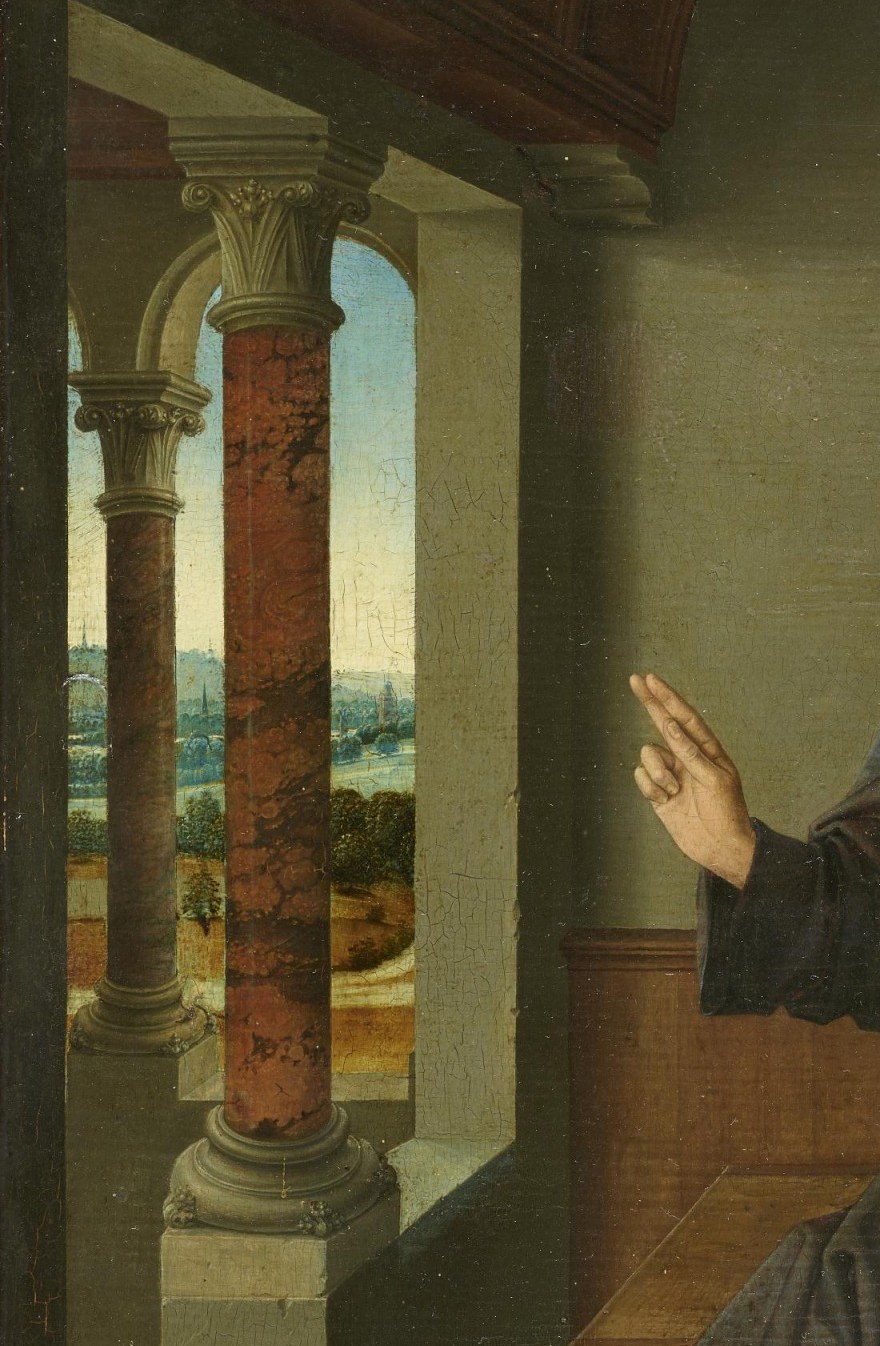
Christ's hands do not gesture or command. They rest. Bouts gives him a stillness that separates him from the debate, while the window behind his head floods in outdoor light, a halo effect achieved without a literal halo. Every pewter cup and bread roll on the table is painted with the Netherlandish precision Bouts learned from the generation of Van Eyck, but they are not the point. The point is on the floor, at the lowest position in the frame.
The story Bouts tells is that devotion matters more than status. The woman society would shun is the one Christ praises, and the expensive jar she breaks is worth less than the act of breaking it. What object in this painting do you think Bouts painted first?
Details
Transcript
A dinner party. But one guest is on the floor. This isn't service. This is the Anointing. The jar held nard, a perfume worth a year's wages. Christ's hands do not stop her. He accepts. The light behind him works like a halo, without one. Simon, in yellow, objected: a sinner touching a prophet. Every object here adds up to a single idea. That devotion, not status, earns forgiveness.