The Seamstress by DeCamp, Joseph Rodefer
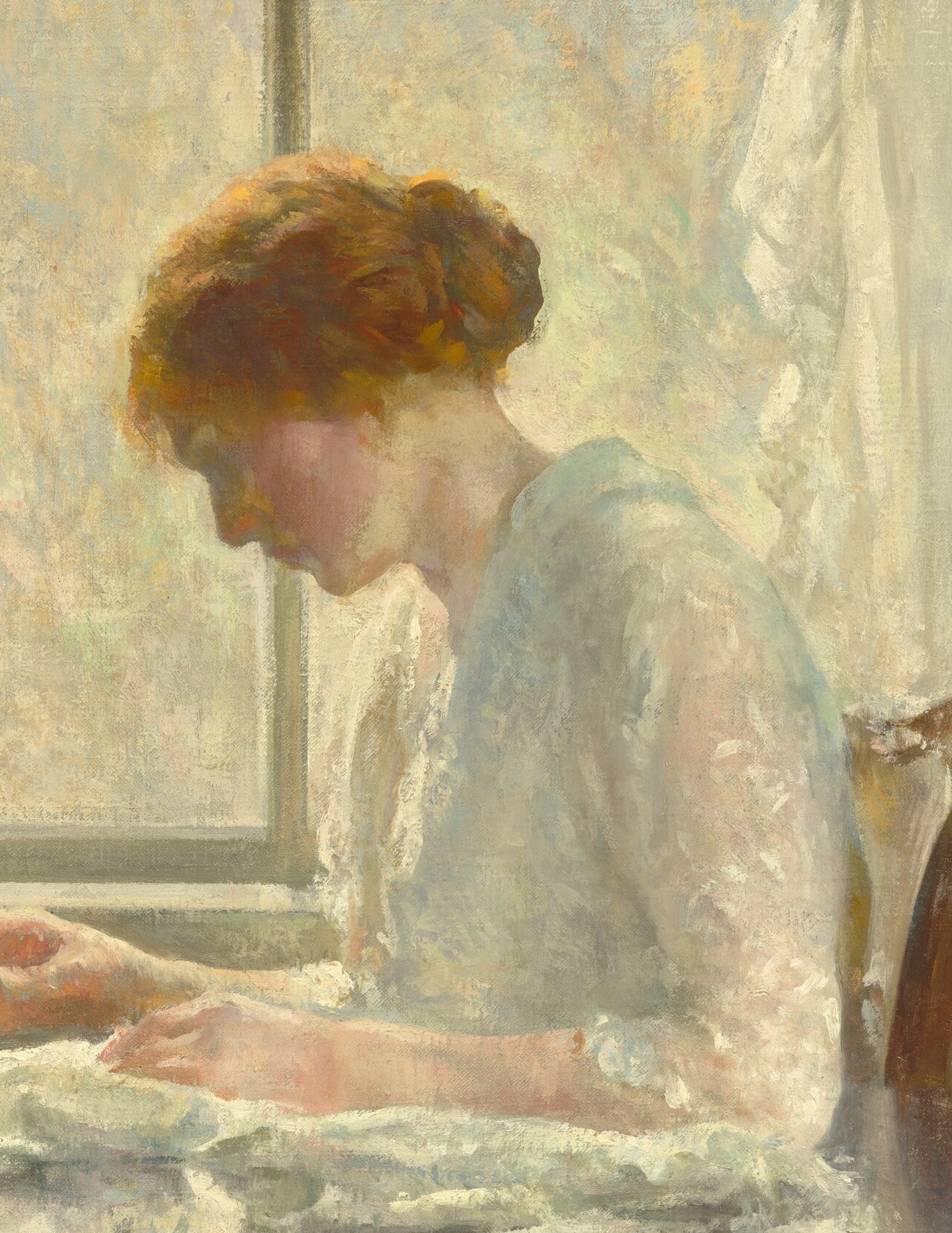
In Joseph Rodefer DeCamp's "The Seamstress," painted in 1916 and held in private collections, we see a quiet moment of domestic labor, a stark contrast to the global events of World War I. DeCamp, known for his intimate interior scenes in his later career, invites us to observe the calm focus of a woman at work.
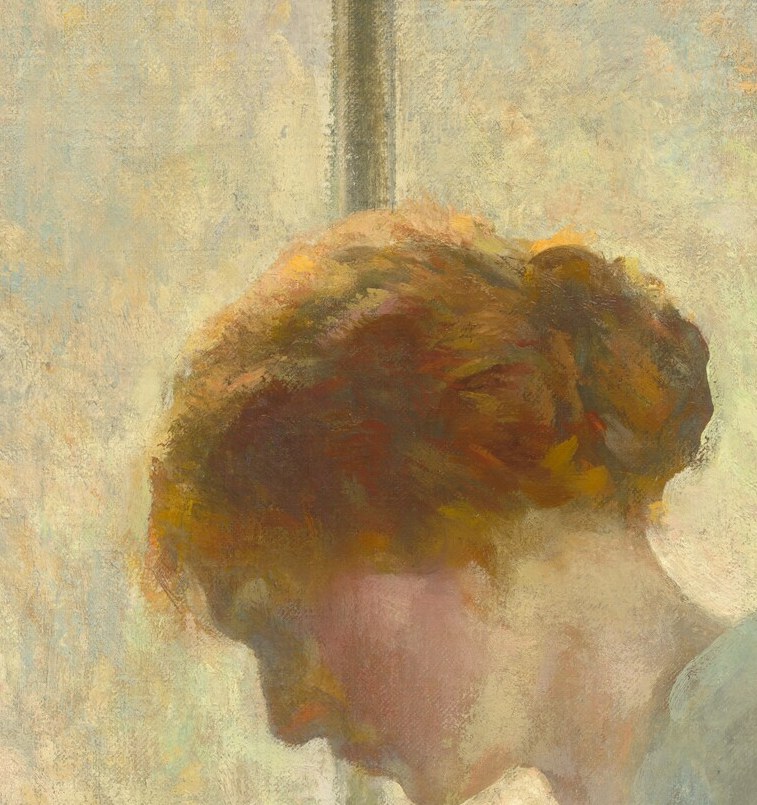
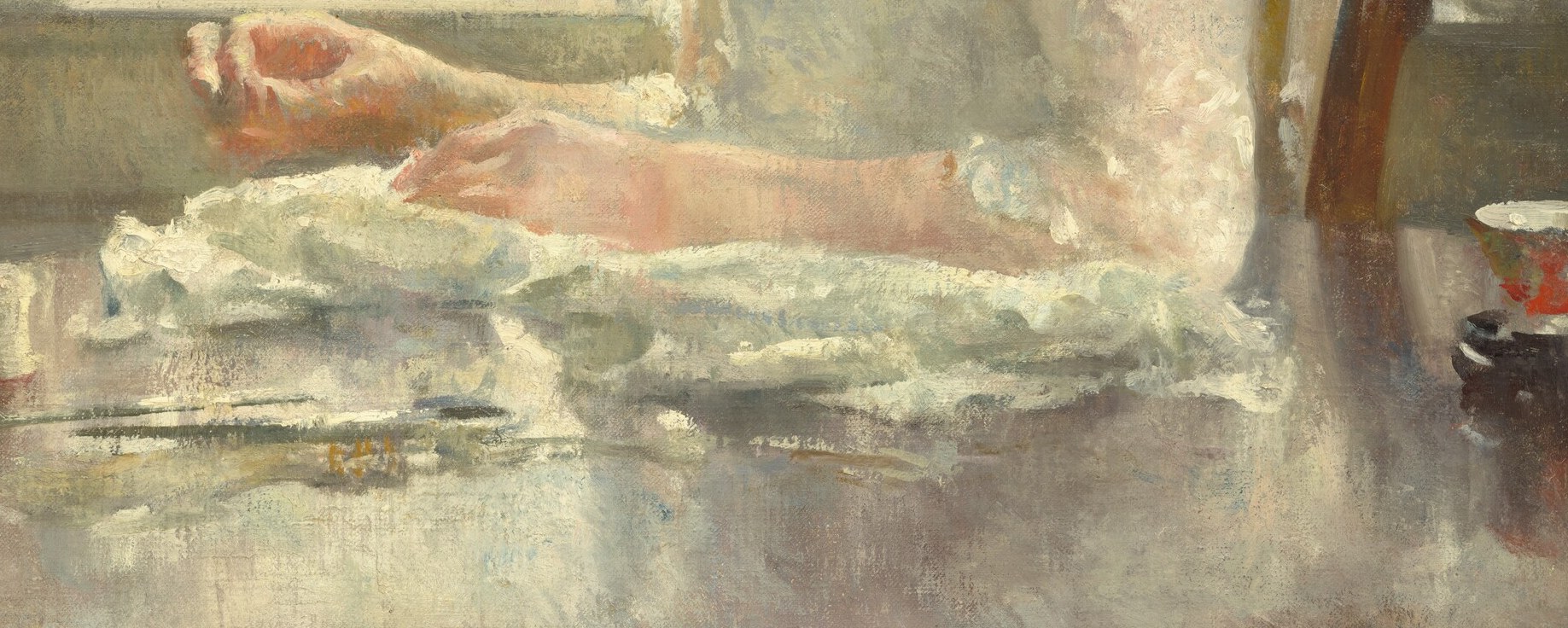
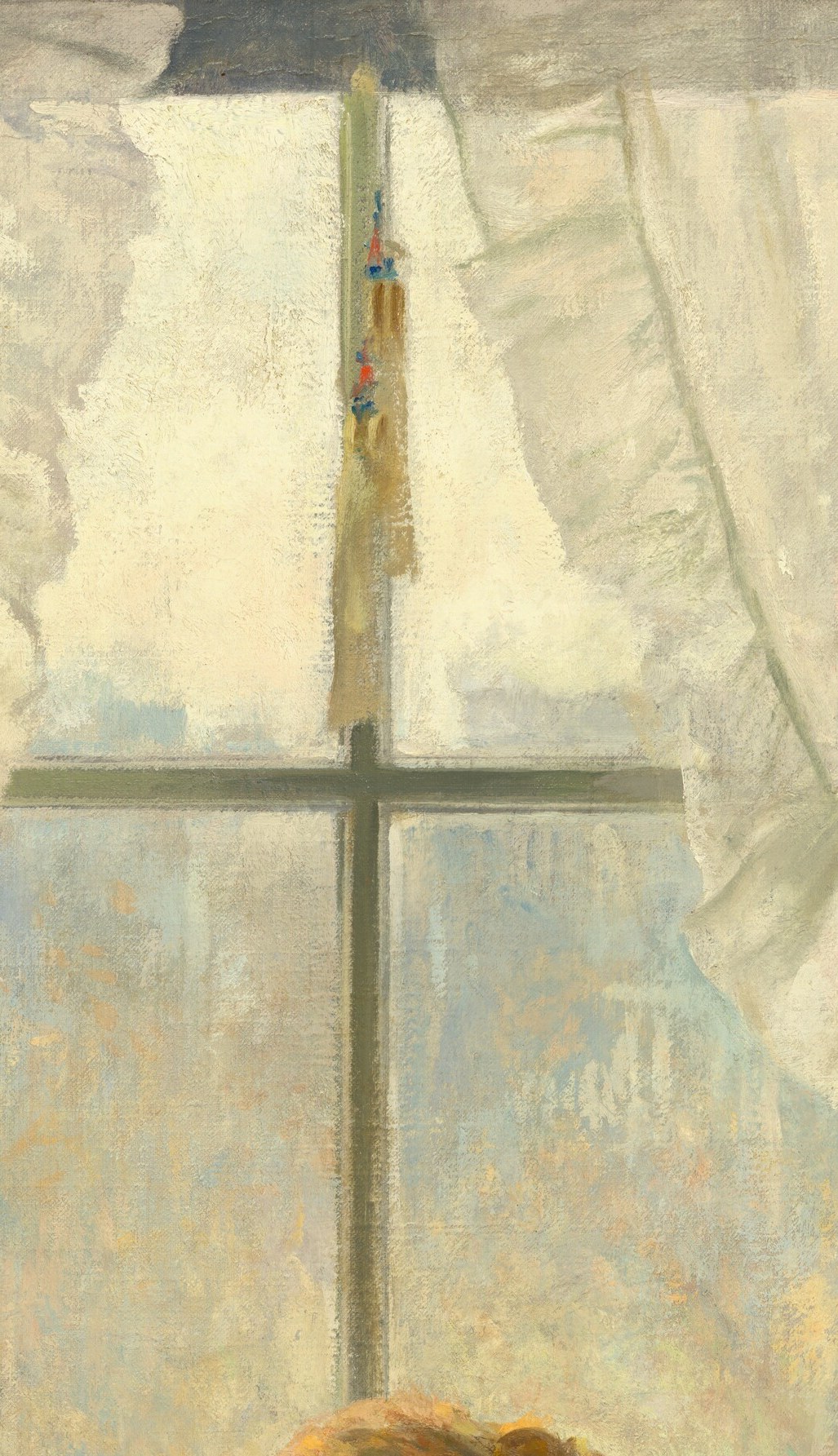
Notice the soft light from the window, illuminating her vibrant red hair and the delicate white dress. Her hands, holding needle and thread over a rumpled white cloth, emphasize the skill and concentration required for her craft. These details transform a simple act into a focal point of quiet dignity.
During the early 20th century, American artists increasingly explored domestic subjects, reflecting a broader social interest in everyday life and the roles of women. This painting aligns with that trend, offering a peaceful counterpoint to the era’s more industrial themes. It captures not just a seamstress, but a moment suspended in time, free from external clamor.
What do you think such a serene scene meant to viewers living through a turbulent period?
Details
Transcript
It’s 1916. War rages, but not in this quiet room. This woman is focused on her sewing, bathed in window light. Her vibrant red hair glows, a focal point of the scene. Under her hands, a needle and thread work delicate magic. Domestic scenes like this were popular in early 20th-century American art. The painter focused on the quiet beauty of everyday life.