The Martyrdom of Saint Mennas by Paolo Veronese
Paolo Veronese, a master of the Venetian Renaissance, painted The Martyrdom of Saint Mennas around 1590, now held at the Museo del Prado. This large-scale work showcases his dramatic style and keen eye for narrative detail.
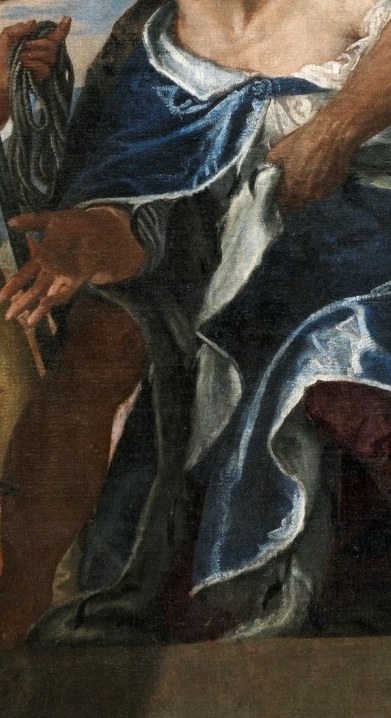
Look closely at the suffering of Saint Mennas, a soldier-saint, whose blue robe contrasts with the violence of the scene. The faint inscription on the beam above him speaks to his enduring faith, while the red flag and its emblem represent the earthly power that condemned him.
Veronese, known for his grand religious and mythological works, created this painting in the Mannerist style, employing vivid colors and dynamic compositions. His ability to tell a complex story through both overt action and subtle symbolism makes this painting a powerful testament to faith and persecution.
What other hidden meanings do you see in the painting?
Details


Transcript
Veronese painted this dramatic martyrdom scene around 1590. Saint Mennas, a soldier-saint, is being martyred for his faith. His blue robe, with its rich folds, hints at his noble spiritual status. The inscription on the beam, though faint, refers to his unwavering faith. This red flag, with its emblem, signifies the authority condemning him. But the boy in armor watches, a symbol of future hope.