Mercury and Argus by Diego Velázquez
Diego Velázquez's “Mercury and Argus” from 1659 captures a pivotal moment from classical mythology. This oil painting, part of the Museo del Prado's collection, depicts the messenger god Mercury about to fulfill Jupiter's command to slay the hundred-eyed giant Argus.
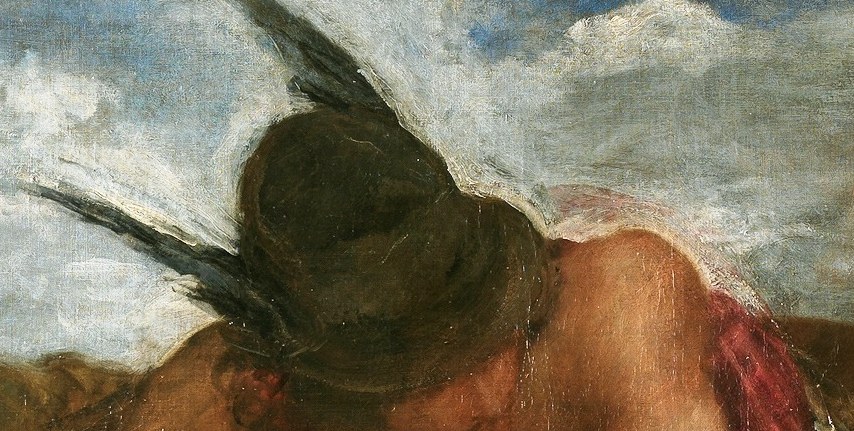
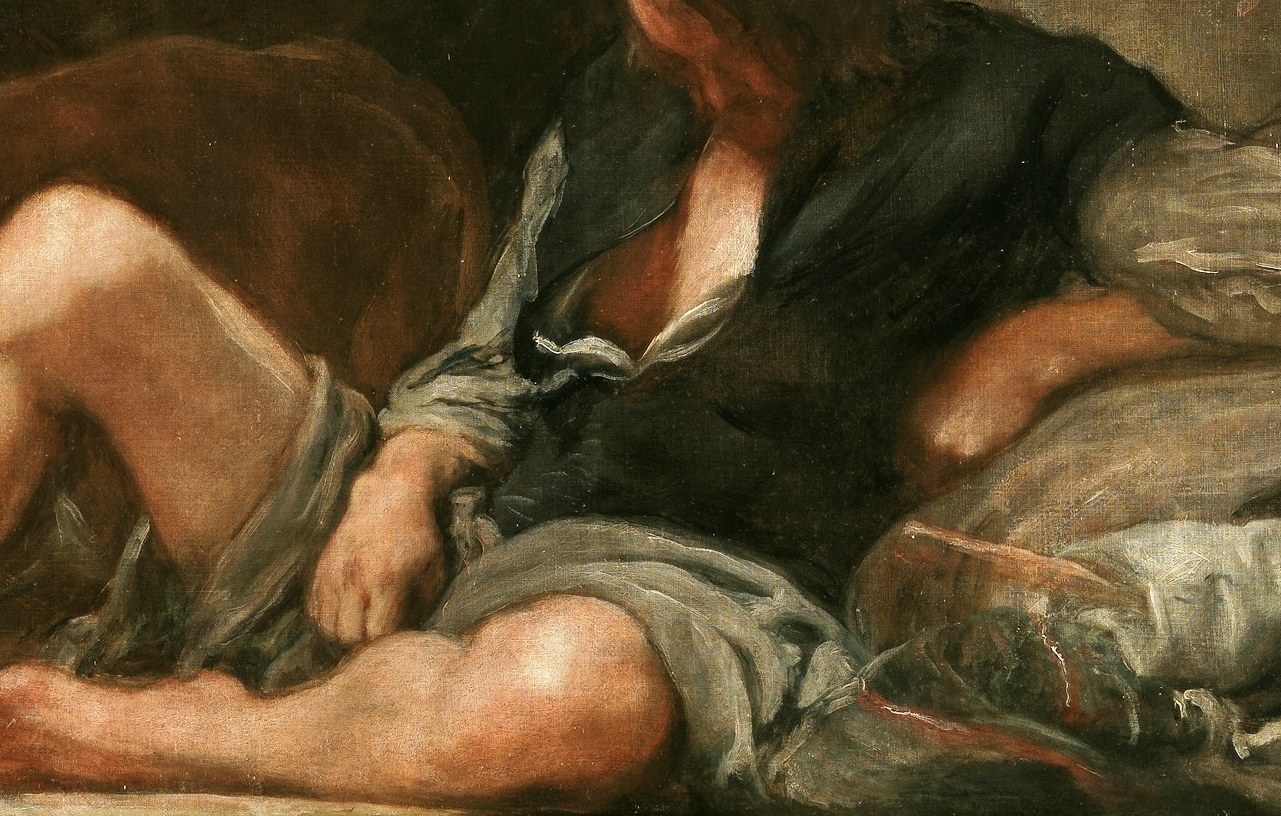
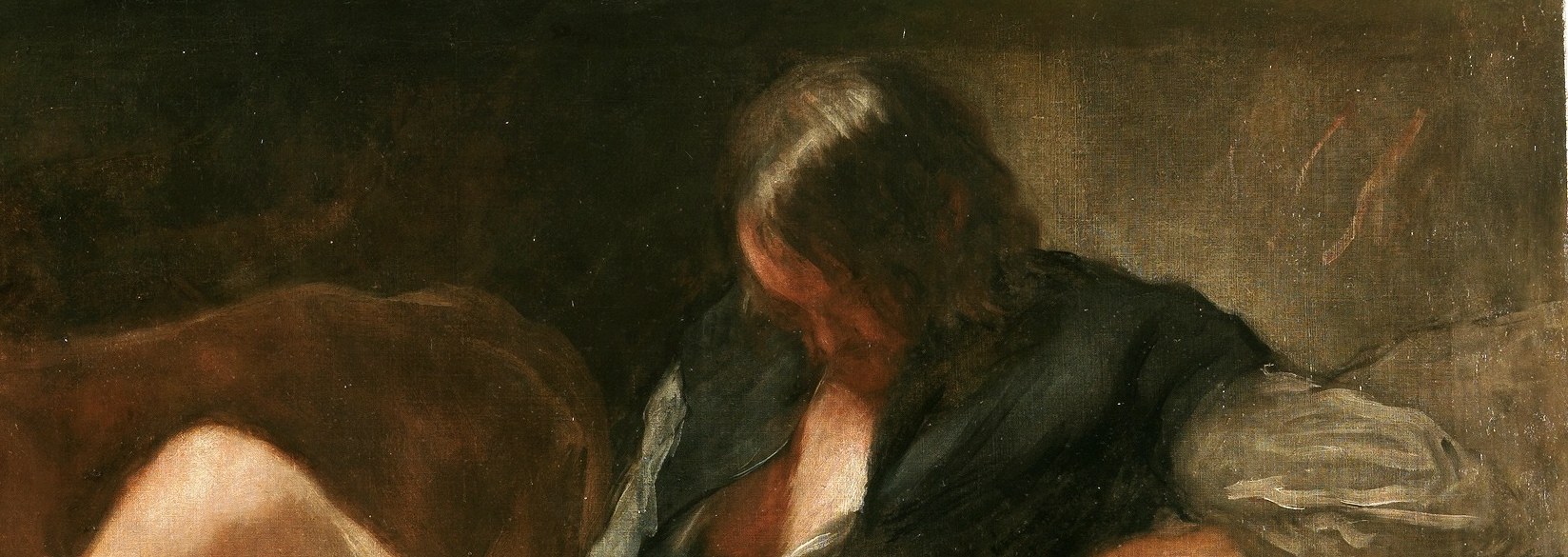
Look closely at Mercury’s winged cap, a classic identifier, and the pan flute, the instrument he used to lull Argus to sleep. Argus, depicted in a hunched, vulnerable state, holds a scroll-like object, suggesting his role as a guardian, now overcome by slumber. The dramatic, cloudy sky adds to the ominous atmosphere.
Created late in Velázquez's career, this work showcases his mastery of chiaroscuro and a limited, yet powerful, color palette. It reflects the 17th-century Spanish interest in classical antiquity, rendered with Velázquez's characteristic realism and adapted from Italian Baroque influences. The painting has remained in royal collections and later the Prado, cementing its place in Spanish artistic heritage.
What details do you notice that hint at the story's dramatic climax?
Details

Transcript
This is a story from classical myth. Jupiter sent Mercury to slay the giant Argus. Mercury wore his winged cap, a sign of swiftness. He lulled the hundred-eyed Argus to sleep with music. Argus, the guardian, now slumps in slumber. The sky above anticipates the coming violence. Then Mercury will cut off Argus's head.