The Hidden Brook by Gustave Courbet
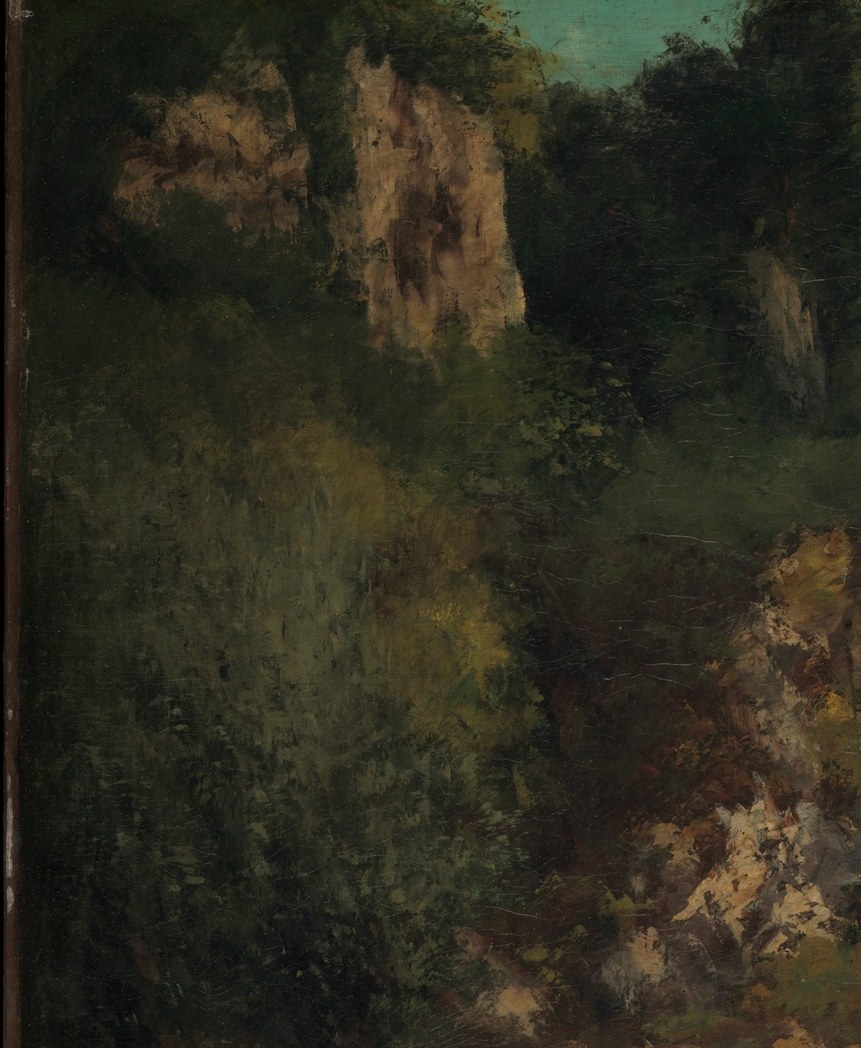
Gustave Courbet, a pivotal figure in 19th-century French painting, captured 'The Hidden Brook' in 1873. This oil painting, now in a private collection, is a prime example of his commitment to the Realism movement, where he depicted the world as he observed it, without idealization.
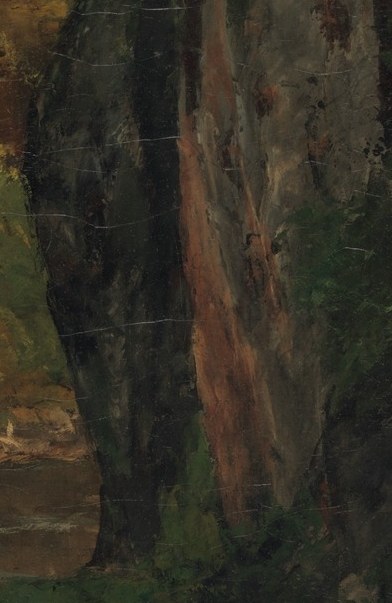
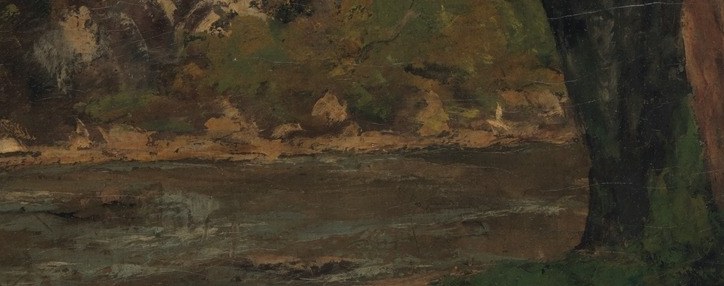
Look closely at the dense foliage and rugged tree trunks; Courbet's visible, textured brushstrokes bring the raw, tangible quality of the forest to life. A dramatic shaft of light illuminates a hidden waterway, reflecting a patch of muted sky and inviting the viewer into a secluded natural setting.
Courbet’s revolutionary approach challenged the prevailing Romanticism and academic conventions of his time. He was later imprisoned for his involvement in the Paris Commune and lived in exile. This painting, created during his exile in Switzerland, stands as a quiet testament to his enduring dedication to observational art, influencing future generations including the Impressionists.
What do you notice first in this unadorned glimpse of nature?
Details
Transcript
This painter was a leader of 19th-century French Realism. He rejected idealized landscapes, painting only what he observed. Observe the thick, textured brushstrokes on these tree trunks. A beam of light cuts through the dense canopy. Beyond, a hidden brook reflects the muted sky. The artist created this unembellished scene in 1873.