Portrait of a man, possibly Marcantonio Doria, Prince of Angri by Anthony van Dyck
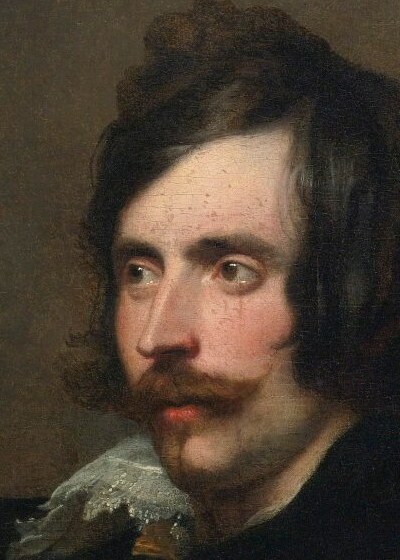
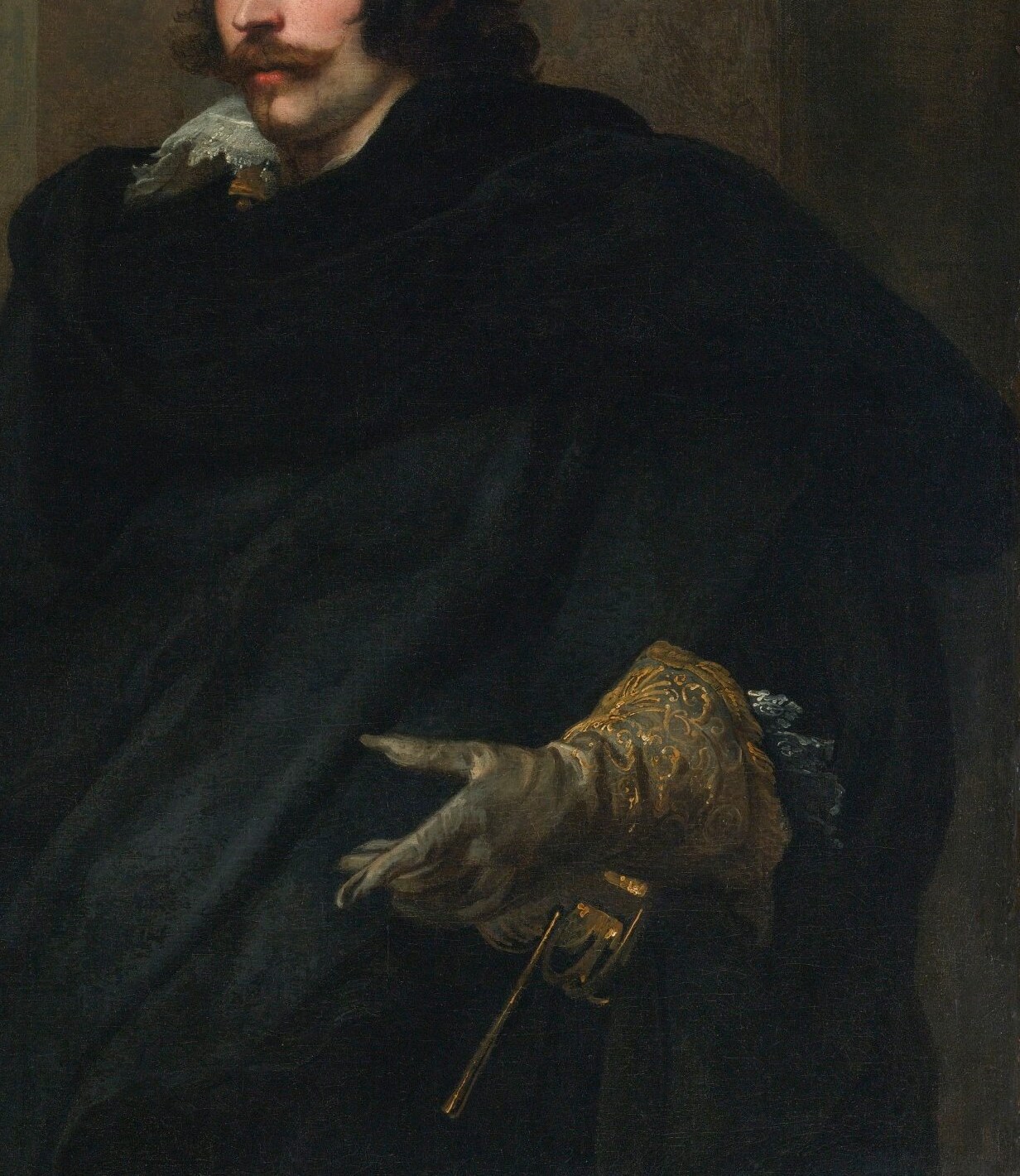
Anthony van Dyck's "Portrait of a man, possibly Marcantonio Doria, Prince of Angri," painted in 1626, showcases the artist's early mastery and the gravitas of 17th-century nobility. This oil painting exemplifies the High Baroque Italian movement with its dramatic lighting and focus on the sitter.
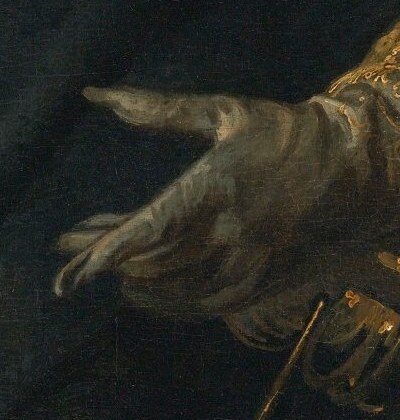
Look at the sitter's voluminous dark cloak, a symbol of wealth, and the delicate, ruffled lace collar. His gloved hand, intricately embroidered with gold, rests on a baton, signifying his rank and authority.
Van Dyck, a Flemish Baroque painter, created this work during his formative years before becoming England's leading court painter. This portrait reflects his engagement with Italian artistic trends.
The painting captures a moment of deep contemplation, inviting us to consider the man's status and inner world.
Details
Transcript
He wears a voluminous, dark cloak. A ruffled lace collar contrasts with his dark attire. This distinguished man was painted in 1626. His gaze suggests introspection or focus elsewhere. He holds a baton in his gloved hand. Intricate gold embroidery adorns the glove. Anthony van Dyck was a leading court painter in England.