Three Woyaway Indians by Catlin, George
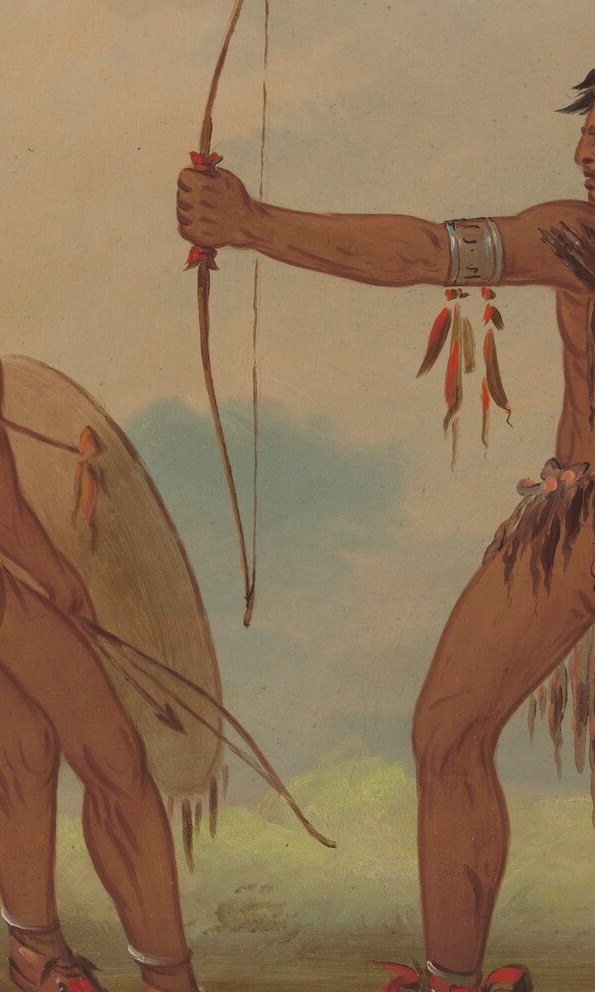
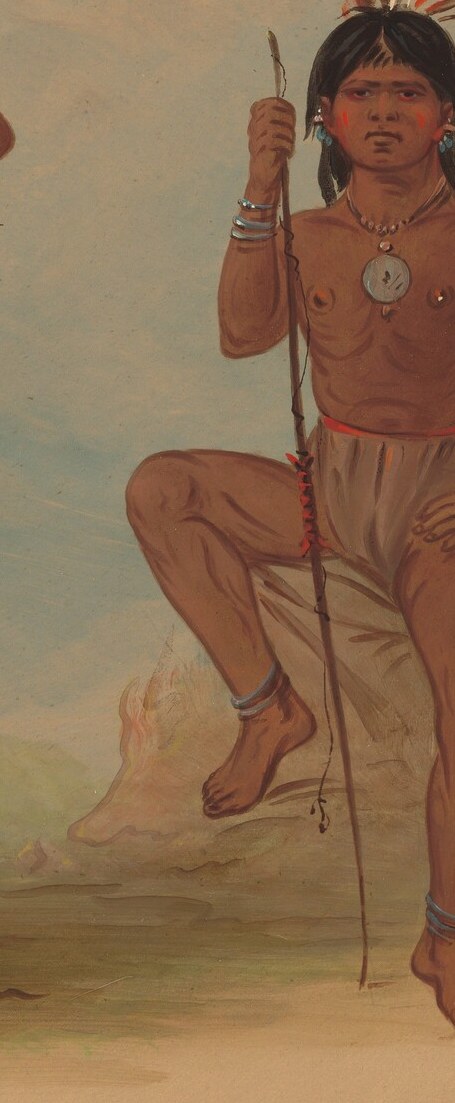
George Catlin, a lawyer-turned-artist, created *Three Woyaway Indians* around 1854, an oil painting now housed in the Smithsonian American Art Museum. It is part of his extensive work documenting Native American life.
Catlin embarked on five expeditions to the American West in the 1830s, producing portraits and scenes to record the cultures of Plains tribes. This painting depicts three Woyaway men, showcasing their traditional regalia, including feathered headdresses, armbands, and weaponry like bows, quivers, and spears, each detail carefully rendered.
His art aimed to preserve visual records of Indigenous communities during a period of rapid westward expansion and cultural disruption. Catlin's commitment was to create a lasting testament to the people he encountered.
What details in their attire or tools tell you the most about their way of life?
Details
Transcript
In the 1830s, this artist journeyed West to document Indigenous cultures. He aimed to preserve visual records during rapid American expansion. These are Woyaway men, depicted in traditional regalia. The middle figure's prominent headdress suggests leadership. His bow and quiver show readiness for hunting or defense. The spear held by the right figure signifies power and status. The artist carefully recorded their distinct adornments and tools.