Still Life with Peacock Pie by Claesz, Pieter
View the artwork: Still Life with Peacock Pie →
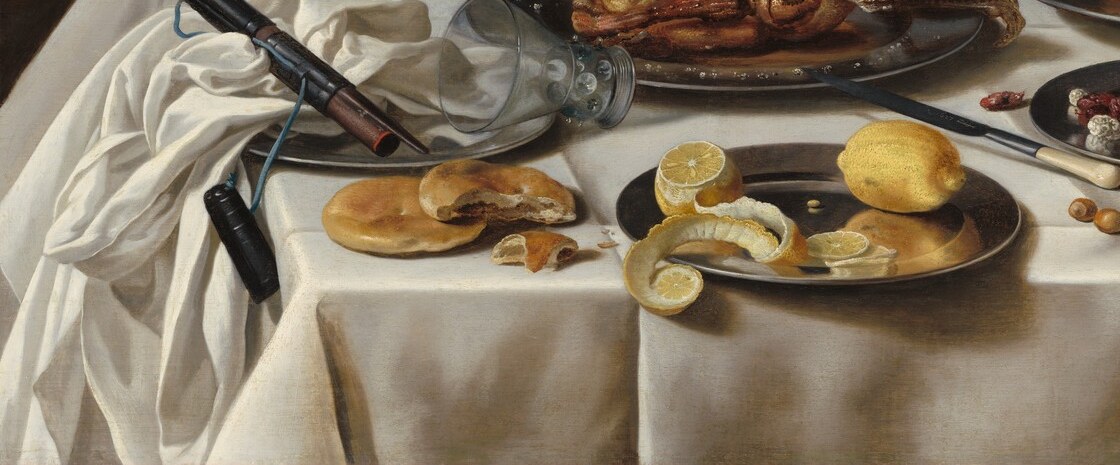
Pieter Claesz signed this monumental banquet piece in 1627, but finding his name takes a sharp eye. The entire signature is engraved on the blade of a knife lying on the tablecloth: the monogram PC and the date 1627.
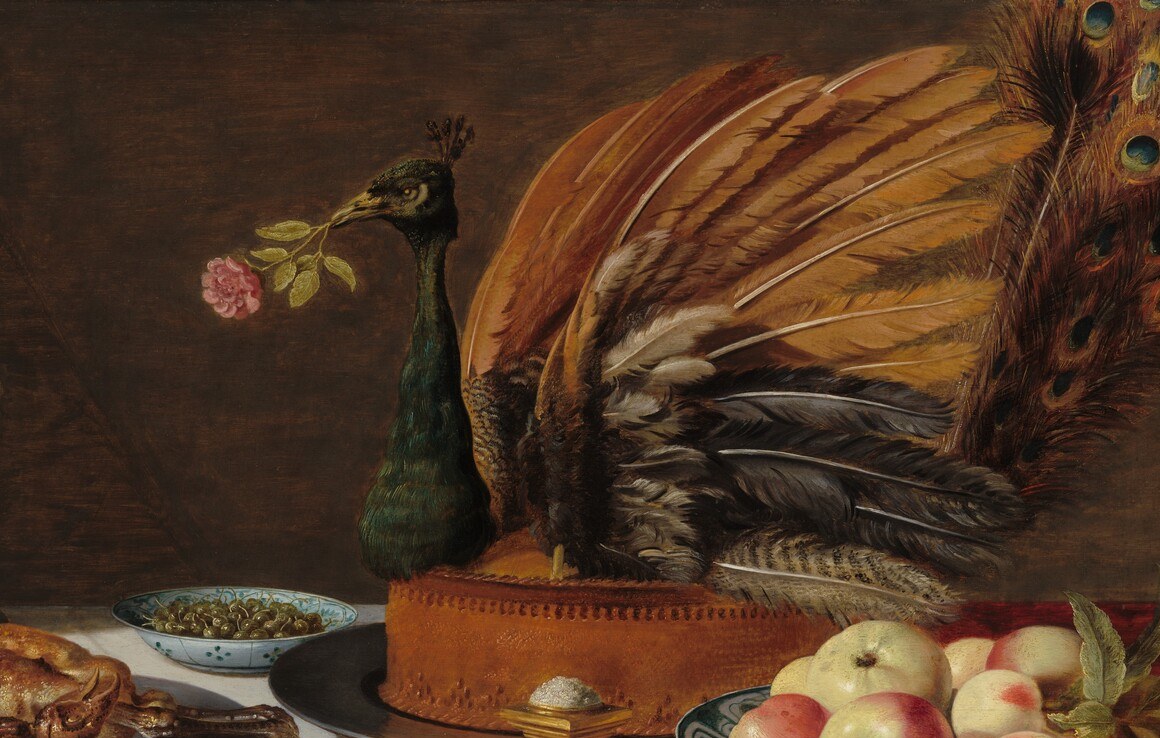
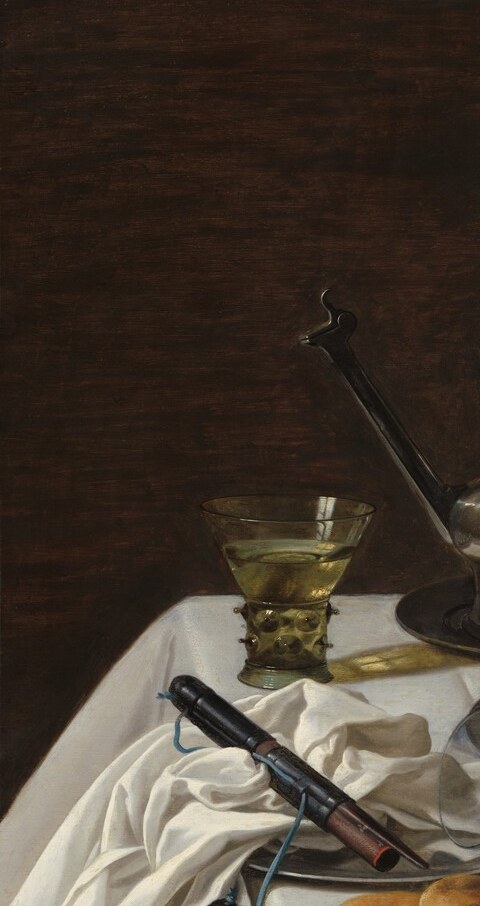
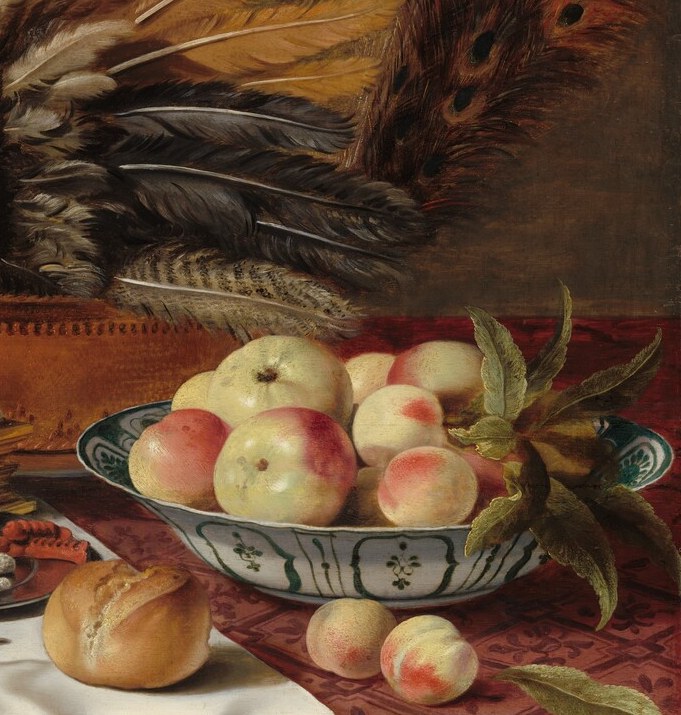
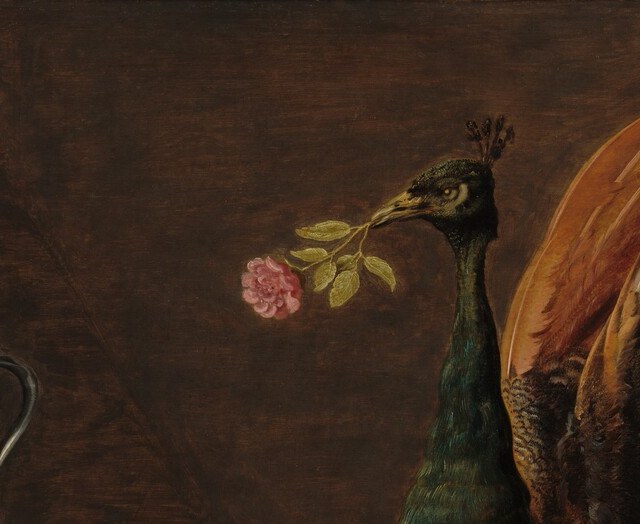
The painting is a catalog of privilege. A peacock pie dominates the table, the bird roasted and then redressed in its own skin and feathers. Peacock and pheasant were restricted game, legally hunted only by the landed gentry. Beside them sit Chinese Wan-Li porcelain, a pewter pitcher reflecting the studio window, and fruit at peak ripeness, every object a status signal and a vanitas reminder.
Claesz was a Haarlem specialist in the tonal still life, and this work marks a turn toward richer color and aristocratic subject matter. The panel is unusually large at 77.5 by 128.9 centimeters, likely a private commission. A nearly identical painting featuring a turkey pie exists in the Rijksmuseum; cut notches along the edges of this panel suggest Claesz transferred the design between the two.
He put his name not on a ribbon or a letter, but on a knife that could literally carve the food beside it. The painter as a craftsman among craftsmen, hiding in plain sight.
#arthistory #dutchgoldenage #stilllife
Details
Transcript
First, the feast. A peacock pie, reassembled in its own feathers. Only landed gentry could legally hunt these birds. This is a banquet of privilege. But the painter left a smaller mark. Look at the knife on the cloth. On the blade: the initials PC, and the year 1627. His only signature on the whole panel hides on a working tool.