Artwork
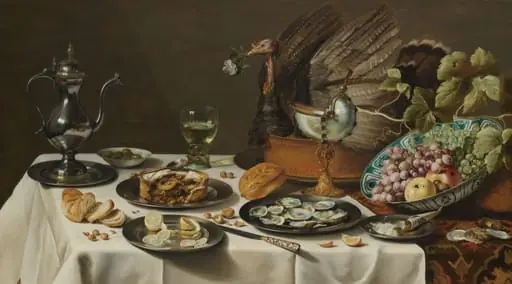
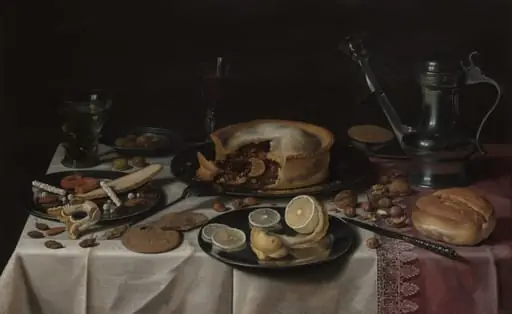
Still Life with Peacock Pie
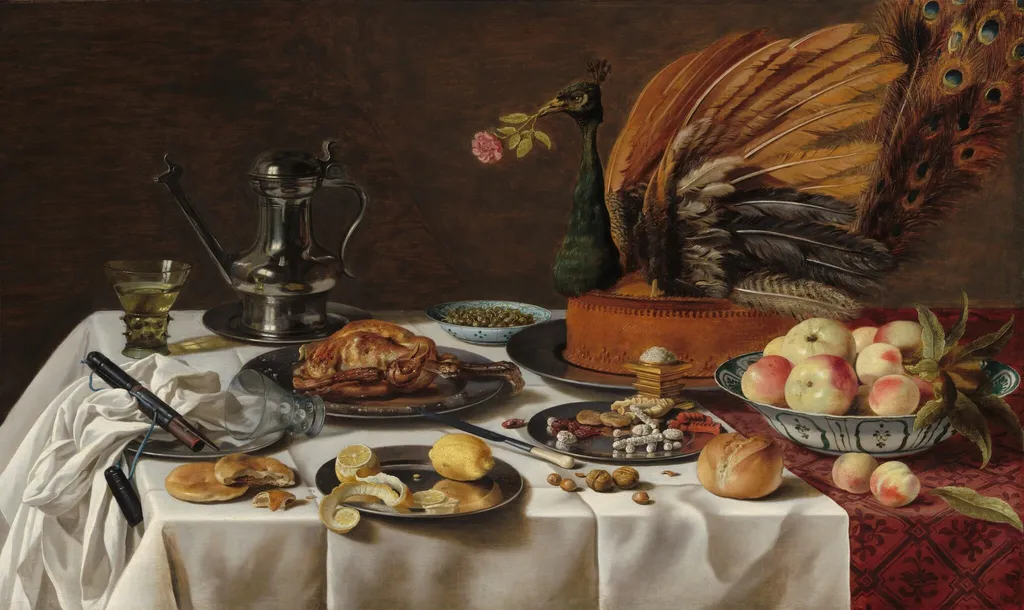
Still Life with Peacock Pie is an oil painting by the Baroque artist Pieter Claesz. It dates from 1627 and is held in the collection of the National Gallery of Art.
- Inscription
- Inscribed:on the knife blade, initials in monogram: PC 1627
About this work
" The panel, over four feet wide, was almost certainly commissioned by a wealthy Dutch landowner who could hunt game birds.
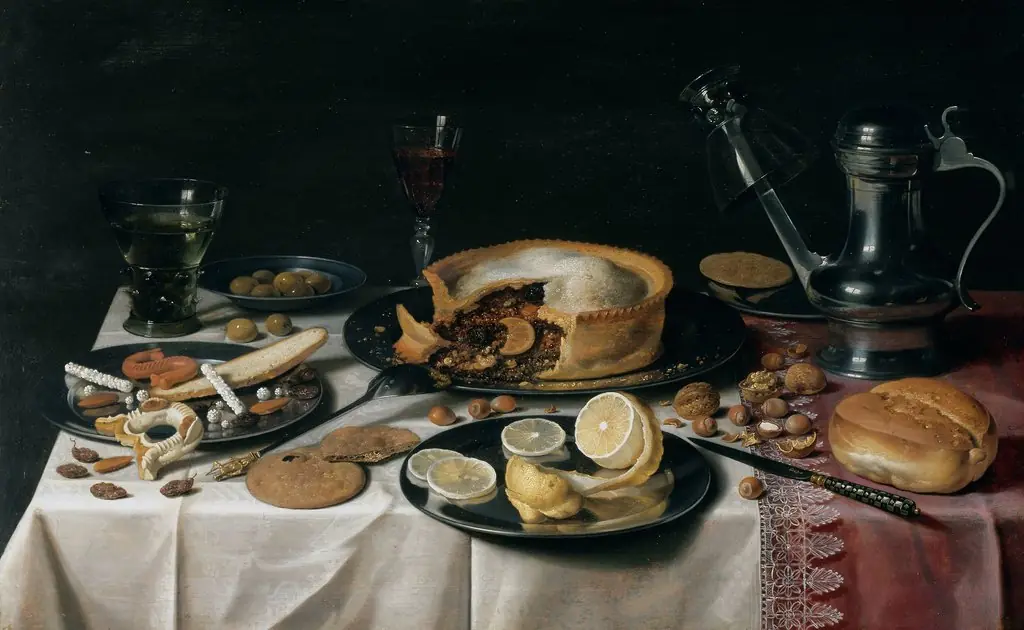
A peacock pie crowned with the bird's own feathers and a pink carnation dominates this 1627 Haarlem banquet scene. Pieter Claesz arranged roasted pheasant, Chinese Wan-Li porcelain, and a gilded saltcellar across a linen-draped table, signing the knife blade with his monogram "PC 1627." The panel, over four feet wide, was almost certainly commissioned by a wealthy Dutch landowner who could hunt game birds.
Overview
Pieter Claesz's Still Life with Peacock Pie, painted in 1627, exemplifies the lavish banquet pieces popular in the Dutch Golden Age. This oil on panel depicts an opulent array of food and luxury items, centered around a grand peacock pie. The work showcases Claesz's skill in rendering textures and light, establishing him as a prominent still-life painter in Haarlem during this period. Its substantial size and aristocratic subject matter suggest it was a significant private commission.
Subject & Meaning
The composition presents a banketje, or banquet piece, featuring a central peacock pie elaborately reassembled with the bird's head, wings, and tail feathers. Surrounding this centerpiece are a roasted pheasant, various fruits like apples, peaches, and lemons, along with breads, olives, nuts, and candies. These delicacies are arranged on pewter platters and in Chinese Wan-Li porcelain, complemented by a gilded saltcellar and a berkemeier glass of wine, signaling a display of wealth and refined taste.
Technique & Style
Claesz demonstrates his command of light and texture in this work. A cool, northern light source illuminates the scene from the left, creating subtle, cream-colored shadows and reflections. This illumination highlights the translucence of the glass and the polished surface of the pewter pitcher, where window frames are visibly reflected.
The artist, known for pioneering tonal, nearly monochromatic 'breakfast pieces,' here applies his refined technique to a more elaborate and colorful composition, characteristic of his later work.
History & Provenance
The monumental dimensions of the panel, measuring 77.5 by 128.9 centimeters, along with its aristocratic subject matter, indicate a private commission for a wealthy patron. The inclusion of game birds like peacock and pheasant suggests an owner with hunting privileges, likely a member of the landed gentry. Claesz inscribed his initials, 'PC,' and the date, '1627,' onto the knife blade within the painting.
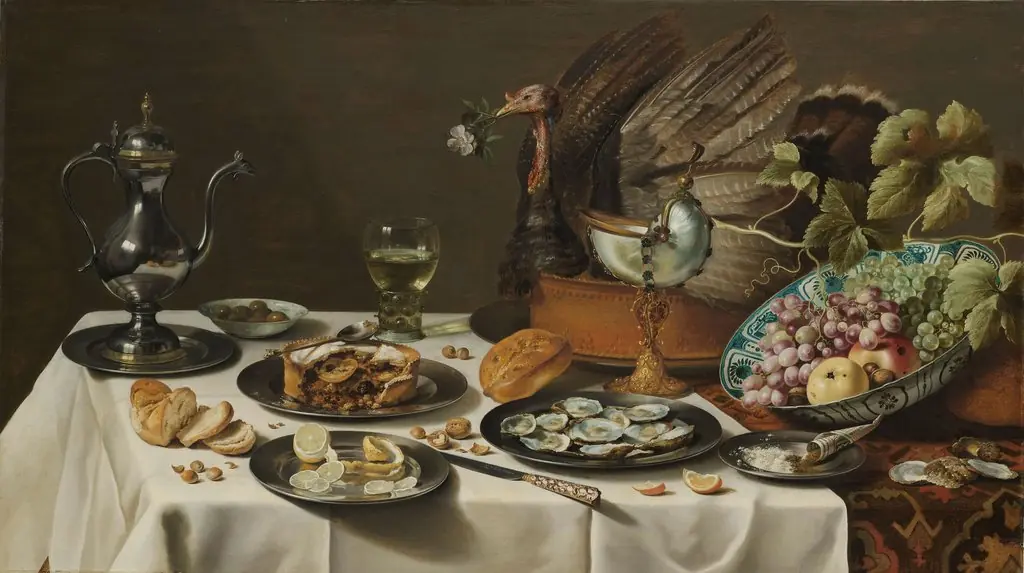
A closely related panel featuring a turkey pie, also from 1627, exists in the Rijksmuseum, with notches on the National Gallery panel suggesting a shared design.
Context
Pieter Claesz, born near Antwerp around 1597, established himself in Haarlem by 1621, becoming a leading still-life painter in the city. He was instrumental in developing the tonal, understated style of Dutch 'breakfast pieces' early in his career. This banketje represents a shift towards more decorative and colorful arrangements, reflecting evolving tastes within the genre.
Such elaborate still lifes were highly valued by the burgeoning merchant class and aristocracy of the Dutch Republic.
Own this work as a print
Artist & collection

 Studied in the Dutch Golden Age course