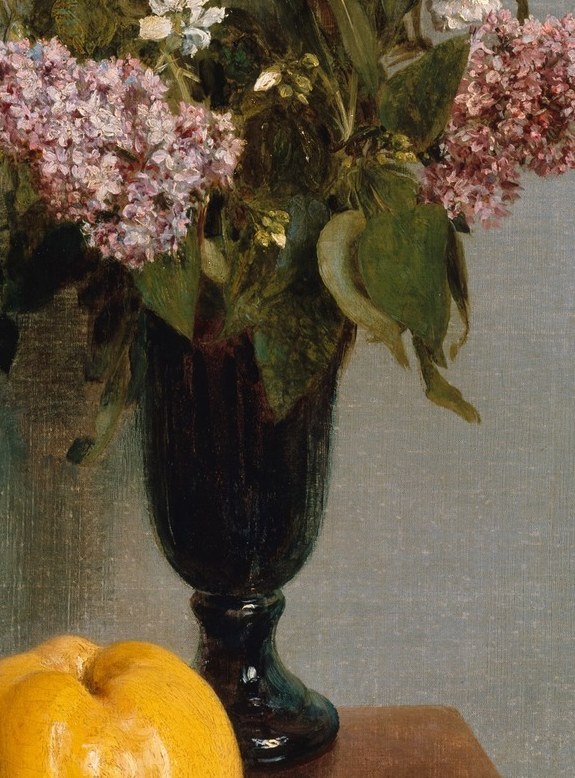
Still Life with Flowers and Fruit by Henri Fantin-Latour (French, 1836–1904)
Henri Fantin-Latour's *Still Life with Flowers and Fruit* (1866) was painted during the height of the Realist movement, yet it feels completely timeless. Today, a work like this commands millions at auction, this particular canvas sold at Christie's in 2019 for $2.7 million.
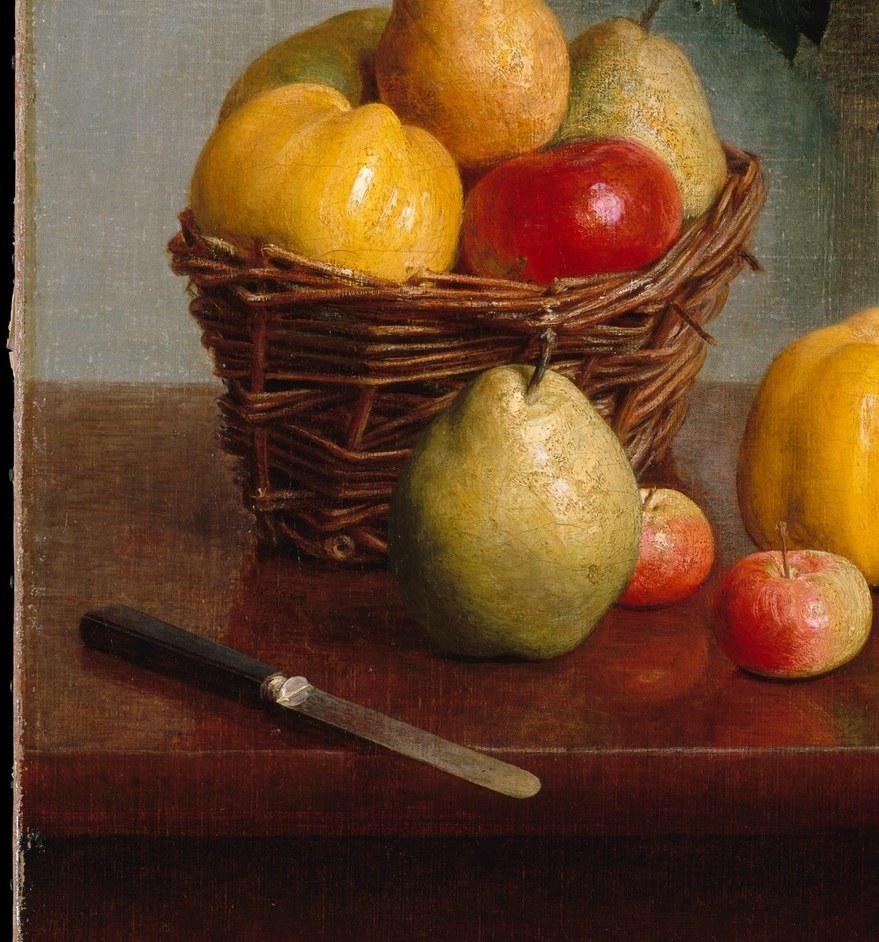
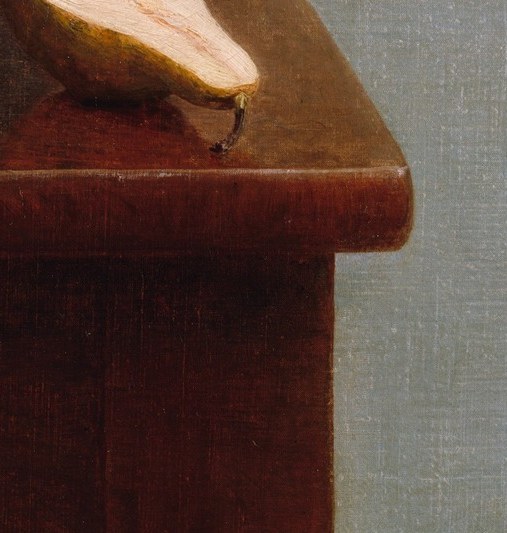
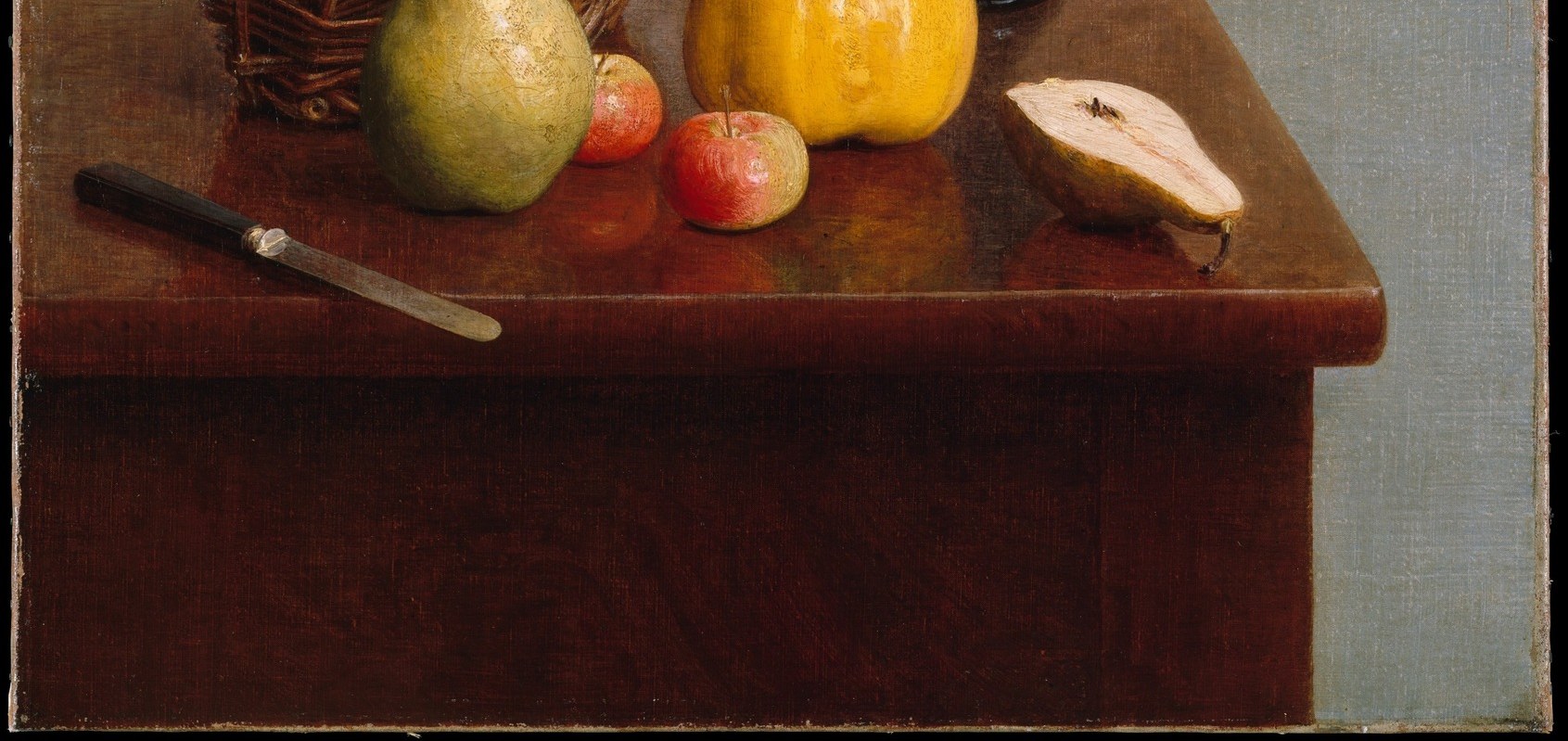
The painting rewards the slow observer. Scan the wicker basket and you'll see that every single woven strand has been individually painted with its own highlight and shadow, a quiet, almost obsessive act of attention. Look at the knife resting on the table's edge, the single sliced pear with its seeds exposed, and the faint ghost-reflections of the fruit on the polished red tabletop in the bottom-right. Nothing is accidental.
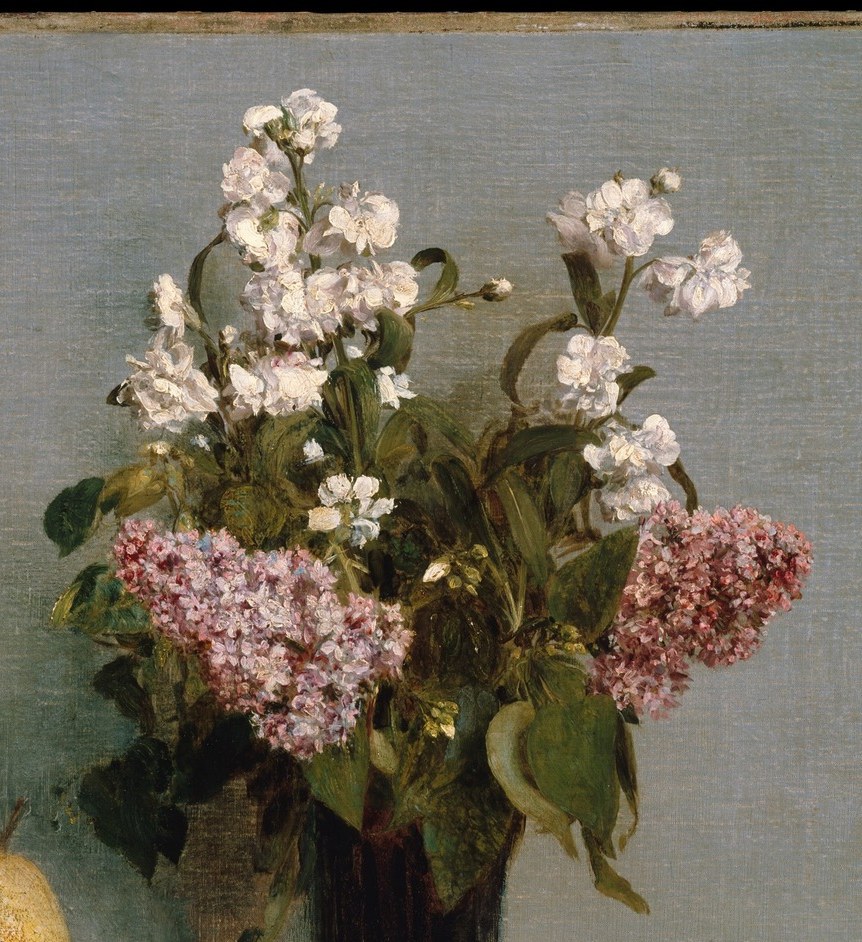
Fantin-Latour built his career on floral still lifes like this. He actually charged a premium for flower paintings because the market, particularly English collectors, couldn't get enough of them. This allowed him financial independence to pursue the group portraits of Parisian writers and artists (Manet, Baudelaire, Whistler) that made him historically important, even as he grumbled that the flower market was a 'distraction.'
Next time you see a flower painting, ask yourself: is the artist recording what they see, or are they showing you how to look?
Details
Transcript
In 1866, a 30-year-old Parisian painted this. A wicker basket, spilling pears. He charged a premium for flowers. They paid it. Each woven strand is a separate brush decision. A single cut pear, with a knife left resting beside it. This still life sold at Christie's for $2.7 million in 2019.