Saint Adalbert and Saint Procopius by Master of Eggenburg
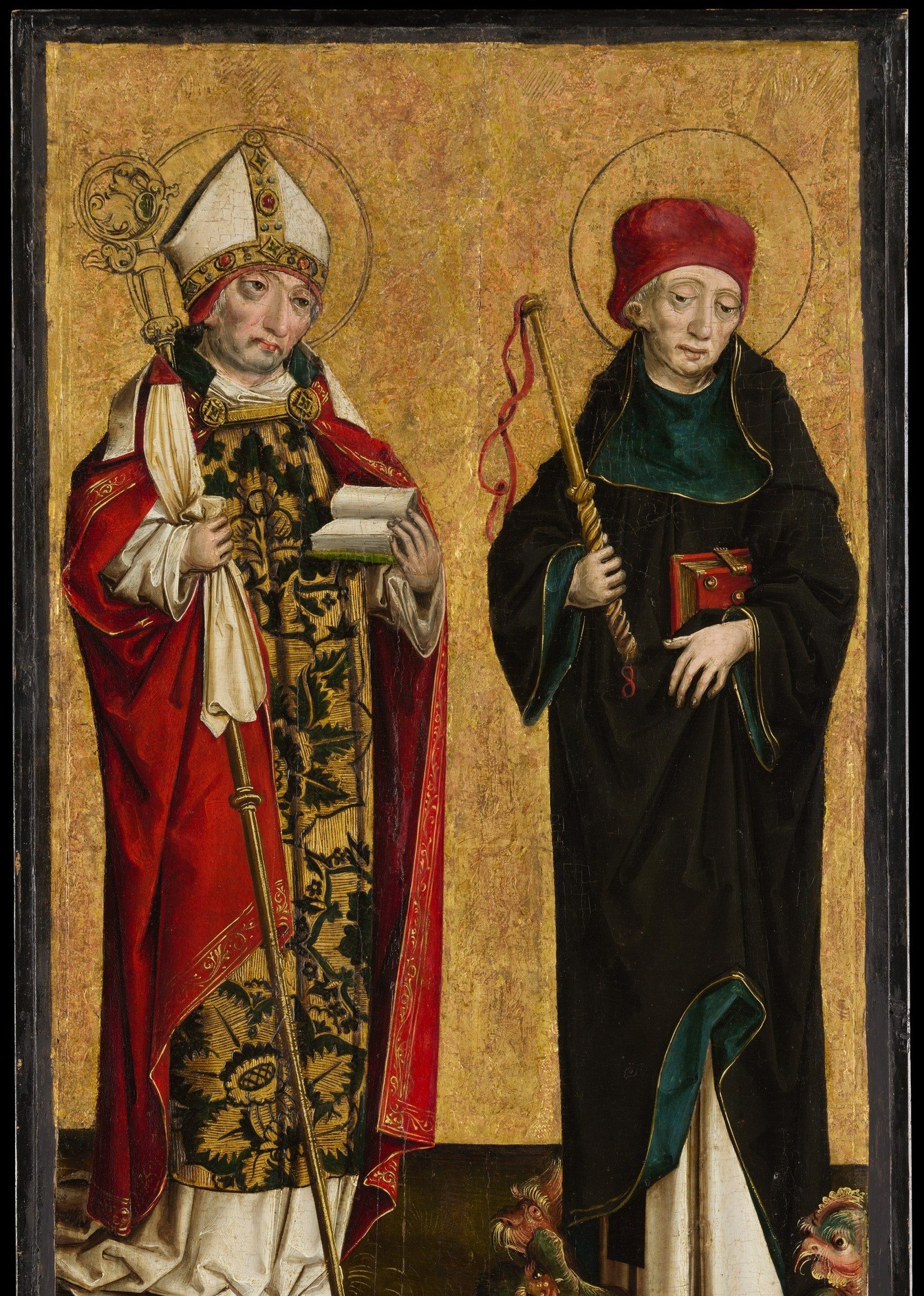
This is "Saint Adalbert and Saint Procopius," painted in 1496 by an artist we now call the Master of Eggenburg. His real name is lost to history, but his careful, humane touch is not. The panel hangs at The Metropolitan Museum of Art.
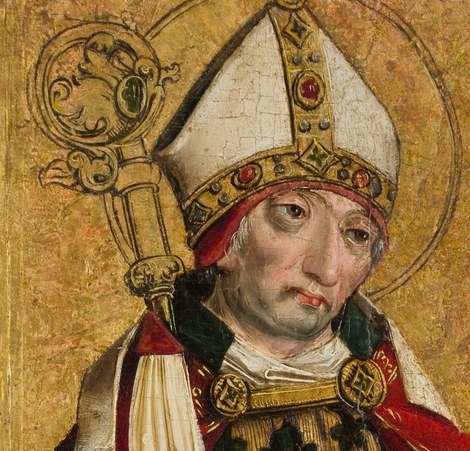
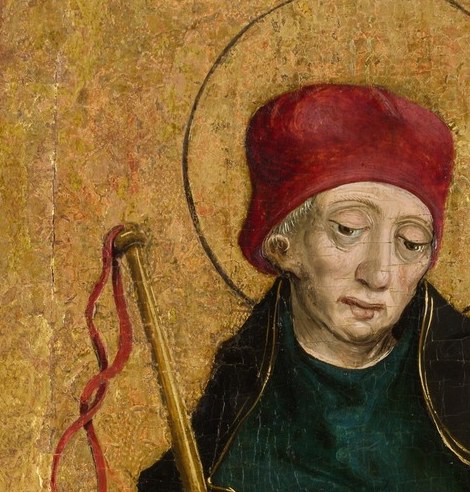
Look first at the two faces. Adalbert, on the left, wears a tall bishop's mitre and gazes downward, contemplative. Procopius faces us head-on with a steady, younger composure. The painter gave each a specific interior life despite the formal Gothic rules of the time.
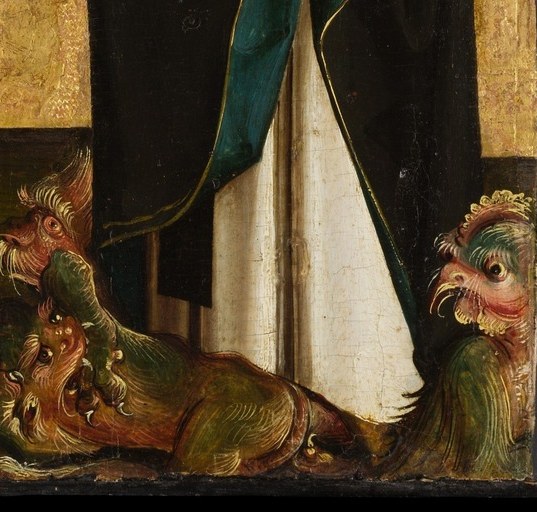
Procopius holds a rope attached to a small box. The legend says he bound a devil and forced it to plow his fields. At his feet, a tiny, crouching figure presumably is that very devil, a detail easy to miss in the glow of all that gold. Adalbert carries a gospel book and a towering crosier, marking his apostolic mission to the Slavs.
A luminous gold background places the saints outside ordinary time, but their faces belong very much to this world. The work is a quiet reminder that even in the most formal religious art, a particular person looked at another particular person and tried to record something true.
Details
Transcript
Two saints, painted in 1496, filling a panel with gold. Adalbert on the left. He was a real bishop in Prague. The painter gave him a particular, downward gaze. Procopius faces forward. Steady. A different kind of stillness. He holds a rope. Legend says he bound a devil to do his plowing. And there at his feet: the very small figure of the bound devil. A painter, whose real name we lost, made a gold world feel human.