An Indian Encampment by Ralph Albert Blakelock
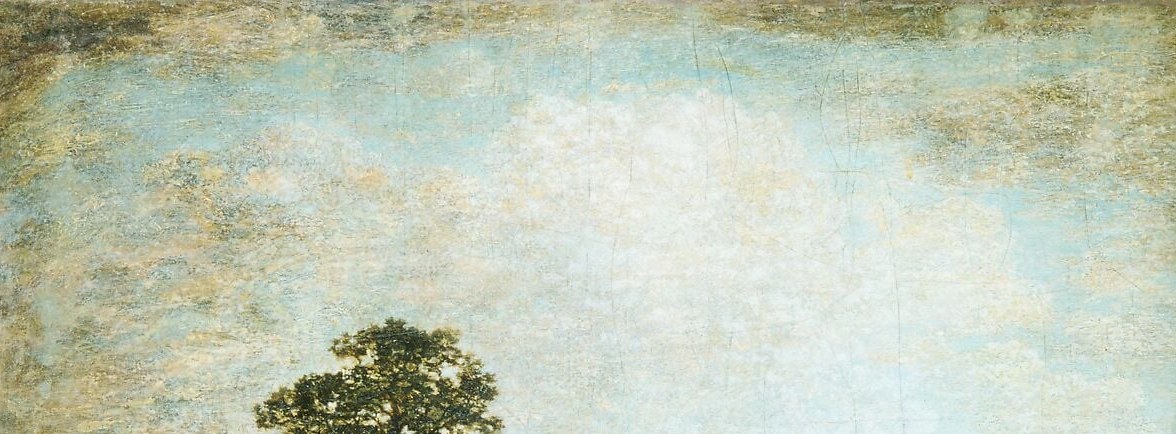
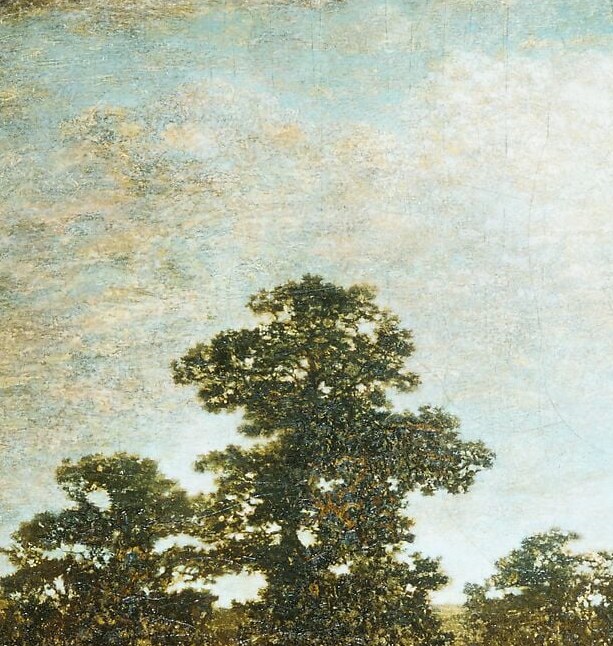
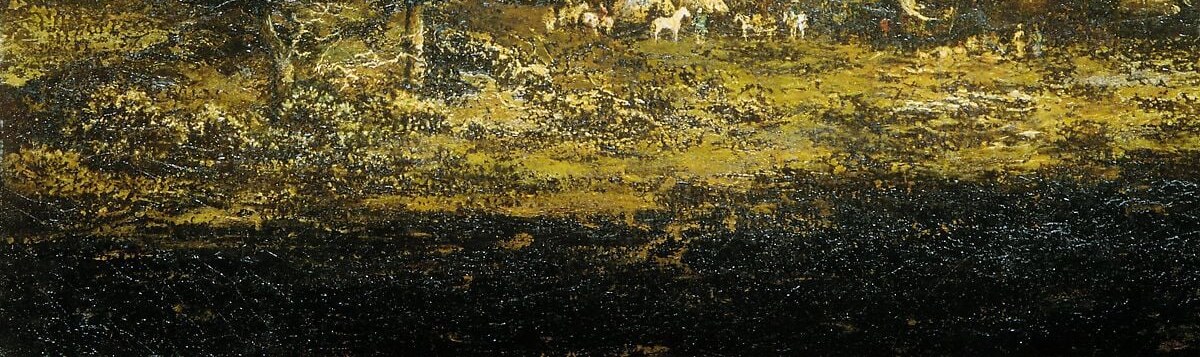
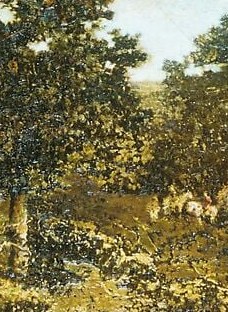
Ralph Albert Blakelock's "An Indian Encampment" (ca. 1880-1900) at The Metropolitan Museum of Art showcases the artist's masterful technique for creating luminous skies. He achieved this glowing effect through a process of applying multiple layers of paint, often dark over light, which causes the lighter pigments to appear to advance forward.
Look closely at the sky, especially where it meets the dark silhouettes of the trees. The fine network of cracks, known as craquelure, reveals the thick, textured impasto beneath the surface. These cracks are a direct result of Blakelock's heavy application of paint and his use of resinous varnishes, testifying to the physical history of the artwork and his unique working method.
Blakelock, an American romanticist painter associated with Tonalism, was renowned for his evocative landscapes that often captured serene, nocturnal scenes. He focused on mood and atmosphere rather than narrative, inviting contemplation of the natural world. This painting is a prime example of his ability to imbue a tranquil setting with profound visual depth and an almost magical light.
His method transformed simple oil on canvas into a vibrant, living sky. What other secrets do you think old paintings hold?
Details

Transcript
This painter was a master of artificial light. He built up the luminous sky with layers of paint. Even after centuries, his technique is visible. The network of cracks shows the thick paint below. This layering is how he made the sky glow. Dark pigments over light make the light push forward. A trick of vision, and a feat of painting.