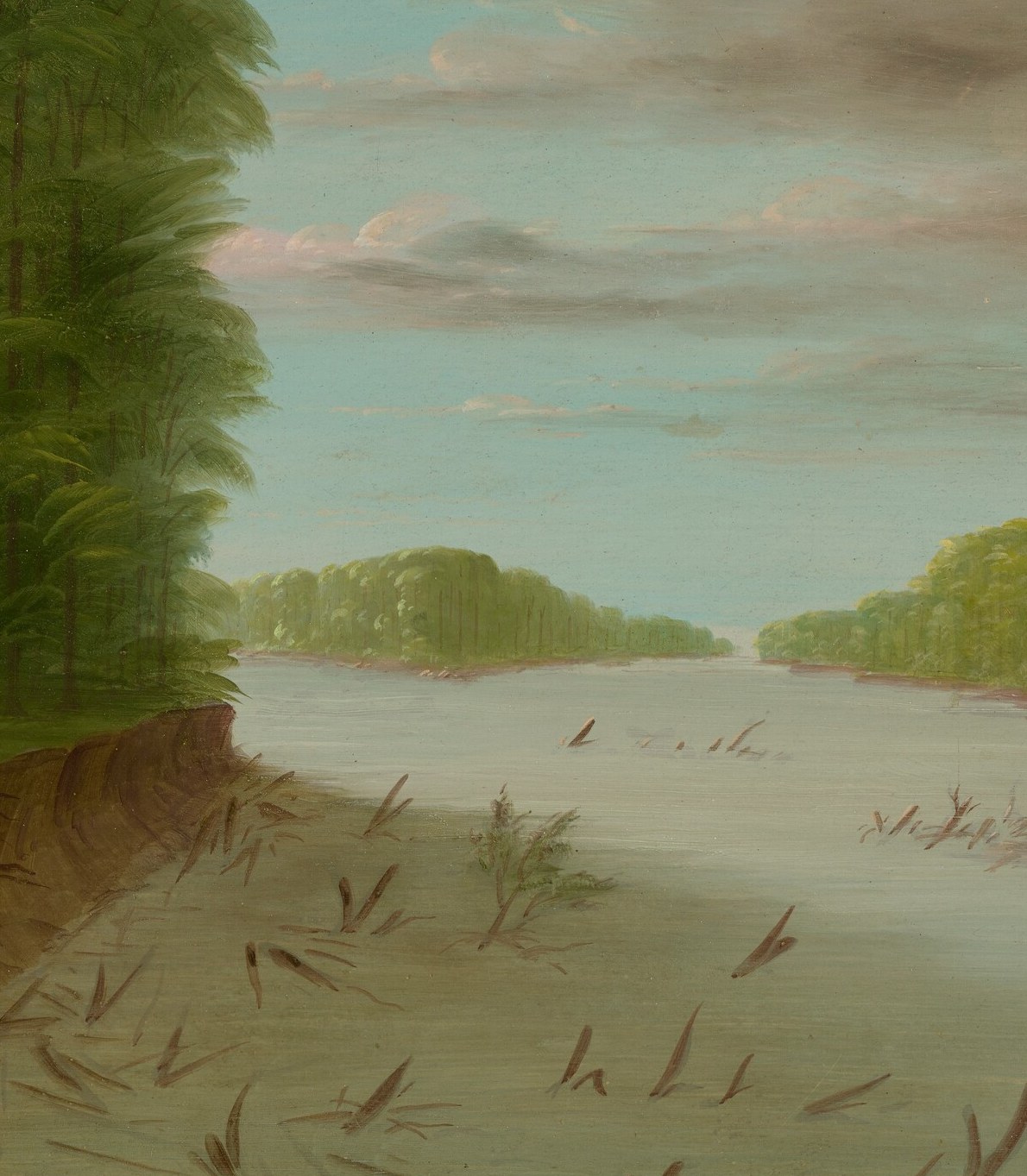
Scene from the Lower Mississippi by Catlin, George
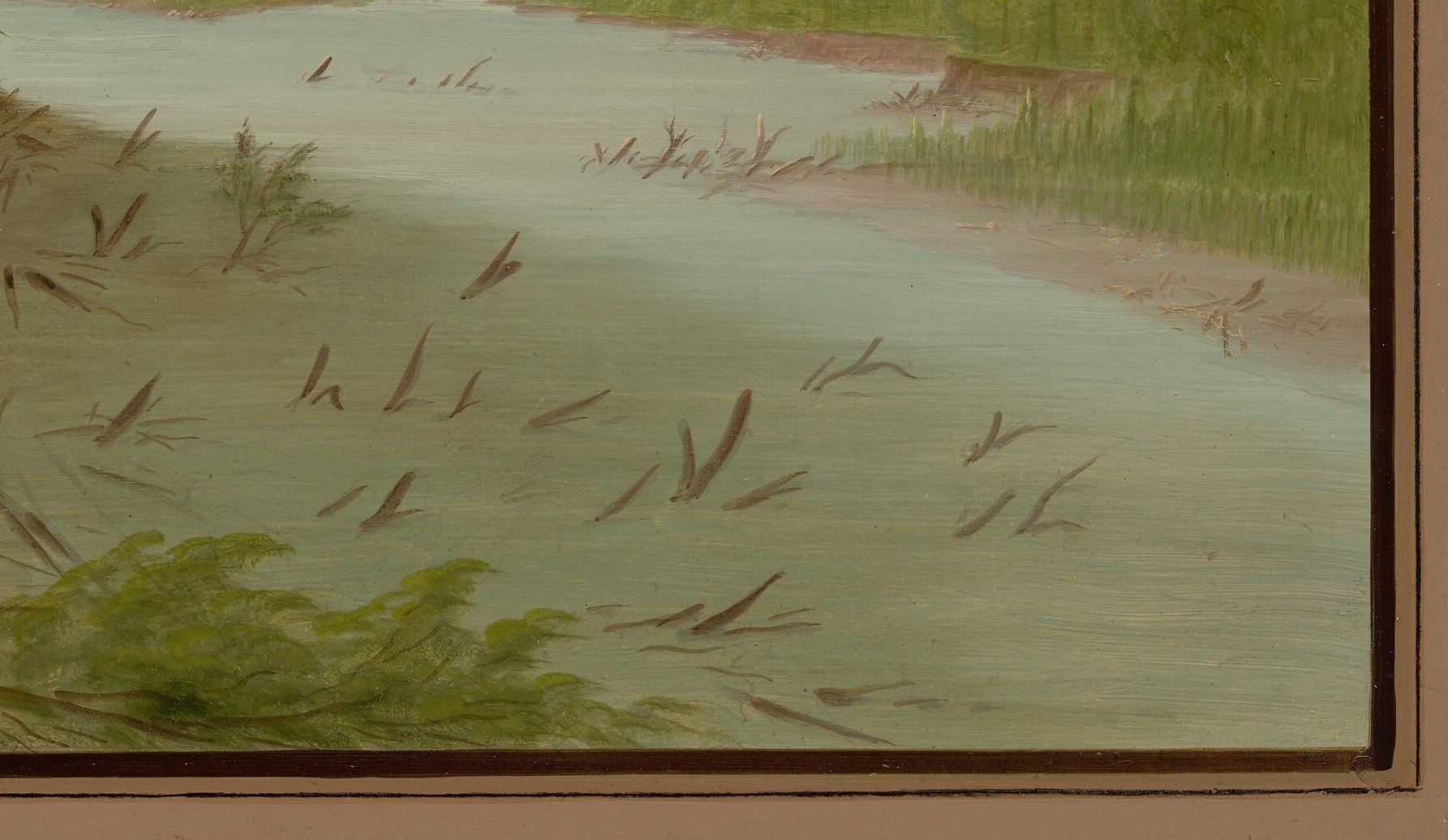
Beneath the misty waters of George Catlin's *Scene from the Lower Mississippi*, a small, hand-written label '243. B.' offers a glimpse into the painting's journey. Created between 1861 and 1869, this oil on card (now mounted on paperboard) is housed in the Smithsonian American Art Museum.
This subtle inscription suggests the painting was once part of a larger cataloged collection or exhibition. Catlin, best known for his extensive documentation of Native American life, often organized his works into a 'Gallery of Indians,' traveling with and displaying hundreds of his paintings together.
While this particular scene captures the natural beauty and human activity along the river, its numbered mark connects it to the artist's broader career and his efforts to present his vast body of work to the public. It reminds us that every artwork has a life beyond the canvas, with stories of its display and preservation.
What other hidden details might artworks reveal about their past?
Details
Transcript
This painting of the Mississippi looks like a quiet landscape. It was painted by George Catlin, known for Native American portraits. Look closely at the lower right corner, beneath the water. There is a small, hand-written label '243. B.' This number suggests it was part of a larger collection or exhibit. Catlin often displayed his work as a 'Gallery of Indians.'