Landscape with Boatman by Rousseau, Théodore
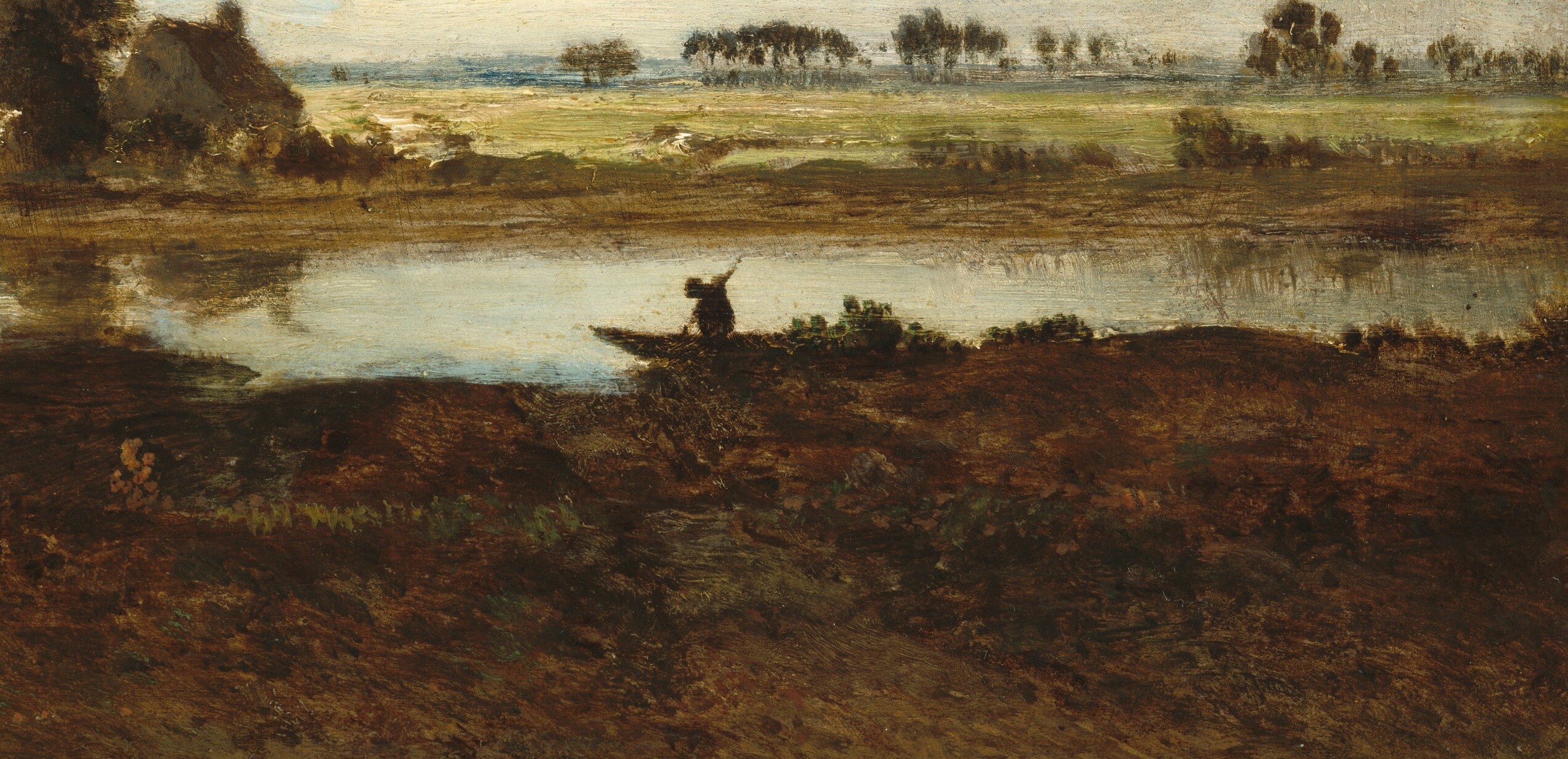
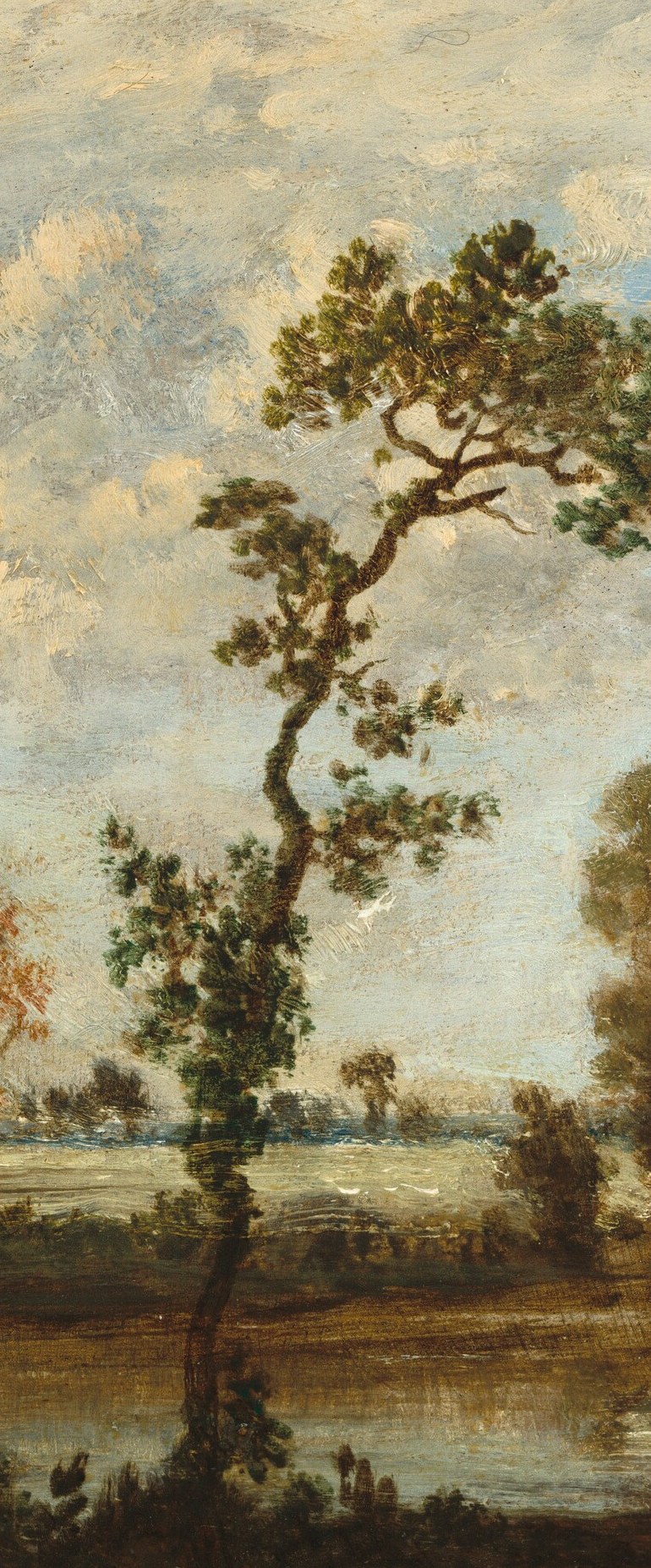
Théodore Rousseau painted 'Landscape with Boatman' around 1860, when nearly every artist in France had switched to canvas. He chose a wood panel. The decision placed him firmly in an older craft tradition, one where the support itself, its grain, its smoothness, became part of the image. The painting belongs to the Metropolitan Museum of Art.
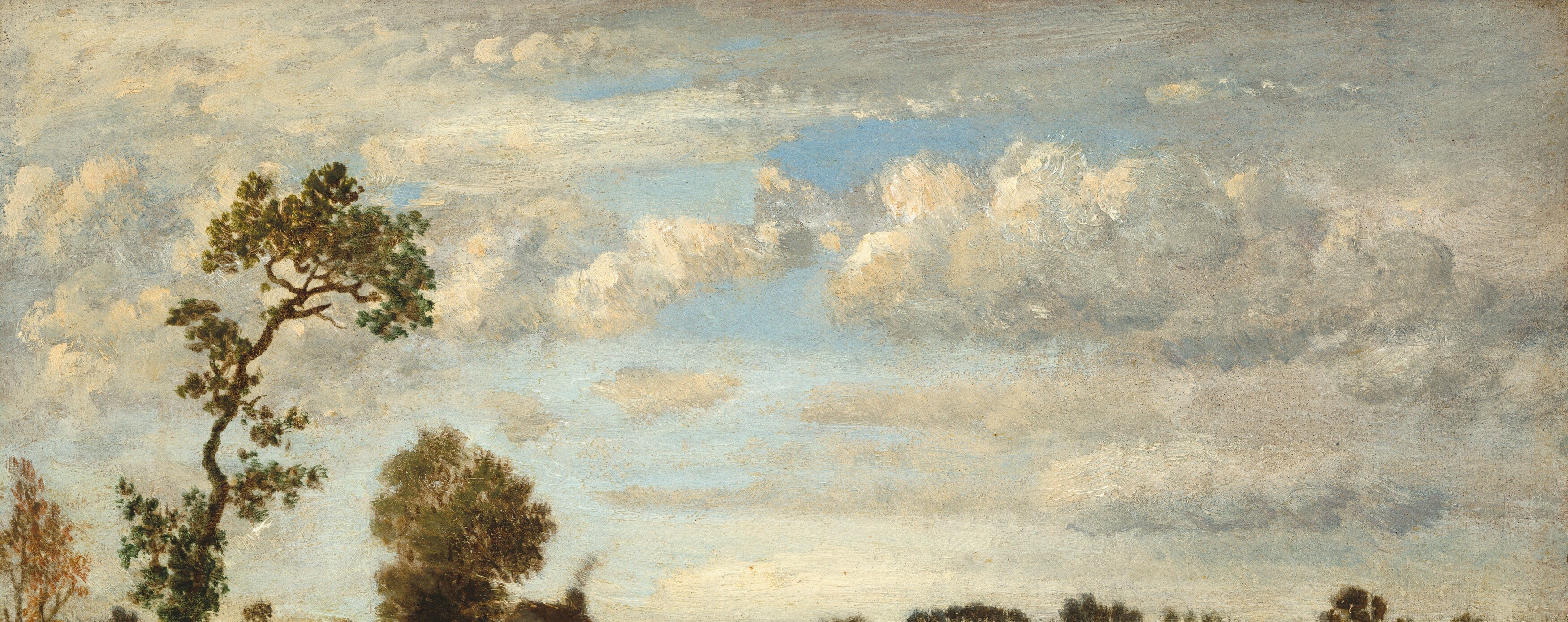
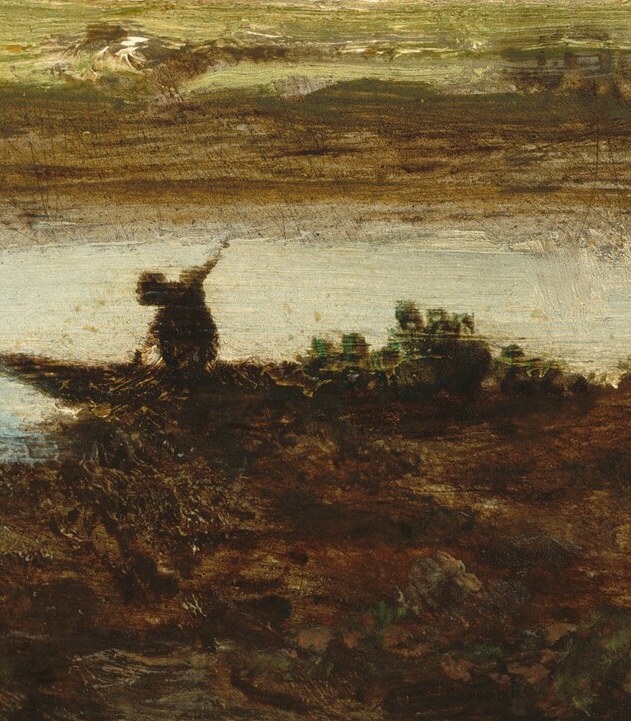
Let your eye go first to the solitary boatman standing in a flat vessel on still water. His scale is tiny against the towering tree on the left bank and the immense cloud-filled sky above. Rousseau uses him as a measure: the landscape is not a backdrop for human action but the main subject, vast and almost indifferent. The water reflects the sky in horizontal smears, so quiet it feels like held breath.
Rousseau belonged to the Barbizon School, painters who left Paris studios to work directly from nature in the Forest of Fontainebleau. He was nicknamed 'le grand refusé' because the official Salon rejected him for years. This panel probably dates from his mature period, when his close study of light, learned partly from Constable's cloud studies, had reached its peak. The painting's history is quieter than his early career, but it carries the weight of an artist finally heard.
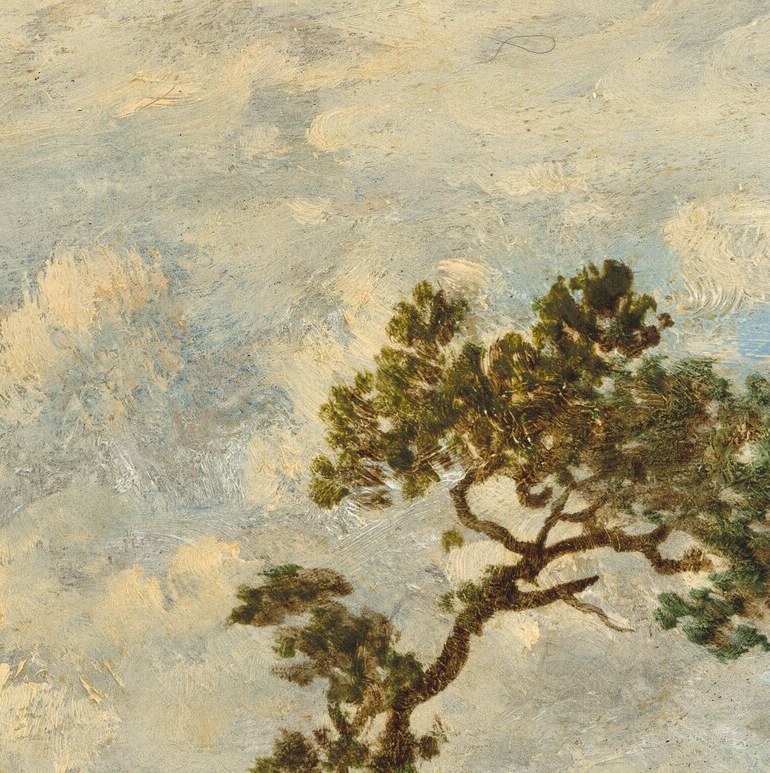
Next time you see this painting, notice how the main tree's crown glows where the clouds backlight it. That technical passage, all green and gold, feels almost like a portrait. What do you think Rousseau saw in that tree?
Details
Transcript
By 1860, almost everyone painted on canvas. Théodore Rousseau chose a wood panel instead. The grain gave his sky a texture canvas couldn't. He studied light the way Constable did, in the clouds. See the tiny boatman. The tree dwarfs him. A lone figure in a vast, quiet world. Rousseau painted the tree like a portrait. A human face in bark and leaves, against the light.