Eruption of the Volcano Vesuvius, 1820 by Johan Christian Dahl
Johan Christian Dahl's "Eruption of the Volcano Vesuvius, 1820," painted in oil in 1821 and housed in a private collection, captures the dramatic natural event that unfolded for months. Dahl, a Norwegian artist, was present in Naples during this period of volcanic activity.
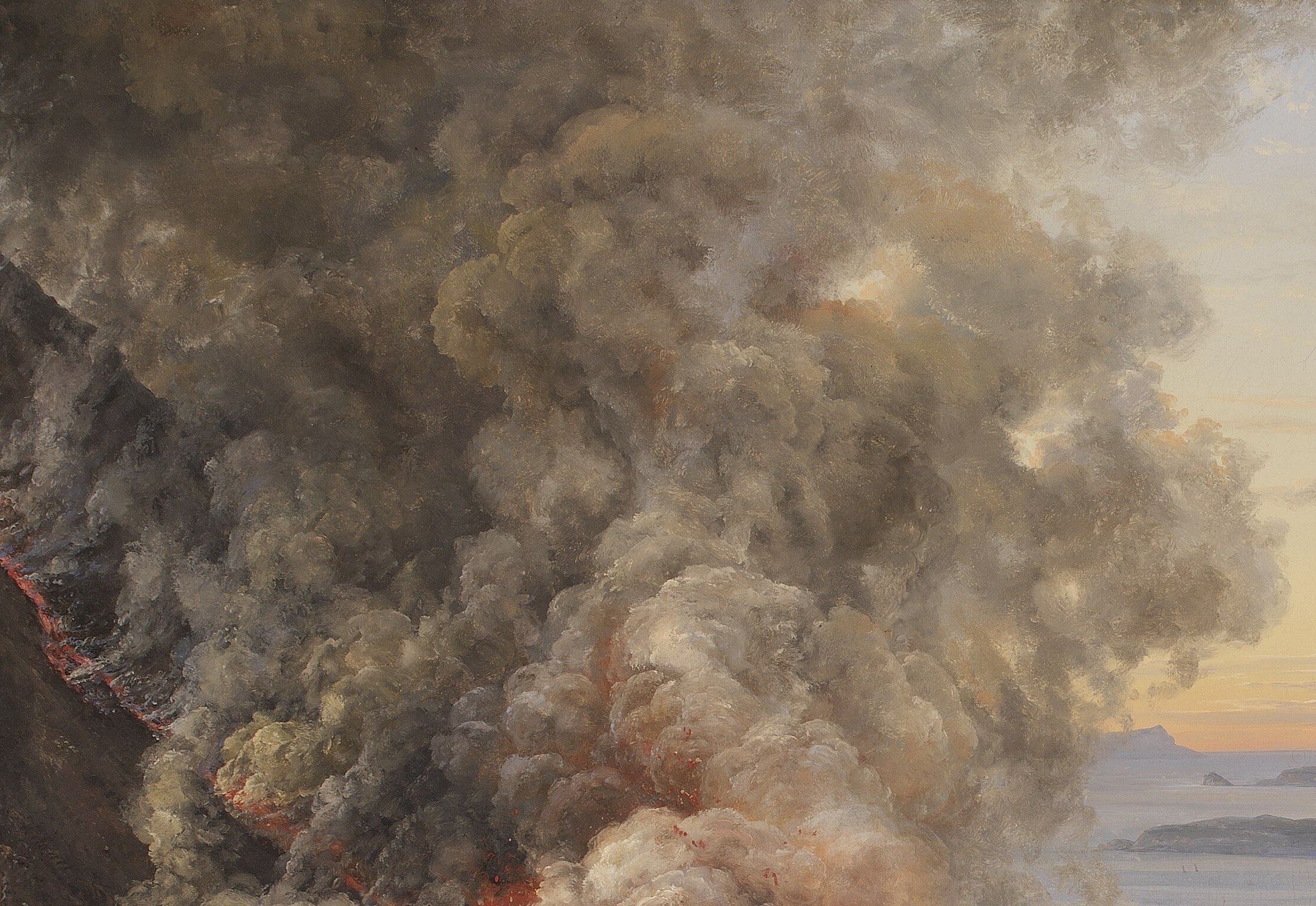
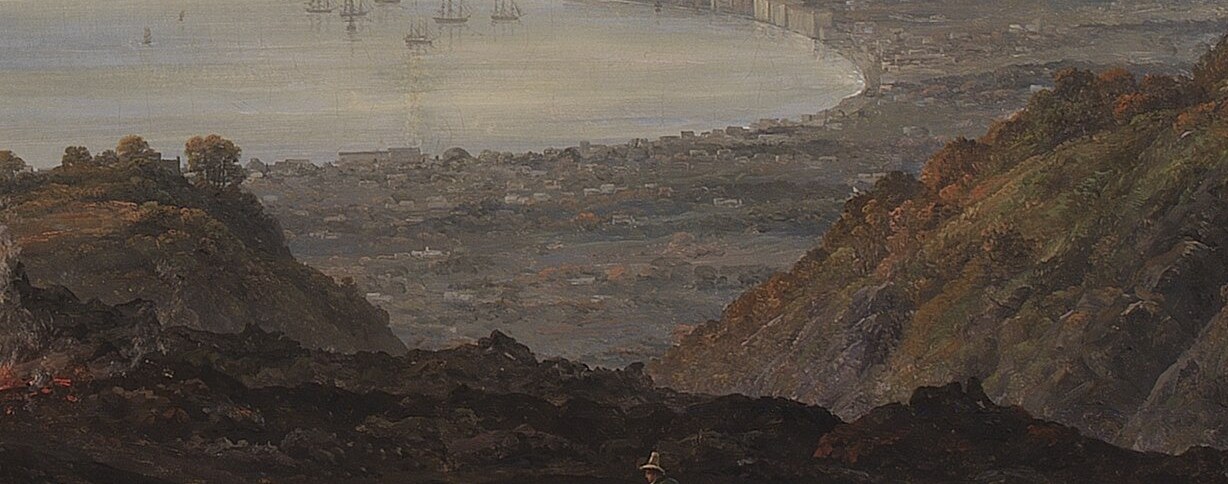
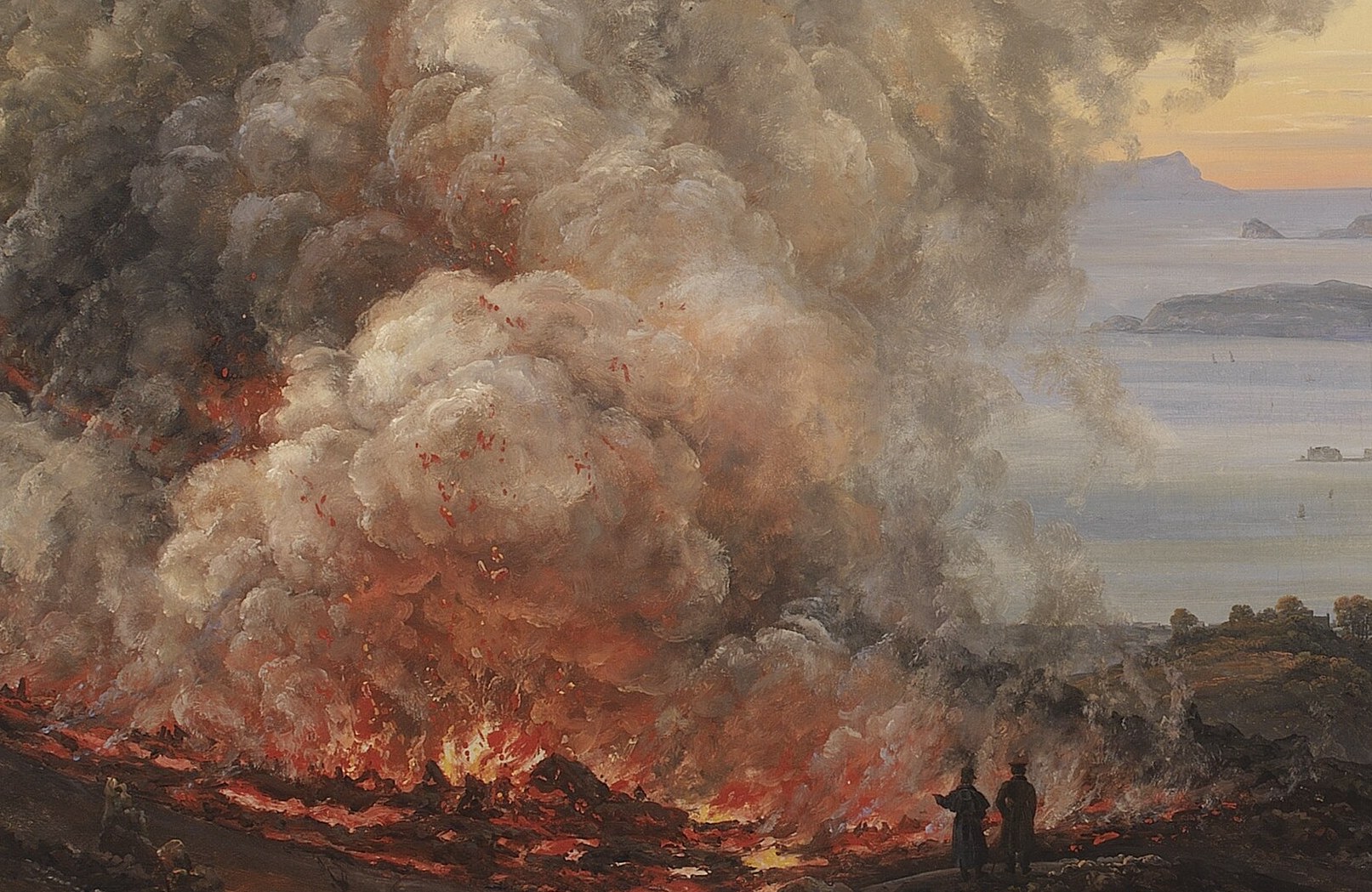
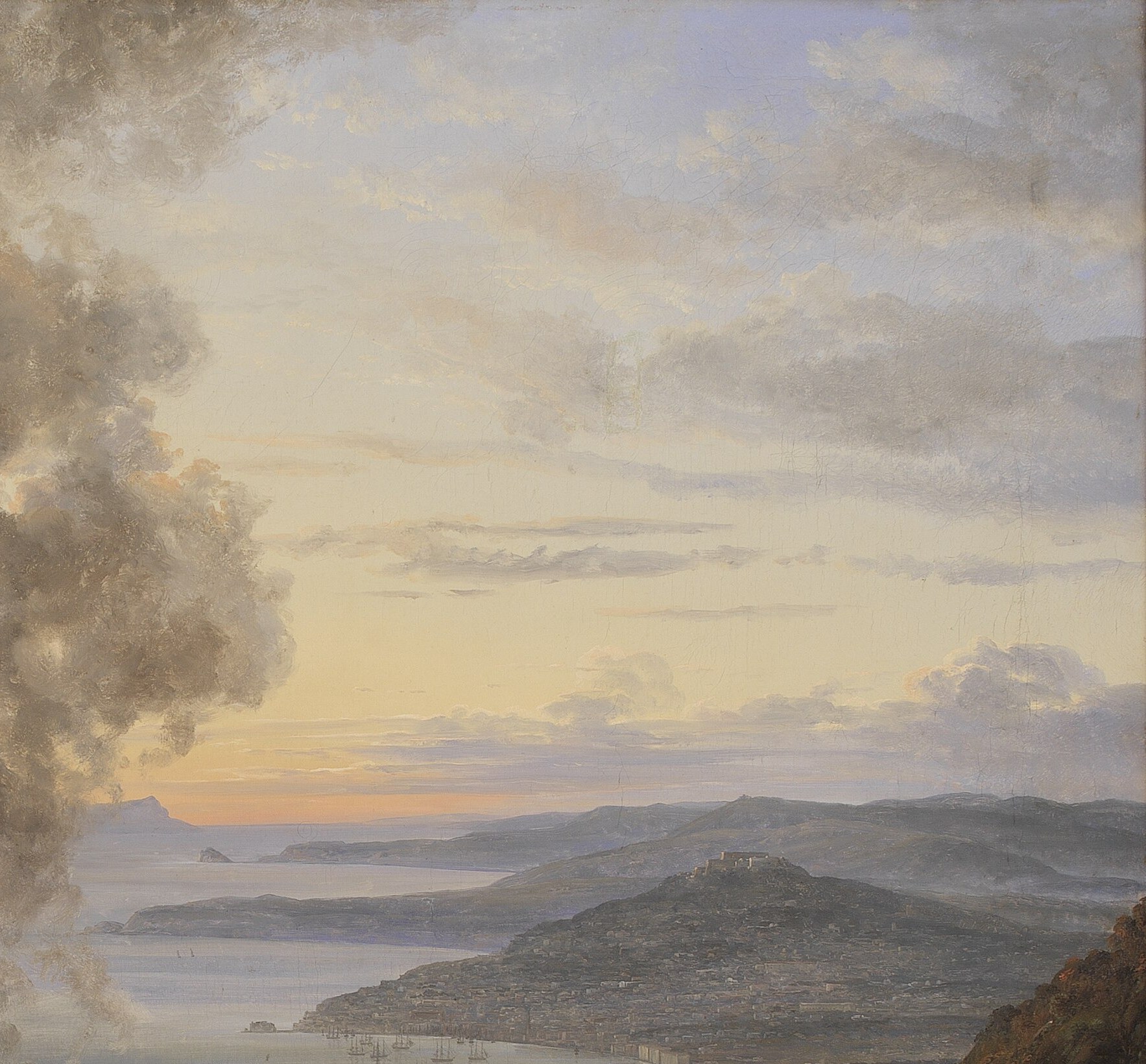
The painting vividly shows the towering plume of ash and incandescent lava flowing down the slopes of Mount Vesuvius. In the foreground, small figures and a donkey observe the cataclysm, emphasizing human vulnerability against nature's raw power. Yet, in the background, the serene city of Naples and its tranquil bay suggest an everyday rhythm continuing amidst the chaos.
Dahl is considered the founder of the "golden age" of Norwegian painting and was the first Norwegian painter to achieve significant acclaim across Europe. His work often explored sublime landscapes, reflecting the German Romanticism movement. This painting, completed just a year after the eruption, solidified his reputation for capturing the grandeur and drama of nature.
What feelings does this powerful contrast between destruction and distant calm evoke in you?
Details
Transcript
In 1820, Mount Vesuvius erupted for months. This painter, visiting Naples, witnessed the event firsthand. His detailed studies capture the volcano's immense power. Yet, life continued in the nearby city of Naples. The artist completed this dramatic scene the following year.