明 佚名 倣唐寅 溪山雪徑 扇|Winter Landscape by Tang Yin
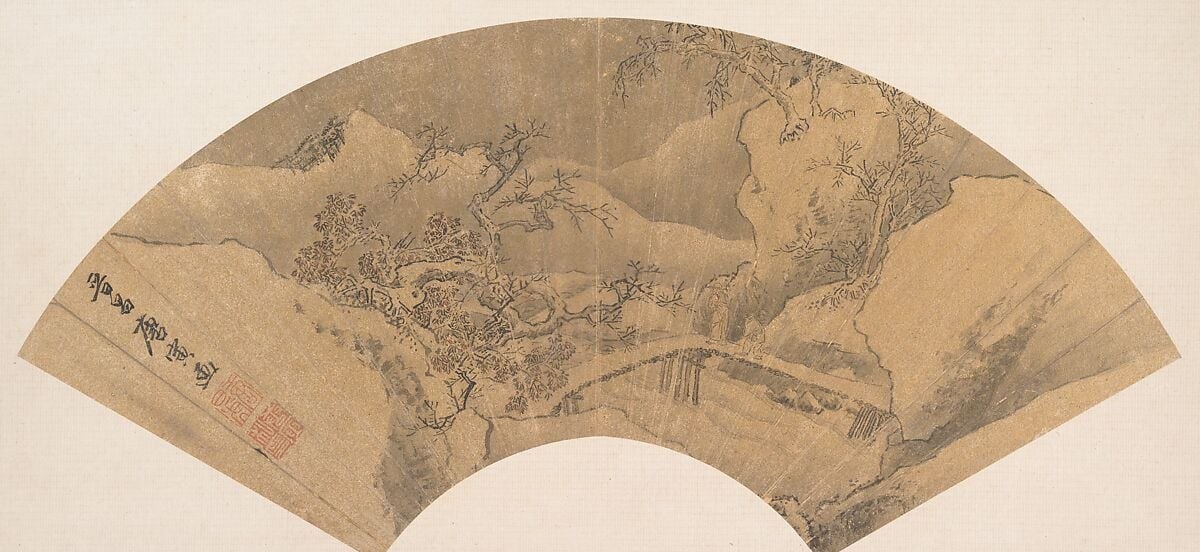
This is "Winter Landscape," an anonymous Ming Dynasty fan painting, mounted as an album leaf, and created in the style of Tang Yin around 1506. It is currently held by the Metropolitan Museum of Art. The painting is a paradox: a masterful work of quiet solitude whose most telling detail is an act of confession buried in its own calligraphy.
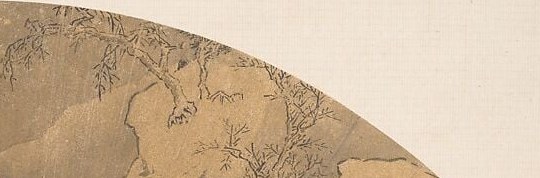
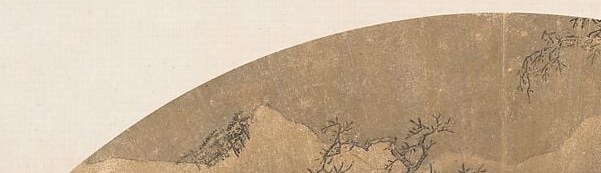
Look at the gold-flecked paper sky. The artist never painted snow with white pigment. Instead, the blank, reserved paper becomes the snow on the peaks, the mist between the mountains, and the light in the air. The only path winds into emptiness, inviting you to walk into a world without a single human figure.
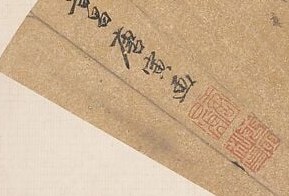
The intrigue lies in the lower-left inscription. For a long time, this piece was attributed to Tang Yin, one of the great masters of the Ming. But the calligraphy states plainly that this is an imitation by an unknown artist. The practice of copying masters was a respected form of study, but here, the honesty of that admission, paired with the painting's undeniable skill, creates a tension. The only strong color in the entire composition is the vermillion seal stamp, likely added by a later collector to authenticate a work that was already, by its own words, a copy.
We're left with a beautiful question: does a name on a stamp make a masterpiece, or does the ink on the gold-flecked paper speak for itself?
Details
Transcript
At first glance, a perfect Ming winter. Snow rests on peaks and boulders, the path empty. The paper itself, flecked with gold, becomes the light. Scholars once believed this was Tang Yin's own hand. But the inscription tells a different story. It reads: "Imitation of Tang Yin." An unknown painter's claim. The only color in this monochrome world is a vermillion stamp. A final, ironic act of authentication on a beautiful forgery.